
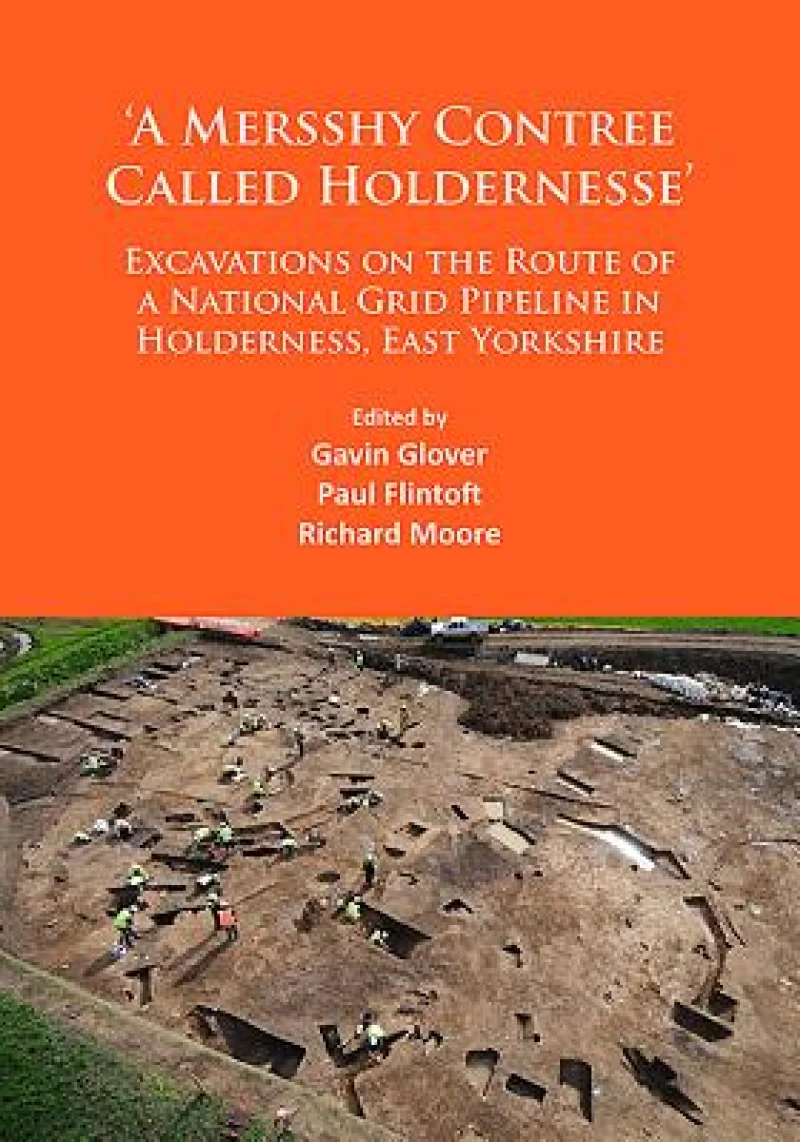
‘A Mersshy Contree Called Holdernesse’: Excavations on the Route of a National Grid Pipeline in Holderness, East Yorkshire : Rural Life in the Claylands to the East of the Yorkshire Wolds, from the Mesolithic to the Iron Age and Roman Periods, and beyond
Book Details
Format
Paperback / Softback
ISBN-10
1784913138
ISBN-13
9781784913137
Publisher
Archaeopress
Imprint
Archaeopress Archaeology
Country of Manufacture
GB
Country of Publication
GB
Publication Date
Mar 31st, 2016
Print length
298 Pages
Weight
1,080 grams
Dimensions
20.70 x 29.10 x 3.00 cms
Product Classification:
Prehistoric archaeologyClassical Greek & Roman archaeology
Ksh 8,250.00
Werezi Extended Catalogue
Delivery in 14 days
1 copies in stock
Delivery Location
Delivery fee: Select location
Delivery in 14 days
Secure
Quality
Fast
Presents the results of excavations along the route of a national grid pipeline in Holderness, East Yorkshire shedding light on rural life in the claylands to the east of the Yorkshire Wolds, from the Mesolithic to the Iron Age and Roman periods, and beyond.
Twenty sites were excavated on the route of a National Grid pipeline across Holderness, East Yorkshire. These included an early Mesolithic flint-working area, near Sproatley. In situ deposits of this age are rare, and the site is a significant addition to understanding of the post-glacial development of the wider region. Later phases of this site included possible Bronze Age round barrows and an Iron Age square barrow. Elsewhere on the pipeline route, diagnostic Mesolithic, Neolithic and Bronze Age flints, as well as Bronze Age pottery, provide evidence of activity in these periods. Iron Age remains were found at all of the excavation sites, fourteen of which had ring gullies, interpreted as evidence for roundhouse structures. The frequency with which these settlements occurred is an indication of the density of population in the later Iron Age and the large assemblage of hand-made pottery provides a rich resource for future study. Activity at several of these sites persisted at least into the second or early third centuries AD, while the largest excavation site, at Burton Constable, was re-occupied in the later third century. However, the pottery from the ring gullies was all hand-made, suggesting that roundhouses had ceased to be used by the later first century AD, when the earliest wheel-thrown wares appear. This has implications for understanding of the Iron Age to Roman transition in the region. Late first- or early second-century artefacts from a site at Scorborough Hill, near Weeton, are of particular interest, their nature strongly suggesting an association with the Roman military. With contributions by: Hugo Anderson-Whymark (flint), Kevin Leahy (metal, glass, worked bone), Terry Manby (earlier prehistoric pottery), Chris Cumberpatch (hand-made pottery), Rob Ixer (petrography), Derek Pitman and Roger Doonan (suface residues: ceramics and slag), Ruth Leary (Roman pottery), Felicity Wild (samian ware), Kay Hartley (mortaria), Jane Young with Peter Didsbury (post-Roman pottery), Ruth Shaffrey (worked stone), Lisa Wastling (fired clay), Jennifer Jones (surface residues: fired clay), Katie Keefe and Malin Holst (human bone), Jennifer Wood (animal bone), Don O’Meara (plant macrofossils), Tudur Burke Davies (pollen) and Matt Law (molluscs). Illustrations by: Jacqueline Churchill, Dave Watt and Susan Freebrey
Get ‘A Mersshy Contree Called Holdernesse’: Excavations on the Route of a National Grid Pipeline in Holderness, East Yorkshire by at the best price and quality guaranteed only at Werezi Africa's largest book ecommerce store. The book was published by Archaeopress and it has pages.

