
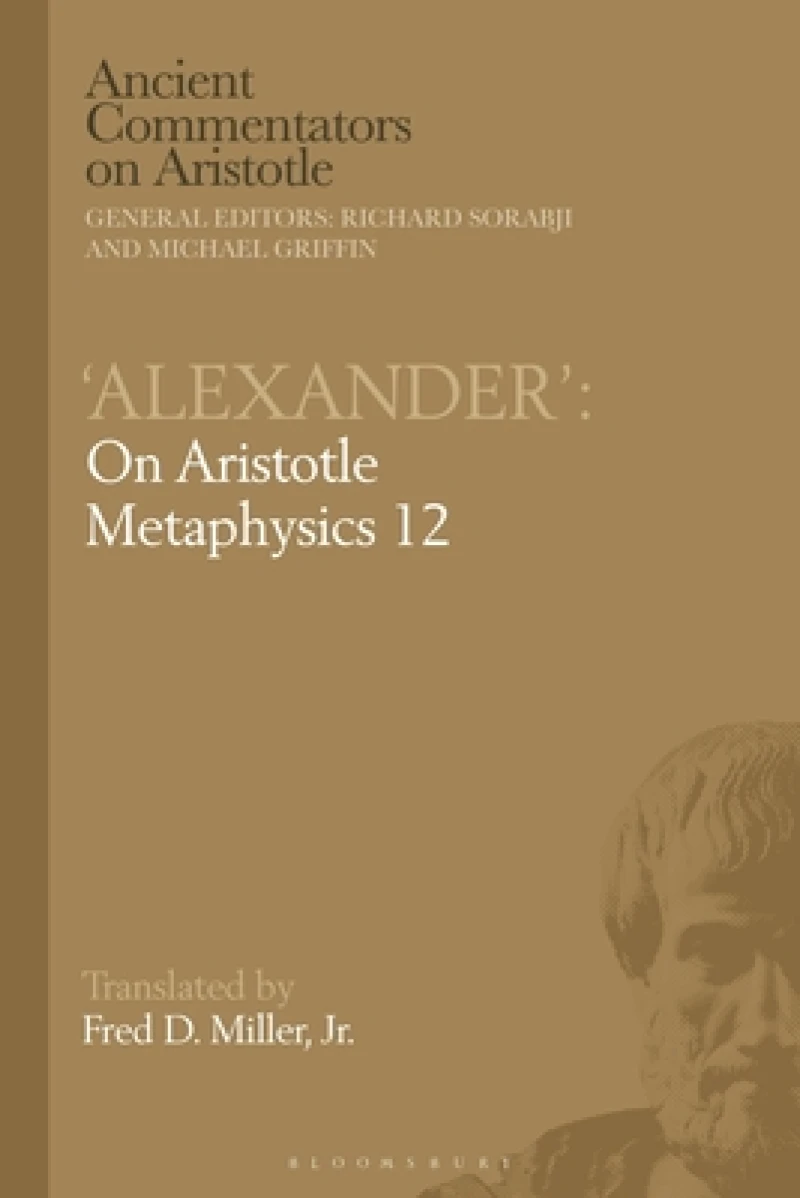
'Alexander': On Aristotle Metaphysics 12
Book Details
Format
Paperback / Softback
Book Series
Ancient Commentators on Aristotle
ISBN-10
1350185620
ISBN-13
9781350185623
Publisher
Bloomsbury Publishing PLC
Imprint
Bloomsbury Academic
Country of Manufacture
GB
Country of Publication
GB
Publication Date
Nov 17th, 2022
Print length
272 Pages
Weight
426 grams
Dimensions
15.40 x 23.40 x 1.80 cms
Product Classification:
Classical textsWestern philosophy: Ancient, to c 500Philosophy: metaphysics & ontology
Ksh 6,600.00
Manufactured on Demand
0 in stock
Delivery Location
Delivery fee: Select location
Secure
Quality
Fast
This volume presents a commentary on Aristotle’s Metaphysics Book 12 by pseudo-Alexander in a new translation accompanied by explanatory notes, introduction and indexes. Fred D. Miller, Jr. argues that the author of the commentary is in fact not Alexander of Aphrodisias, Aristotle’s distant successor in early 3rd century CE Athens and his leading defender and interpreter, but Michael of Ephesus from Constantinople as late as the 12th century CE. Robert Browning had earlier made the case that Michael was enlisted by Princess Anna Comnena in a project to restore and complete the ancient Greek commentaries on Aristotle, including those of Alexander; he did so by incorporating available ancient commentaries into commentaries of his own. Metaphysics Book 12 posits a god as the supreme cause of motion in the cosmic system Aristotle had elaborated elsewhere as having the earth at the centre. The fixed stars are whirled around it on an outer sphere, the sun, moon and recognised planets on interior spheres, but with counteracting spheres to make the motions of each independent of the motions of others and of the fixed stars, thus yielding a total of 55 spheres. Motion is transmitted from a divine unmoved mover through divine moved movers which move the celestial spheres, and on to the perishable realms. Chapters 1 to 5 describe the principles and causes of the perishable substances nearer the centre of the universe, while Chapters 6 to 10 seek to prove the existence and attributes of the celestial substances beyond.
This volume presents a commentary on Aristotle’s Metaphysics Book 12 by pseudo-Alexander in a new translation accompanied by explanatory notes, introduction and indexes. Fred D. Miller, Jr. argues that the author of the commentary is in fact not Alexander of Aphrodisias, Aristotle’s distant successor in early 3rd century CE Athens and his leading defender and interpreter, but Michael of Ephesus from Constantinople as late as the 12th century CE. Robert Browning had earlier made the case that Michael was enlisted by Princess Anna Comnena in a project to restore and complete the ancient Greek commentaries on Aristotle, including those of Alexander; he did so by incorporating available ancient commentaries into commentaries of his own. Metaphysics Book 12 posits a god as the supreme cause of motion in the cosmic system Aristotle had elaborated elsewhere as having the earth at the centre. The fixed stars are whirled around it on an outer sphere, the sun, moon and recognised planets on interior spheres, but with counteracting spheres to make the motions of each independent of the motions of others and of the fixed stars, thus yielding a total of 55 spheres. Motion is transmitted from a divine unmoved mover through divine moved movers which move the celestial spheres, and on to the perishable realms. Chapters 1 to 5 describe the principles and causes of the perishable substances nearer the centre of the universe, while Chapters 6 to 10 seek to prove the existence and attributes of the celestial substances beyond.
Get 'Alexander': On Aristotle Metaphysics 12 by at the best price and quality guaranteed only at Werezi Africa's largest book ecommerce store. The book was published by Bloomsbury Publishing PLC and it has pages.

