
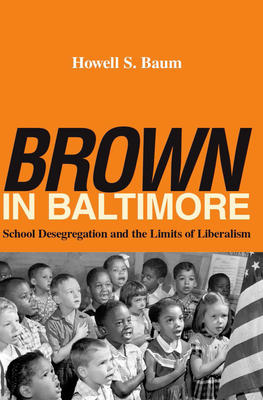
"Brown" in Baltimore : School Desegregation and the Limits of Liberalism
Book Details
Delivery Location
Delivery fee: Select location
In the first book to present the history of Baltimore school desegregation, Howell S. Baum shows how good intentions got stuck on what Gunnar Myrdal called the "American Dilemma." Immediately after the 1954 Brown v. Board of Education decision, the city''s liberal school board voted to desegregate and adopted a free choice policy that made integration voluntary. Baltimore''s school desegregation proceeded peacefully, without the resistance or violence that occurred elsewhere. However, few whites chose to attend school with blacks, and after a few years of modest desegregation, schools resegregated and became increasingly segregated. The school board never changed its policy. Black leaders had urged the board to adopt free choice and, despite the limited desegregation, continued to support the policy and never sued the board to do anything else.
Baum finds that American liberalism is the key to explaining how this happened. Myrdal observed that many whites believed in equality in the abstract but considered blacks inferior and treated them unequally. School officials were classical liberals who saw the world in terms of individuals, not races. They adopted a desegregation policy that explicitly ignored students'' race and asserted that all students were equal in freedom to choose schools, while their policy let whites who disliked blacks avoid integration. School officials'' liberal thinking hindered them from understanding or talking about the city''s history of racial segregation, continuing barriers to desegregation, and realistic change strategies. From the classroom to city hall, Baum examines how Baltimore''s distinct identity as a border city between North and South shaped local conversations about the national conflict over race and equality. The city''s history of wrestling with the legacy of Brown reveals Americans'' preferred way of dealing with racial issues: not talking about race. This avoidance, Baum concludes, allows segregation to continue.
Get "Brown" in Baltimore by Howell S. Baum at the best price and quality guaranteed only at Werezi Africa's largest book ecommerce store. The book was published by Cornell University Press and it has 296 pages.
Customers Who Bought This Also Bought

A Guide to the Diploma in Teaching and Related Qualifications
KSh 4,450.00
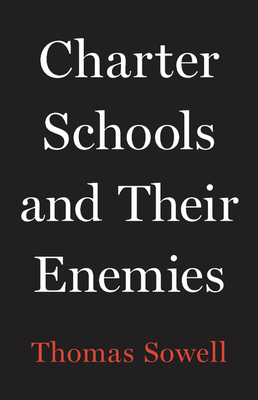
Charter Schools and Their Enemies
KSh 4,500.00
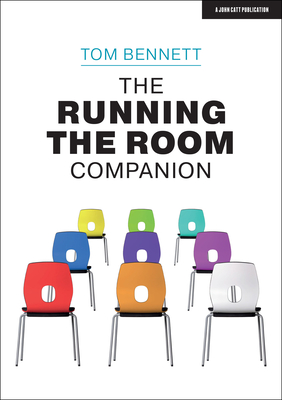
Running the Room Companion: Issues in classroom management and strategies to deal with them
KSh 2,500.00
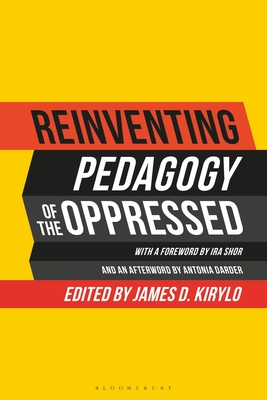
Reinventing Pedagogy of the Oppressed
KSh 4,850.00
Insiders, Outliers
KSh 3,950.00
The Theatre Artist''s Guide to Consent-Based Pedagogy
KSh 7,200.00
Career
KSh 4,950.00
Demoralization of Teachers
KSh 15,450.00
How Children Succeed
KSh 3,400.00
Act Now
KSh 2,050.00
Helping Children Succeed
KSh 3,050.00

Thinking Teacher: How to transform your mindset and your teaching
KSh 3,300.00
More in This Genre
A Guide to the Diploma in Teaching and Related Qualifications
KSh 4,450.00
Charter Schools and Their Enemies
KSh 4,500.00
Running the Room Companion: Issues in classroom management and strategies to deal with them
KSh 2,500.00
Reinventing Pedagogy of the Oppressed
KSh 4,850.00
Insiders, Outliers
KSh 3,950.00
The Theatre Artist''s Guide to Consent-Based Pedagogy
KSh 7,200.00
