
Cart 0
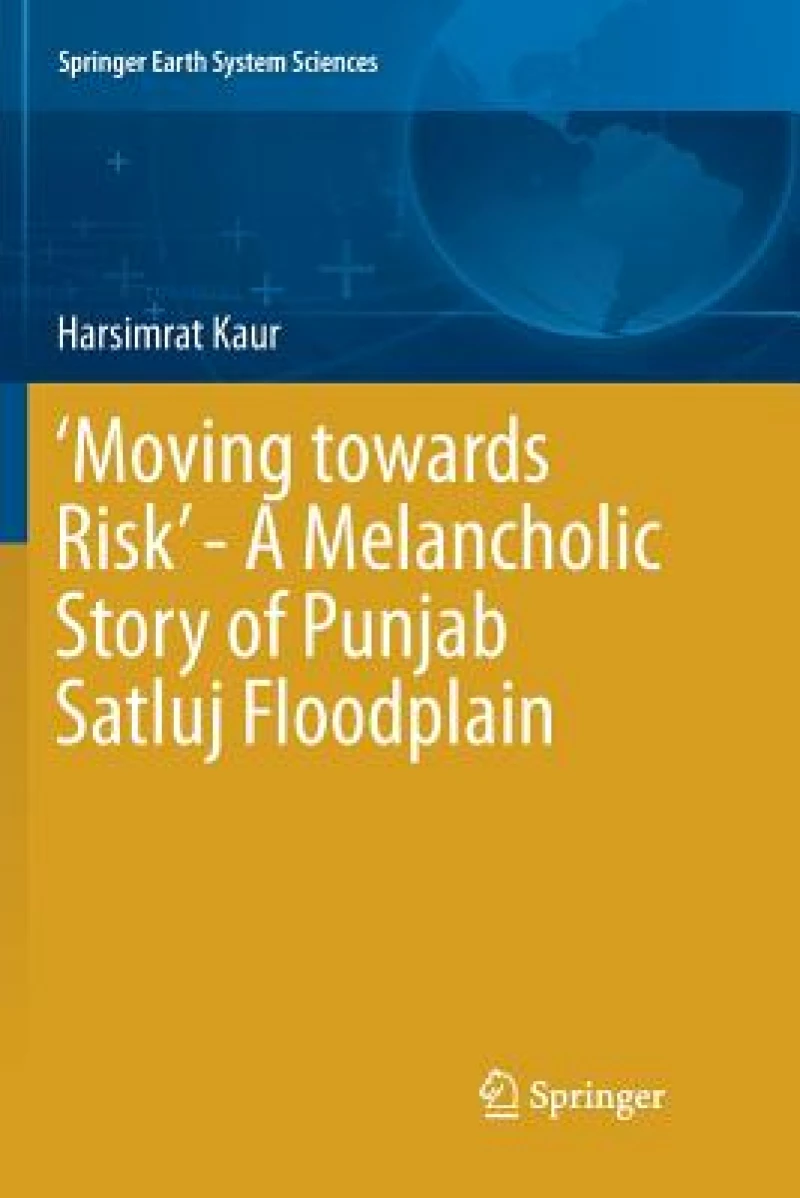
‘Moving towards Risk’ - A Melancholic Story of Punjab Satluj Floodplain
Click to zoom

Share this book

‘Moving towards Risk’ - A Melancholic Story of Punjab Satluj Floodplain

Softcover Reprint of the Original 1st 2019 ed.

Book Details

Format Paperback / Softback
ISBN-10 3030070123
ISBN-13 9783030070120
Edition Softcover Reprint of the Original 1st 2019 ed.
Publisher Springer Nature Switzerland AG
Imprint Springer Nature Switzerland AG
Country of Manufacture GB
Country of Publication GB
Publication Date Jan 19th, 2019
Print length 139 Pages
Ksh 16,200.00
Werezi Extended Catalogue Delivery in 28 days

Delivery Location

Delivery fee: Select location

Delivery in 28 days

Secure
Quality
Fast
This book explains the tragic tale of the Satluj floodplain since its inception. As a landscape this floodplain entity evolves and sets a niche to distinctive natural and cultural aspects. The historical reconstruction of the landscape transformation depicts the excessive human encroachment and development activities which leads to more than fifty percent of landscape transformation. Data set layers were generated in a geospatial environment, with the use of multiscale and multitemporal satellite imageries, empirical field verification, and ancillary data input. An integrated landscape model was hence formed in order to identify the causal links between natural and cultural aspects. The author shows a landscape transformation  matrix and change detection maps to explain the spatial trends and patterns of land use and  land cover change. Pixel wise land use and land cover gain-loss algorithm were identified and measured for a selected time period.  Changing spatial pattern of land cover to land use ratio are explained with underlying local to regional level causes. The author thoroughly explains the satellite image interpretation and related  methodology. This book provides the detailed transition journey of landscape conversion from resource rich natural entity to a human dominated ‘hazardscape’. It also explains how the expansion of population and related activities in the close vicinity of an active floodplain accentuates the problem of flood risks and how it affects the human and livestock life and creates economic loss. The author maps and explains the vector and magnitude of increased  human pressure on the landscape and its adverse ecological implications, and describes issues with reference to the hazard status of the Punjab Satluj floodplain, including increased flood risk, increased pressure on agricultural land and depletion of resources, loss of biodiversity, qualitative and quantitative loss to surface and sub-surface water, and soil degradation (soil erosion, waterlogging and soil loss). Recommendations are provided with a detailed provision of potential applications with the underlying agenda of further conversion of this ecologically highly vulnerable flood prone ‘hazardscape’ to a Green Habitat. This book consist of two major themes: land use/land cover change and floodplain. The author answers all the geographical questions (what, where, when, why and how) related with both themes and provides an outlook to potential future prospects. The book is targeted at stakeholders, students, researchers and policy makers to optimize their interest and to guide them towards a positive charge in sustainable resource management through suitable and  best possible sustainable utilization of landscape.

This book explains the tragic tale of the Satluj floodplain since its inception. As a landscape this floodplain entity evolves and sets a niche to distinctive natural and cultural aspects. The historical reconstruction of the landscape transformation depicts the excessive human encroachment and development activities which leads to more than fifty percent of landscape transformation. Data set layers were generated in a geospatial environment, with the use of multiscale and multitemporal satellite imageries, empirical field verification, and ancillary data input. An integrated landscape model was hence formed in order to identify the causal links between natural and cultural aspects.

The author shows a landscape transformation  matrix and change detection maps to explain the spatial trends and patterns of land use and  land cover change. Pixel wise land use and land cover gain-loss algorithm were identified and measured for a selected time period.  Changing spatial pattern of land cover to land use ratio are explained with underlying local to regional level causes. The author thoroughly explains the satellite image interpretation and related  methodology.

This book provides the detailed transition journey of landscape conversion from resource rich natural entity to a human dominated ''hazardscape''. It also explains how the expansion of population and related activities in the close vicinity of an active floodplain accentuates the problem of flood risks and how it affects the human and livestock life and creates economic loss. The author maps and explains the vector and magnitude of increased  human pressure on the landscape and its adverse ecological implications, and describes issues with reference to the hazard status of the Punjab Satluj floodplain, including increased flood risk, increased pressure on agricultural land and depletion of resources, loss of biodiversity, qualitative and quantitative loss to surface and sub-surface water, and soil degradation (soil erosion, waterlogging and soil loss).

Recommendations are provided with a detailed provision of potential applications with the underlying agenda of further conversion of this ecologically highly vulnerable flood prone ''hazardscape'' to a Green Habitat.

This book consist of two major themes: land use/land cover change and floodplain. The author answers all the geographical questions (what, where, when, why and how) related with both themes and provides an outlook to potential future prospects. The book is targeted at stakeholders, students, researchers and policy makers to optimize their interest and to guide them towards a positive charge in sustainable resource management through suitable and  best possible sustainable utilization of landscape.


Get ‘Moving towards Risk’ - A Melancholic Story of Punjab Satluj Floodplain by at the best price and quality guaranteed only at Werezi Africa's largest book ecommerce store. The book was published by Springer Nature Switzerland AG and it has pages.


Mind, Body, & Spirit

Price

Ksh 16,200.00

Shopping Cart

Africa largest book store

Sub Total:
Ebooks

Digital Library
Coming Soon

Our digital collection is currently being curated to ensure the best possible reading experience on Werezi. We'll be launching our Ebooks platform shortly.