
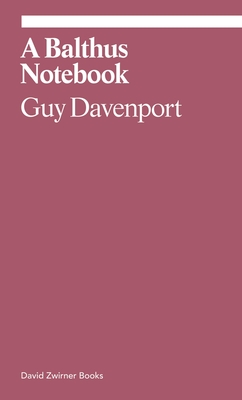
A Balthus Notebook
Book Details
Format
Paperback / softback
Book Series
Ekphrasis
ISBN-10
1644230321
ISBN-13
9781644230329
Publisher
David Zwirner
Imprint
David Zwirner
Country of Manufacture
US
Country of Publication
GB
Publication Date
Jul 2nd, 2020
Print length
112 Pages
Weight
102 grams
Dimensions
10.70 x 17.60 x 1.30 cms
KSh 1,600.00
Currently unavailable
0 in stock
Delivery Location
Delivery fee: Select location
Secure
Quality
Fast
In his 1989 book on Balthus—the storied and controversial artist who worked in Paris throughout the twentieth century—Guy Davenport gives one of the most nuanced, literary, and compelling readings of the work of this master. Reading it today highlights the change in perspectives on sexuality and nudity in art in the past thirty years.
Written over several years in his notebooks, Davenport’s distinct reflections on Balthus’s paintings try to explain why his work is so radical, and why it has so often come under scrutiny for its depiction of girls and women. Davenport throws the lens back on the viewer and asks: is it us or Balthus who reads sexuality into these paintings? For Davenport, the answer is clear: Balthus may indeed show us periods in adolescent development that are uncomfortable to view, but the eroticization exists primarily on the part of the viewer.
Arguing that Balthus’s figures are erotic only if we make them so, and that their innocence is more present than anything pornographic in them, Davenport posits that the paintings hold up a mirror to our own perversities and force us, difficultly, to confront them. He writes, “The nearer an artist works to the erotic politics of his own culture, the more he gets its concerned attention. Gauguin’s naked Polynesian girls, brown and remote, escape the scandal of Balthus’s, although a Martian observer would not see the distinction.” Davenport’s critique helps us understand Balthus in our times—something we need more than ever as we crucially confront sexual politics in visual art.
Written over several years in his notebooks, Davenport’s distinct reflections on Balthus’s paintings try to explain why his work is so radical, and why it has so often come under scrutiny for its depiction of girls and women. Davenport throws the lens back on the viewer and asks: is it us or Balthus who reads sexuality into these paintings? For Davenport, the answer is clear: Balthus may indeed show us periods in adolescent development that are uncomfortable to view, but the eroticization exists primarily on the part of the viewer.
Arguing that Balthus’s figures are erotic only if we make them so, and that their innocence is more present than anything pornographic in them, Davenport posits that the paintings hold up a mirror to our own perversities and force us, difficultly, to confront them. He writes, “The nearer an artist works to the erotic politics of his own culture, the more he gets its concerned attention. Gauguin’s naked Polynesian girls, brown and remote, escape the scandal of Balthus’s, although a Martian observer would not see the distinction.” Davenport’s critique helps us understand Balthus in our times—something we need more than ever as we crucially confront sexual politics in visual art.
Get A Balthus Notebook by Guy Davenport, Judith Thurman at the best price and quality guaranteed only at Werezi Africa's largest book ecommerce store. The book was published by David Zwirner and it has 112 pages.
Customers Who Bought This Also Bought
Van Gogh
KSh 10,750.00

Kahlo
KSh 1,800.00
Michelangelo
KSh 15,850.00

Frida Kahlo
KSh 5,400.00

Michelangelo
KSh 5,950.00

Caravaggio
KSh 3,250.00

Life, Letters, and Poetry
KSh 2,000.00

The Book of Emma Reyes
KSh 2,000.00
Jean-Michel Basquiat
KSh 5,650.00
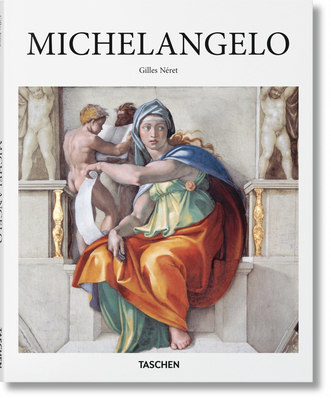
Michelangelo
KSh 3,250.00

Artists Who Changed History
KSh 5,900.00

Basquiat
KSh 3,250.00
More by Guy Davenport, Judith Thurman

The Conversions of Edward Gibbon
KSh 5,050.00
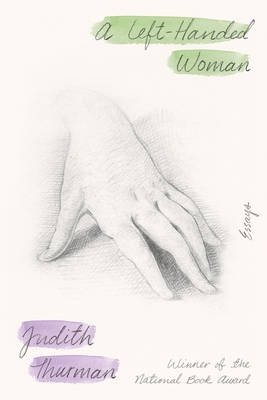
A Left-Handed Woman
KSh 5,750.00

The Cardiff Team: Ten Stories
KSh 2,350.00

Everything Is Alive
KSh 12,800.00

The Geography of the Imagination
KSh 3,250.00
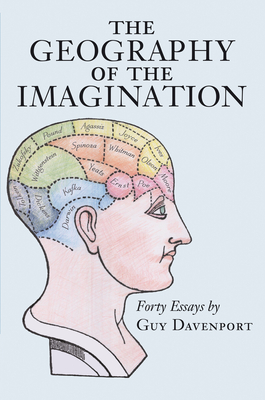
The Geography of the Imagination
KSh 2,950.00
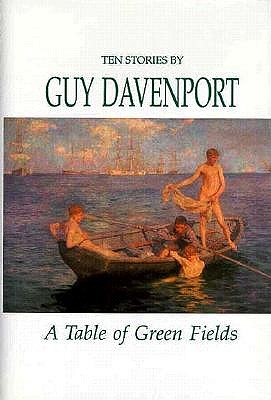
A Table of Green Fields – Stories
KSh 3,600.00

A Life of Colette
KSh 3,150.00

A Left-Handed Woman
KSh 3,600.00
