
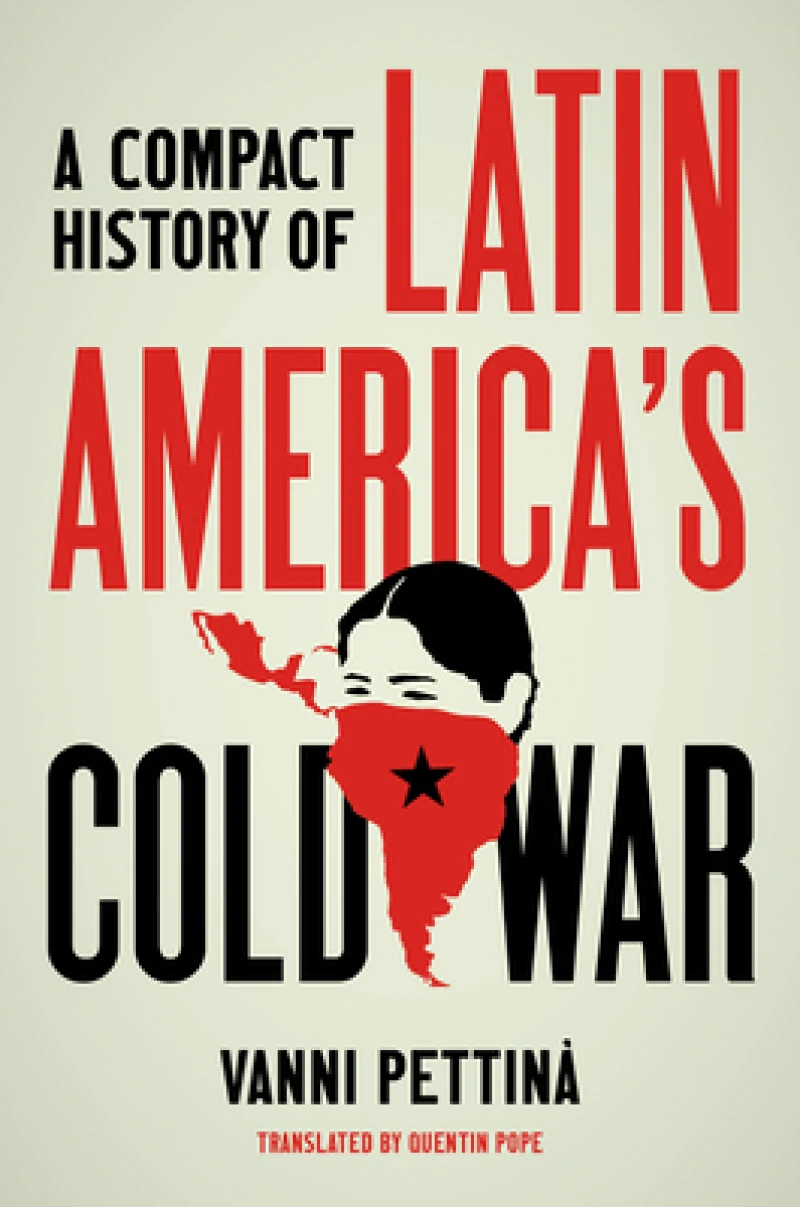
A Compact History of Latin America''s Cold War
Book Details
Format
Paperback / Softback
ISBN-10
1469669765
ISBN-13
9781469669762
Publisher
The University of North Carolina Press
Imprint
The University of North Carolina Press
Country of Manufacture
GB
Country of Publication
GB
Publication Date
Oct 18th, 2022
Print length
218 Pages
Weight
332 grams
Dimensions
15.50 x 23.60 x 1.60 cms
Ksh 3,800.00
Werezi Extended Catalogue
0 in stock
Delivery Location
Delivery fee: Select location
Secure
Quality
Fast
While not commonly centred in the Cold War story, Latin America was intensely affected by that historic conflict. In this book, Vanni Pettina makes sense of the region’s diverse, complex political experiences of the Cold War era.
While not commonly centered in the Cold War story, Latin America was intensely affected by that historic conflict. In this book, available for the first time in English, Vanni Pettina makes sense of the region's diverse, complex political experiences of the Cold War era. Cross-fertilized by Latin American and Anglophone historiography, his account shifts from an overemphasis on U.S. interventions toward a comprehensive Latin American perspective. Connecting Cold War events to the region's political polarizations, revolutionary mobilizations, draconian state repression, and brutal violence in almost every sphere, Pettina demonstrates that Latin America's Cold War was rarely cold.
In the midst of the tumult, some countries showed resilience and capacity to bend the disruptive dynamics to their advantage. Mexico, for example, drew on a mix of nationalism and anticommunism, aided by the United States, to achieve strong economic growth and political stability. Cuba, in contrast, used Soviet protection to shield its revolution from the United States and to strengthen its capacity to project power in Latin America and beyond. Interweaving global and local developments along an insightful analytical frame, Pettina reveals the distinct consequences of the Cold War in the Western Hemisphere.
In the midst of the tumult, some countries showed resilience and capacity to bend the disruptive dynamics to their advantage. Mexico, for example, drew on a mix of nationalism and anticommunism, aided by the United States, to achieve strong economic growth and political stability. Cuba, in contrast, used Soviet protection to shield its revolution from the United States and to strengthen its capacity to project power in Latin America and beyond. Interweaving global and local developments along an insightful analytical frame, Pettina reveals the distinct consequences of the Cold War in the Western Hemisphere.
Get A Compact History of Latin America''s Cold War by at the best price and quality guaranteed only at Werezi Africa's largest book ecommerce store. The book was published by The University of North Carolina Press and it has pages.

