

A Database for a Changing Economy : Review of the Occupational Information Network (O*NET)
Book Details
Delivery Location
Delivery fee: Select location
Information about the characteristics of jobs and the individuals who fill them is valuable for career guidance, reemployment counseling, workforce development, human resource management, and other purposes. To meet these needs, the U.S. Department of Labor (DOL) in 1998 launched the Occupational Information Network (O*NET), which consists of a content model—a framework for organizing occupational data—and an electronic database. The O*NET content model includes hundreds of descriptors of work and workers organized into domains, such as skills, knowledge, and work activities. Data are collected using a classification system that organizes job titles into 1,102 occupations.
The National Center for O*NET Development (the O*NET Center) continually collects data related to these occupations. In 2008, DOL requested the National Academies to review O*NET and consider its future directions. In response, the present volume inventories and evaluates the uses of O*NET; explores the linkage of O*NET with the Standard Occupational Classification System and other data sets; and identifies ways to improve O*NET, particularly in the areas of cost-effectiveness, efficiency, and currency.
Get A Database for a Changing Economy by Committee on National Statistics, Division of Behavioral and Social Sciences and Education at the best price and quality guaranteed only at Werezi Africa's largest book ecommerce store. The book was published by National Academies Press and it has 231 pages.
Customers Who Bought This Also Bought

Finding Your Ethical Research Self
KSh 6,650.00

Island Time
KSh 18,900.00

Fundamental Issues, Measurement and Study Design
KSh 35,100.00

Building a Digital Chemistry Lab
KSh 8,100.00

Data Analysis
KSh 35,100.00

Research Design in Political Science
KSh 6,300.00

Crime Scripting
KSh 7,900.00

Renegade
KSh 30,950.00

Research Design in Political Science
KSh 21,600.00
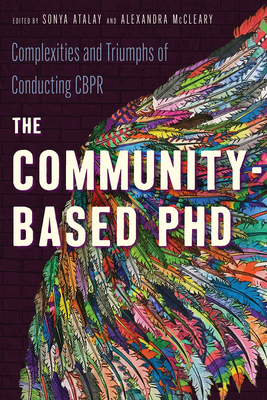
The Community-Based PhD
KSh 5,050.00
Practical Research Methods for Media and Cultural Studies
KSh 6,900.00

Crime Scripting
KSh 30,950.00
More by Committee on National Statistics, Division of Behavioral and Social Sciences and Education

Evaluation of PEPFAR
KSh 13,300.00

Living on an Active Earth
KSh 14,600.00

Calculating the Secrets of Life
KSh 24,650.00

Eager to Learn
KSh 9,550.00

Enhancing Professional Development for Teachers
KSh 7,400.00

Aviation Safety and Pilot Control
KSh 19,600.00

Vision and Voyages for Planetary Science in the Decade 2013-2022
KSh 7,550.00

Discipline-Based Education Research
KSh 6,650.00
Zero-Sustainment Aircraft for the U.S. Air Force
KSh 4,300.00

The Unique U.S.-Russian Relationship in Biological Science and Biotechnology
KSh 7,400.00

Technology Pathways
KSh 7,400.00

Implementing the New Biology
KSh 7,400.00
