
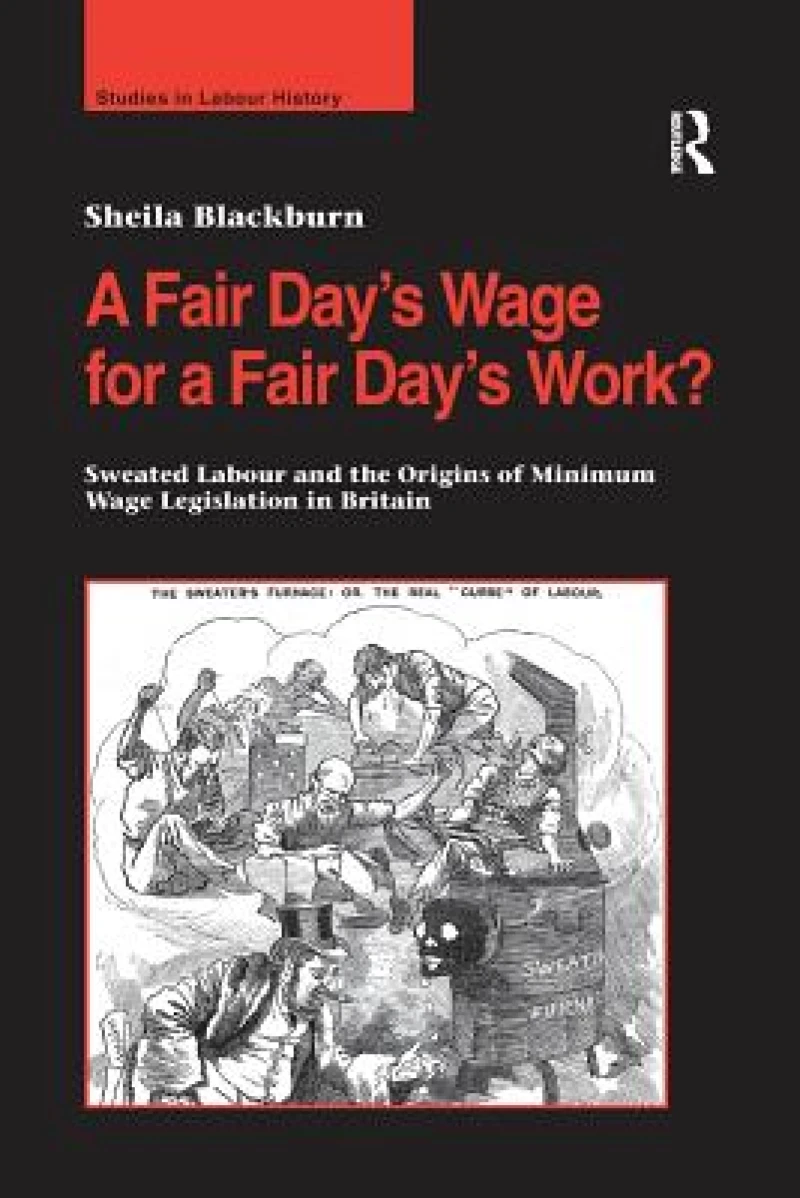
A Fair Day’s Wage for a Fair Day’s Work? : Sweated Labour and the Origins of Minimum Wage Legislation in Britain
Book Details
Format
Paperback / Softback
ISBN-10
1138272485
ISBN-13
9781138272484
Publisher
Taylor & Francis Ltd
Imprint
Routledge
Country of Manufacture
GB
Country of Publication
GB
Publication Date
Oct 28th, 2016
Print length
248 Pages
Weight
453 grams
Product Classification:
HistoryArchaeologyConstitutional & administrative law
Ksh 10,600.00
Werezi Extended Catalogue
0 in stock
Delivery Location
Delivery fee: Select location
Secure
Quality
Fast
Adopting a broad national and long-run approach, this book examines the issue of sweated labour and the legal control of low pay in Britain between 1840 and 1930. It explores the definition of sweated labour and the forces that generate it, as well as tackling the image of the sweated labourer and how it has changed over time. Having focused on these issues, the book then looks at how the problem was dealt with and analyses the success of reforms aimed at eradicating the practice.
The nature of sweating and the origins of low pay legislation are of fundamental social, economic and moral importance. Although difficult to define, sweating, according to a select committee established to investigate the issue, was characterised by long hours, poor working conditions and above all by low pay. By the beginning of the twentieth century the government estimated that up to a third of the British workforce could be classed as sweated labour, and for the first time in a century began to think about introducing legislation to address the problem. Whilst historians have written much on unemployment, poverty relief and other such related social and industrial issues, relatively little work has been done on the causes, extent and character of sweated labour. That work which has been done has tended to focus on the tailoring trades in London and Leeds, and fails to give a broad overview of the phenomenon and how it developed and changed over time. In contrast, this volume adopts a broad national and long-run approach, providing a more holistic understanding of the subject. Rejecting the argument that sweating was merely a London or gender related problem, it paints a picture of a widespread and constantly shifting pattern of sweated labour across the country, that was to eventually persuade the government to introduce legislation in the form of the 1909 Trades Board Act. It was this act, intended to combat sweated labour, which was to form the cornerstone of low pay legislation, and the barrier to the introduction of a minimum wage, for the next 90 years.
Get A Fair Day’s Wage for a Fair Day’s Work? by at the best price and quality guaranteed only at Werezi Africa's largest book ecommerce store. The book was published by Taylor & Francis Ltd and it has pages.

