
Search

Categories

    • categories-img Jacket, Women
    • categories-img Woolend Jacket
    • categories-img Western denim
    • categories-img Mini Dresss
    • categories-img Jacket, Women
    • categories-img Woolend Jacket
    • categories-img Western denim
    • categories-img Mini Dresss
    • categories-img Jacket, Women
    • categories-img Woolend Jacket
    • categories-img Western denim
    • categories-img Mini Dresss
    • categories-img Jacket, Women
    • categories-img Woolend Jacket
    • categories-img Western denim
    • categories-img Mini Dresss
    • categories-img Jacket, Women
    • categories-img Woolend Jacket
    • categories-img Western denim
    • categories-img Mini Dresss

Filter By Price

$
-
$

Dietary Needs

Top Rated Product

product-img product-img

Modern Chair

$165.00
product-img product-img

Plastic Chair

$165.00
product-img product-img

Design Rooms

$165.00

Brands

  • Wooden
  • Chair
  • Modern
  • Fabric
  • Shoulder
  • Winter
  • Accessories
  • Dress

Welcome and thank you for visiting us. For any query call us on 0799 626 359 or Email [email protected]

Offcanvas Menu Open

Shopping Cart

Africa largest book store

Sub Total:

Search for any Title

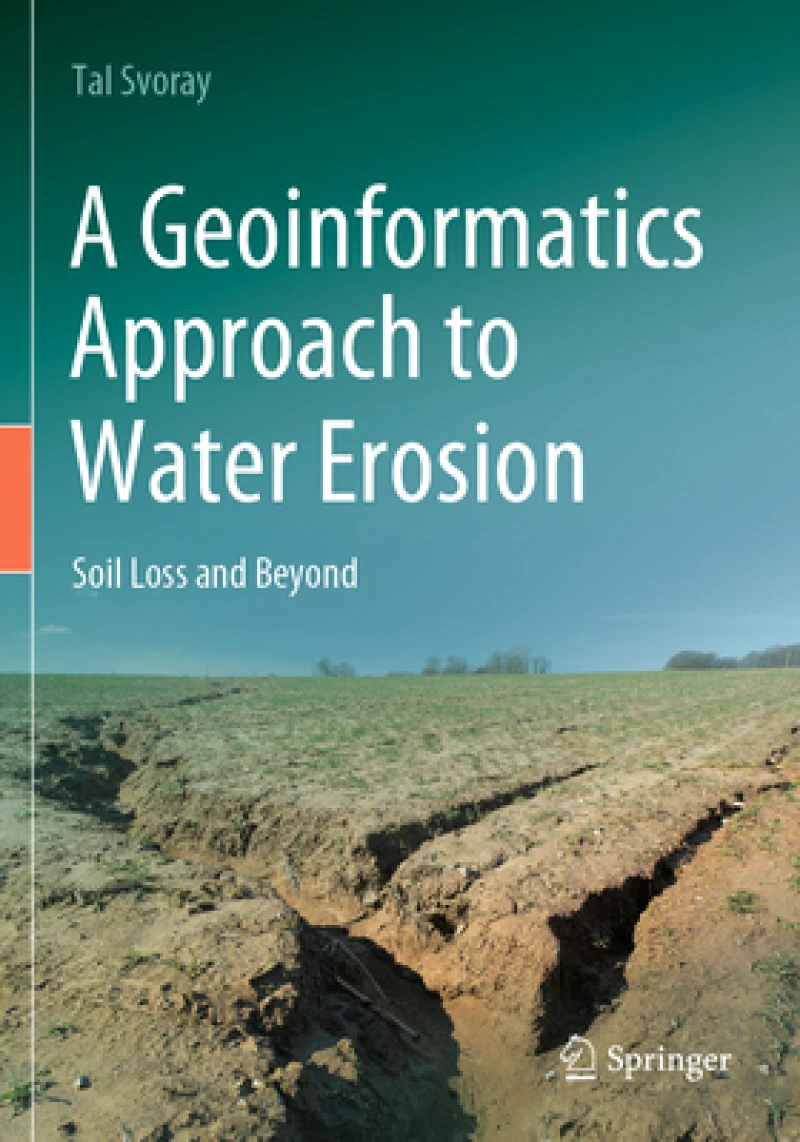
A Geoinformatics Approach to Water Erosion : Soil Loss and Beyond - 2022 ed.

By: (Author) Tal Svoray

Werezi Extended Catalogue
Delivery in 34 days

Ksh 19,800.00

Format: Paperback / Softback

ISBN-10: 3030915387

ISBN-13: 9783030915384

Edition: 2022 ed.

Publisher: Springer Nature Switzerland AG

Imprint: Springer Nature Switzerland AG

Country of Manufacture: GB

Country of Publication: GB

Publication Date: Feb 19th, 2023

Print length: 349 Pages

Choose your Location

Shipping & Delivery

Door Delivery

Delivery fee

Delivery in 34 days

  • Description

  • Reviews

Degradation of agricultural catchments due to water erosion is a major environmental threat at the global scale, with long-lasting destructive consequences valued at tens of billions of dollars per annum. Eroded soils lead to reduced crop yields and deprived agroecosystem’s functioning through, for example, decreased water holding capacity, poor aeration, scarce microbial activity, and loose soil structure. This can result in reduced carbon sequestration, limited nutrient cycling, contamination of water bodies due to eutrophication, low protection from floods and poor attention restoration—consequences that go far beyond the commonly modelled soil loss and deposition budgets. This book demonstrates, using data from the Harod catchment in northern Israel, how cutting-edge geoinformatics, data science methodologies and soil health indicators can be used to measure, predict, and regulate these major environmental hazards. It shows how these approaches are used to quantify—in timeand space—the effect of water erosion not only on the soil layer, soil minerals, and soil loss, but also on the wide-range of services that agricultural ecosystems might supply for the benefit and well-being of humans. The algorithms described in this book play a major role in this paradigm shift and they include, for example, extraction of photogrammetric DEMs from drone's data, advanced drainage structure calculations, fuzzy process-based modelling and spatial topographic threshold computations, multicriteria analyses and expert-based systems development using analytic hierarchal processes, innovative data-mining and machine learning tools, autocorrelation and interpolation of soil health, physically-based soil evolution models, spatial decision support systems and many more.

Degradation of agricultural catchments due to water erosion is a major environmental threat at the global scale, with long-lasting destructive consequences valued at tens of billions of dollars per annum. Eroded soils lead to reduced crop yields and deprived agroecosystem''s functioning through, for example, decreased water holding capacity, poor aeration, scarce microbial activity, and loose soil structure. This can result in reduced carbon sequestration, limited nutrient cycling, contamination of water bodies due to eutrophication, low protection from floods and poor attention restoration-consequences that go far beyond the commonly modelled soil loss and deposition budgets.

This book demonstrates, using data from the Harod catchment in northern Israel, how cutting-edge geoinformatics, data science methodologies and soil health indicators can be used to measure, predict, and regulate these major environmental hazards. It shows how these approaches are used to quantify-in time and space-the effect of water erosion not only on the soil layer, soil minerals, and soil loss, but also on the wide-range of services that agricultural ecosystems might supply for the benefit and well-being of humans. The algorithms described in this book play a major role in this paradigm shift and they include, for example, extraction of photogrammetric DEMs from drone''s data, advanced drainage structure calculations, fuzzy process-based modelling and spatial topographic threshold computations, multicriteria analyses and expert-based systems development using analytic hierarchal processes, innovative data-mining and machine learning tools, autocorrelation and interpolation of soil health, physically-based soil evolution models, spatial decision support systems and many more.


Get A Geoinformatics Approach to Water Erosion by at the best price and quality guranteed only at Werezi Africa largest book ecommerce store. The book was published by Springer Nature Switzerland AG and it has pages. Enjoy Shopping Best Offers & Deals on books Online from Werezi - Receive at your doorstep - Fast Delivery - Secure mode of Payment

Customer Reviews

Based on 0 reviews

Mind, Body, & Spirit
