
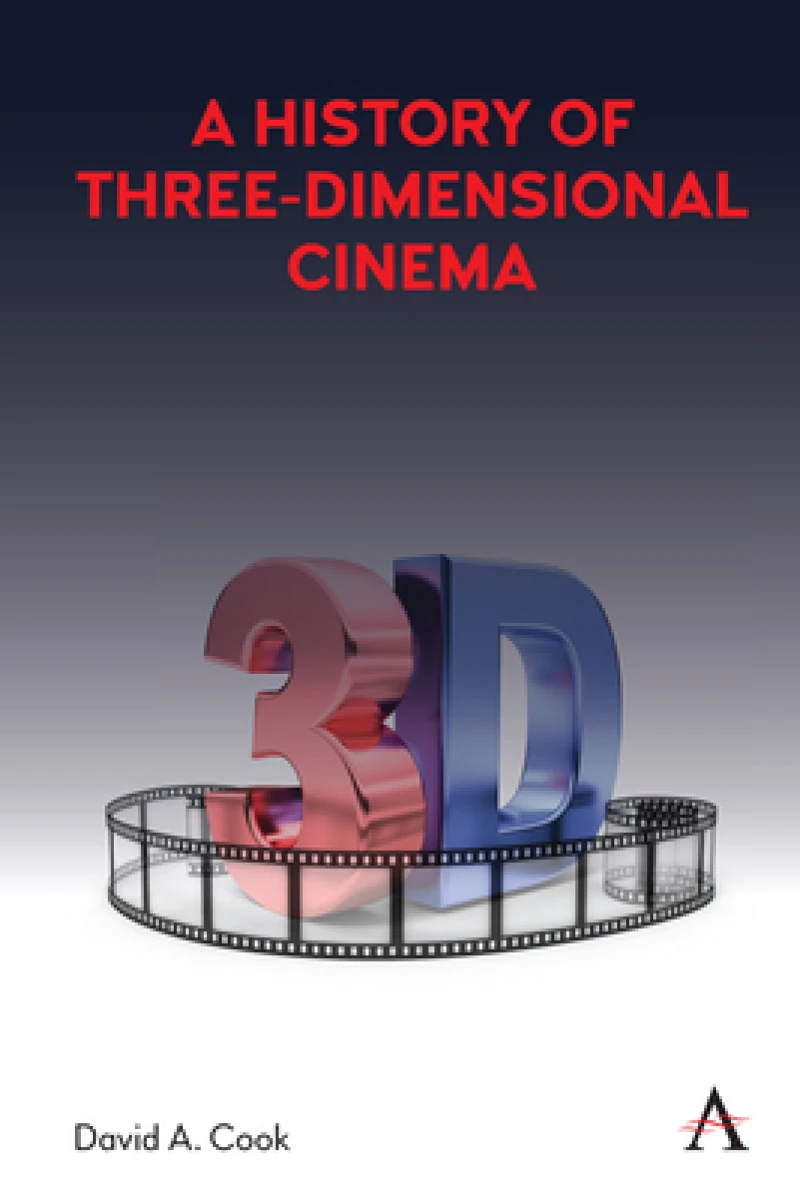
A History of Three-Dimensional Cinema
Book Details
Delivery Location
Delivery fee: Select location
A History of Three-Dimensional Cinema chronicles 3-D cinema as a single, continuous and coherent medium, proceeding from 19th-century experiments in stereoscopic photography and lantern projection (18391892) to stereoscopic cinemas long novelty period (18931952). It proceeds to examine the first Hollywood boom in anaglyphic stereo (19531955), when the mainstream industry produced 69 features in 3-D, mostly action films that could exploit the depth illusion, but also a handful of big-budget filmsfor example, Kiss Me Kate (George Sidney, 1953) and Dial M for Murder (Alfred Hitchcock, 1954)until audiences tired of the process; the anaglyphic revival of 19701985, when 3-D was sustained as a novelty feature in sensational genres like soft-core pornography and horror; the age of IMAX 3-D (19862008); the current era of digital 3-D cinema, which began in 2009 when James Camerons Avatar became the highest-grossing feature of all time and the studios once again stampeded into 3-D production; and finally the future promise of Virtual Reality.
In human binocular vision, the lenses of our eyes project two slightly different images onto the retinas and our brain calculates the difference between them as actual depth. Stereoscopy replicates this process by providing left-eye views and right-eye views (stereo pairs) of the same picture at slightly different angles which, when viewed simultaneously, create the illusion of depth (stereopsis). In 1844 Sir David Brewster invented a handheld apparatus for viewing stereoscopic photographs through a system of prismatic lenses, with the stereo pairs mounted on a single card. During the 1870s, a popular theatrical entertainment involved the projection of duo-color coded slides onto a large screen to be viewed through glasses with corresponding left and right colored cells to produce a stereoscopic illusion, known as anaglyphic 3-D.
With the development of motion pictures, it was natural that pioneers like William Friese-Green and the Lumiere brothers would experiment with anaglyphic systems, since the photographic principle was the same. But commercial exploitation of the process awaited 1952, when independent producer Arch Oboler released Bwana Devil, a low-budget Anscocolor feature whose phenomenal box-office success catalyzed a short, industry-wide conversion to 3-D. Between 1953 and 1954, Hollywood produced 69 features in 3-D, mostly action films that could exploit the depth illusion, such as Westerns, science fiction, and horror filmsall of them shot in some version of Obolers Natural Vision. With some modification, such as the introduction of twin-lens cameras and projectors, this was the process used for nearly all the 3-D films made between 1953 and 2009, when James Camerons Avatar became the highest-grossing feature of all time and the studios once again stampeded into 3-D production, this time in the more perceptually satisfying (and, ultimately, cost-effective) digital form.
While all 3-D systems fool our brains into believing that something is either closer or farther away than it actually is, older systems tended to represent depth as a series of dimensionally flat planes like an eighteenth-century peep show, whereas digital systems add the effect of volumetric figures occupying real space, creating a kind of aesthetics of immersion. Yet the ultimate technology for seeing things in three dimensions is Virtual Reality (VR), which uses a hybrid of advanced modern technologyLidar scanners, hyper-accelerated graphic cards, etc.and the stereoscopic illusion first quantified in the nineteenth century to create a state of sensory immersion that borders on otherness. Finding a way to mass-market the VR experience as a form of popular cinema, rather than as an enhanced form of video game, has become the new grail of the film industry.
Get A History of Three-Dimensional Cinema by at the best price and quality guaranteed only at Werezi Africa's largest book ecommerce store. The book was published by Anthem Press and it has pages.

