
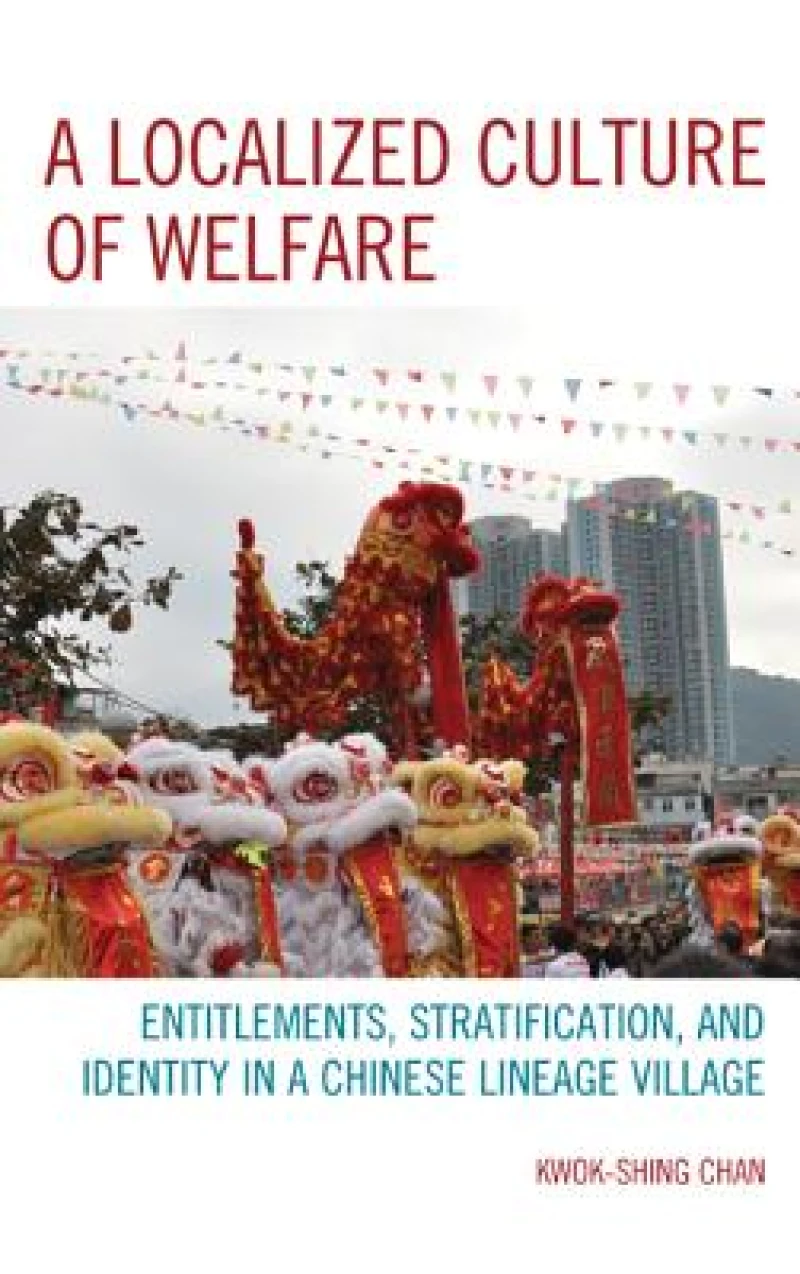
A Localized Culture of Welfare : Entitlements, Stratification, and Identity in a Chinese Lineage Village
Book Details
Format
Hardback or Cased Book
Book Series
AsiaWorld
ISBN-10
0739166875
ISBN-13
9780739166871
Publisher
Bloomsbury Publishing Plc
Imprint
Lexington Books
Country of Manufacture
GB
Country of Publication
GB
Publication Date
Oct 25th, 2012
Print length
236 Pages
Weight
522 grams
Dimensions
23.70 x 15.70 x 2.10 cms
Product Classification:
Social & cultural anthropology, ethnographySocial welfare & social services
Ksh 19,400.00
Manufactured on Demand
0 in stock
Delivery Location
Delivery fee: Select location
Secure
Quality
Fast
Hong Kong has undergone rapid and substantial social, economic, political and demographic changes since the 1970s. This book examines critically the real impact of these changes on a single surname village in rural Hong Kong. It draws on anthropological fieldwork conducted during the late 1990s and the early 2000s. This ethnographic study demonstrates that kinship, particularly agnatic kinship, has remained a valuable resource for Pang villagers, enabling them to acquire key welfare entitlements, and to secure a good measure of economic and social well-being. Kinship affiliation has provided and still provides (admittedly differential) access to political patronage and legal entitlements, financial assistance and the substantial benefits of corporate property-holding, physical protection and political leadership, employment, care-giving and support networks, housing needs, old age security, a ritually-imagined community, with a sense of spiritual well-being. Agnatic kinship has been organized as a corporate institution and as a quasi-religious community through which substantial support, protection, and privileged access is provided for villagers. At the same time, reliance on this elaborate “localized culture of welfare” has maintained or reinforced the contours of stratification and inequality among Pang villagers, even as lineage identity has remained largely intact in the face of changing external circumstances.
Hong Kong has undergone rapid and substantial social, economic, political and demographic changes since the 1970s. This book examines critically the real impact of these changes on a single surname village in rural Hong Kong. It draws on anthropological fieldwork conducted during the late 1990s and the early 2000s. This ethnographic study demonstrates that kinship, particularly agnatic kinship, has remained a valuable resource for Pang villagers, enabling them to acquire key welfare entitlements, and to secure a good measure of economic and social well-being. Kinship affiliation has provided and still provides (admittedly differential) access to political patronage and legal entitlements, financial assistance and the substantial benefits of corporate property-holding, physical protection and political leadership, employment, care-giving and support networks, housing needs, old age security, a ritually-imagined community, with a sense of spiritual well-being. Agnatic kinship has been organized as a corporate institution and as a quasi-religious community through which substantial support, protection, and privileged access is provided for villagers. At the same time, reliance on this elaborate “localized culture of welfare” has maintained or reinforced the contours of stratification and inequality among Pang villagers, even as lineage identity has remained largely intact in the face of changing external circumstances.
Get A Localized Culture of Welfare by at the best price and quality guaranteed only at Werezi Africa's largest book ecommerce store. The book was published by Bloomsbury Publishing Plc and it has pages.

