
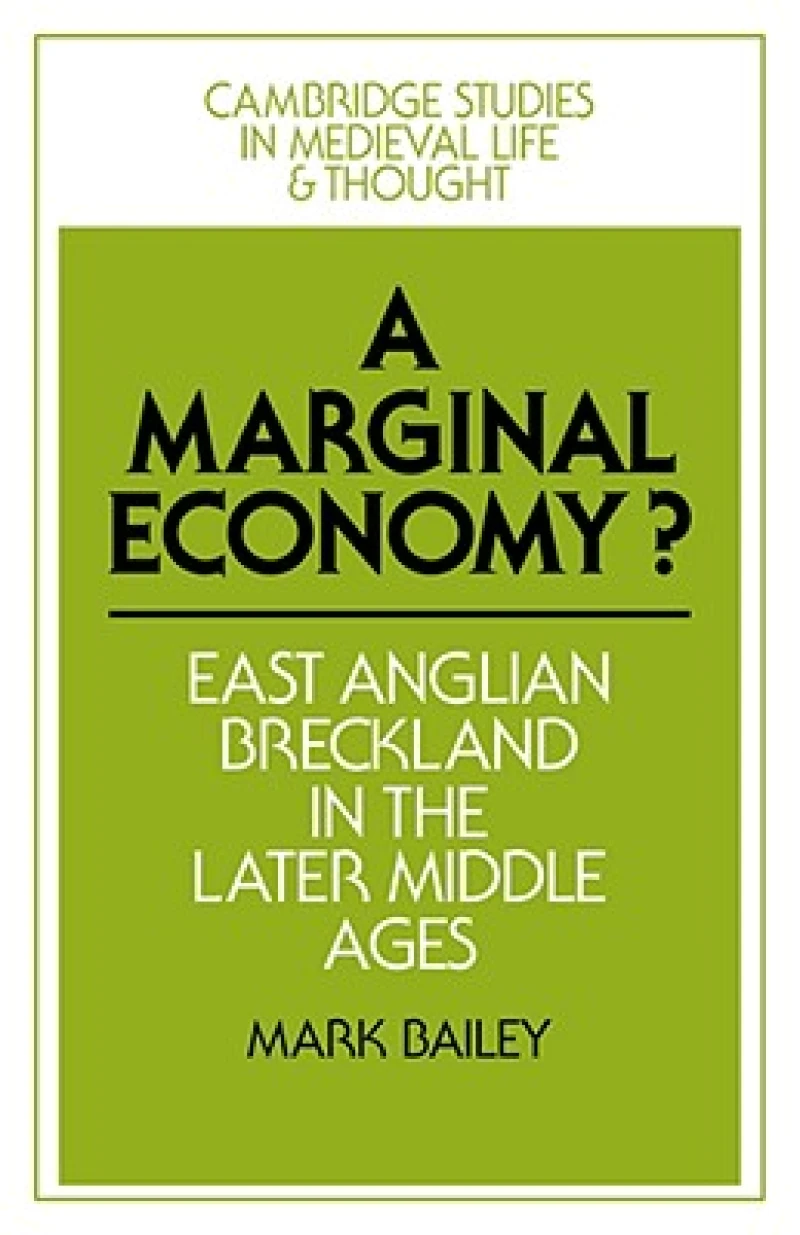
A Marginal Economy? : East Anglian Breckland in the Later Middle Ages
by
Mark Bailey
Book Details
Format
Paperback / Softback
ISBN-10
0521073146
ISBN-13
9780521073141
Publisher
Cambridge University Press
Imprint
Cambridge University Press
Country of Manufacture
GB
Country of Publication
GB
Publication Date
Sep 4th, 2008
Print length
368 Pages
Weight
300 grams
Dimensions
22.40 x 14.40 x 1.80 cms
Ksh 7,900.00
Manufactured on Demand
0 in stock
Delivery Location
Delivery fee: Select location
Secure
Quality
Fast
A theory of the margin has long featured in the work of medieval historians. Marginal regions are taken to be those of poor soil or geographical remoteness, where farmers experienced particular difficulties in grain production. It is argued that such regions were cultivated only when demographic pressure intensified in the thirteenth century.
A theory of the margin has long featured in the work of medieval historians. Marginal regions are taken to be those of poor soil or geographical remoteness, where farmers experienced particular difficulties in grain production. It is argued that such regions were cultivated only when demographic pressure intensified in the thirteenth century, but that a combination of soil exhaustion and demographic decline resulted in severe economic contraction by the end of the fourteenth century. Marginal regions are seen not just as sensitive barometers of economic change but as important catalysts in that change. Despite the importance placed by historians on the general theory of the margin, this book represents the first detailed study of a 'marginal region'. It focuses upon East Anglian Breckland, whose blowing sands are among the most barren soils in lowland England. Drawing upon a wide range of sources, this study reconstructs Breckland's late medieval economy, and shows it to be more diversified and resilient than the stereotype depicted in marginal theory.
Get A Marginal Economy? by at the best price and quality guaranteed only at Werezi Africa's largest book ecommerce store. The book was published by Cambridge University Press and it has pages.

