

Book Details
Format
Paperback / softback
ISBN-10
9819656389
ISBN-13
9789819656387
Publisher
Springer Nature Switzerland AG
Imprint
Springer Nature Switzerland AG
Country of Manufacture
GB
Country of Publication
GB
Publication Date
Jul 10th, 2025
Print length
476 Pages
Weight
722 grams
Dimensions
15.70 x 23.50 x 3.10 cms
KSh 9,000.00
Werezi Extended Catalogue
Delivery in 12 days
1 copies in stock
Delivery Location
Delivery fee: Select location
Delivery in 12 days
Secure
Quality
Fast
This textbook provides a comprehensive foundation in the mathematics needed for data science for students and self-learners with a basic mathematical background who are interested in the principles behind computational algorithms in data science.
This textbook provides a comprehensive foundation in the mathematics needed for data science for students and self-learners with a basic mathematical background who are interested in the principles behind computational algorithms in data science. It covers sets, functions, linear algebra, and calculus, and delves deeply into probability and statistics, which are key areas for understanding the algorithms driving modern data science applications. Readers are guided toward unlocking the secrets of algorithms like Principal Component Analysis, Singular Value Decomposition, Linear Regression in two and more dimensions, Simple Neural Networks, Maximum Likelihood Estimation, Logistic Regression and Ridge Regression, illuminating the path from mathematical principles to algorithmic mastery. It is designed to make the material accessible and engaging, guiding readers through a step-by-step progression from basic mathematical concepts to complex data science algorithms. It stands out for its emphasis on worked examples and exercises that encourage active participation, making it particularly beneficial for those with limited mathematical backgrounds but a strong desire to learn. This approach facilitates a smoother transition into more advanced topics. The authors expect readers to be proficient in handling numbers in various formats, including fractions, decimals, percentages, and surds. They should also have a knowledge of introductory algebra, such as manipulating simple algebraic expressions, solving simple equations, and graphing elementary functions, along with a basic understanding of geometry including angles, trigonometry and Pythagoras’ theorem.
Get A Mathematical Introduction to Data Science by Rod Adams, Yi Sun at the best price and quality guaranteed only at Werezi Africa's largest book ecommerce store. The book was published by Springer Nature Switzerland AG and it has 476 pages.
Customers Who Bought This Also Bought

How to Lie with Statistics
KSh 2,350.00
Pearson Edexcel International A Level Mathematics Statistics 1 Student Book
KSh 5,900.00
White Noise Distribution Theory
KSh 9,750.00
Pearson Edexcel International A Level Mathematics Statistics 3 Student Book
KSh 5,700.00

Pearson Edexcel International A Level Mathematics Statistics 2 Student Book
KSh 5,700.00
Caie Al Maths - Prob 1
KSh 4,500.00
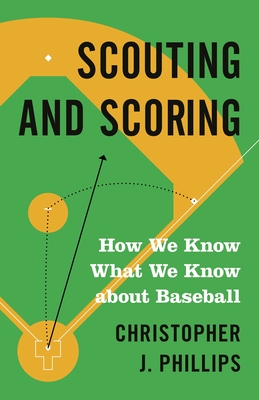
Scouting and Scoring – How We Know What We Know about Baseball
KSh 3,050.00
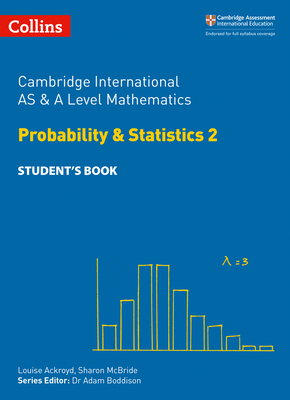
Caie Al Maths - Prob 2
KSh 4,450.00

Modeling Cancer Progression and the Effects of Treatment
KSh 21,950.00

Introduction to Data Science
KSh 9,900.00

Stochastic Differential Equations
KSh 13,150.00
The Evidential Foundations of Probalistic Reasoning
KSh 6,850.00
More by Rod Adams, Yi Sun
The Attribute of Water
KSh 23,400.00

A Mathematical Introduction to Data Science with Python
KSh 8,100.00
The Attribute of Water
KSh 23,400.00

A Multidimensional and Cross-spherical Study of Cognitive Metaphorology
KSh 23,400.00

East Asia and the West
KSh 14,400.00

Milkyway Image
KSh 18,000.00

Milkyway Image
KSh 18,000.00
More in This Genre
How to Lie with Statistics
KSh 2,350.00
Pearson Edexcel International A Level Mathematics Statistics 1 Student Book
KSh 5,900.00
White Noise Distribution Theory
KSh 9,750.00
Pearson Edexcel International A Level Mathematics Statistics 3 Student Book
KSh 5,700.00
Pearson Edexcel International A Level Mathematics Statistics 2 Student Book
KSh 5,700.00
Caie Al Maths - Prob 1
KSh 4,500.00
