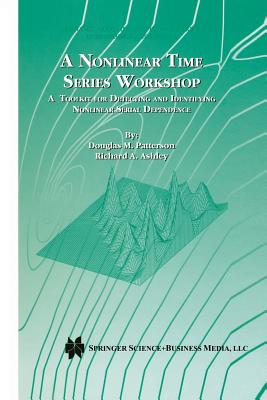
A Nonlinear Time Series Workshop : A Toolkit for Detecting and Identifying Nonlinear Serial Dependence
Softcover reprint of the original 1st ed. 2000
Book Details
Format
Paperback / softback
ISBN-10
1461346657
ISBN-13
9781461346654
Edition
Softcover reprint of the original 1st ed. 2000
Publisher
Springer-Verlag New York Inc.
Imprint
Springer-Verlag New York Inc.
Country of Manufacture
US
Country of Publication
GB
Publication Date
Sep 25th, 2012
Print length
201 Pages
KSh 23,400.00
Currently unavailable
0 in stock
Delivery Location
Delivery fee: Select location
Secure
Quality
Fast
The analysis ofwhat might be called "dynamic nonlinearity" in time series has its roots in the pioneering work ofBrillinger (1965) - who first pointed out how the bispectrum and higher order polyspectra could, in principle, be used to test for nonlinear serial dependence - and in Subba Rao and Gabr (1980) and Hinich (1982) who each showed how Brillinger''s insight could be translated into a statistical test. Hinich''s test, because ittakes advantage ofthe large sample statisticalpropertiesofthe bispectral estimates became the first usable statistical test for nonlinear serial dependence. We are forever grateful to Mel Hinich for getting us involved at that time in this fascinating and fruitful endeavor. With help from Mel (sometimes as amentor,sometimes as acollaborator) we developed and applied this bispectral test in the ensuing period. The first application ofthe test was to daily stock returns {Hinich and Patterson (1982, 1985)} yielding the important discovery of substantial nonlinear serial dependence in returns, over and above the weak linear serial dependence that had been previously observed. The original manuscript met with resistance from finance journals, no doubt because finance academics were reluctant to recognize the importance of distinguishing between serial correlation and nonlinear serial dependence. In Ashley, Patterson and Hinich (1986) we examined the power and sizeofthe test in finite samples.
Get A Nonlinear Time Series Workshop by Douglas M. Patterson, Richard A. Ashley at the best price and quality guaranteed only at Werezi Africa's largest book ecommerce store. The book was published by Springer-Verlag New York Inc. and it has 201 pages.
Customers Who Bought This Also Bought

Economics Book
KSh 4,250.00
Basic Economics
KSh 6,850.00

The Essential Keynes
KSh 2,350.00

General Theory of Employment, Interest and Money
KSh 1,400.00
The Wealth of Nations – The Economics Classic – A Selected Edition for the Contemporary Reader
KSh 2,350.00

Wealth of Nations
KSh 1,800.00

Equality
KSh 2,150.00
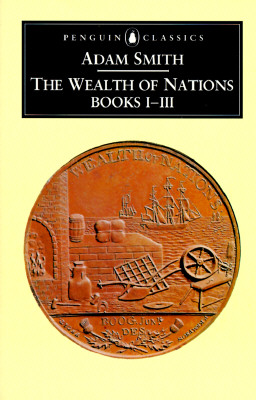
The Wealth of Nations
KSh 2,350.00

What Happened to Liberal Democracy?
KSh 3,050.00

Good Economics for Hard Times
KSh 2,350.00
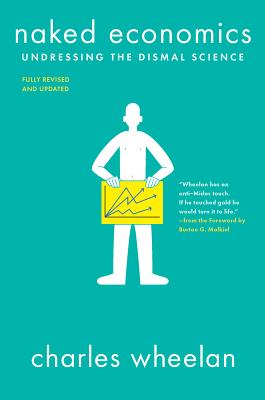
Naked Economics – Undressing the Dismal Science
KSh 2,550.00
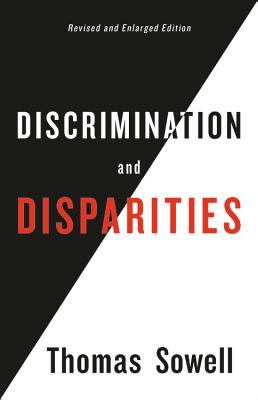
Discrimination and Disparities
KSh 5,400.00