
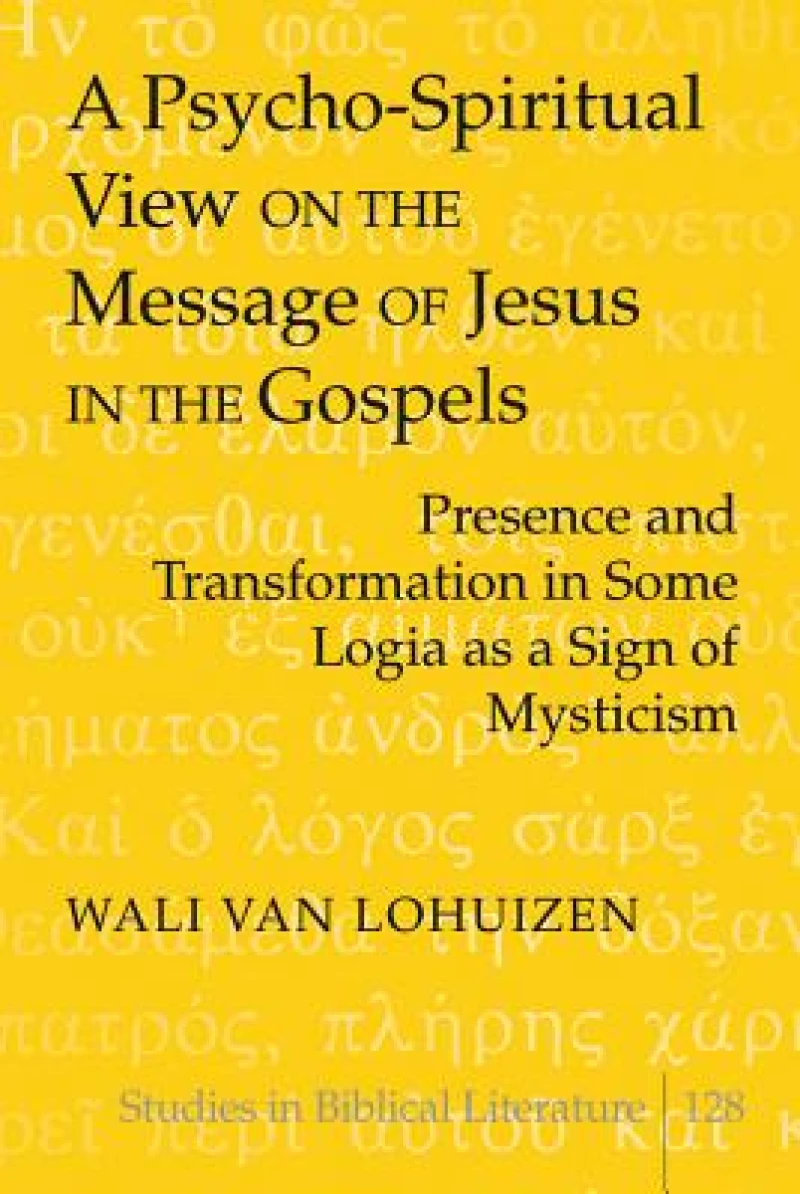
A Psycho-Spiritual View on the Message of Jesus in the Gospels : Presence and Transformation in Some Logia as a Sign of Mysticism
New
Book Details
Format
Hardback or Cased Book
Book Series
Studies in Biblical Literature
ISBN-10
1433106582
ISBN-13
9781433106583
Edition
New
Publisher
Peter Lang Publishing Inc
Imprint
Peter Lang Publishing Inc
Country of Manufacture
US
Country of Publication
GB
Publication Date
Feb 28th, 2011
Print length
381 Pages
Weight
672 grams
Dimensions
15.80 x 23.20 x 2.70 cms
Product Classification:
Philosophy of religionThe Early ChurchNew TestamentsSpirituality & religious experience
Ksh 14,200.00
Manufactured on Demand
0 in stock
Delivery Location
Delivery fee: Select location
Secure
Quality
Fast
A Psycho-Spiritual View on the Message of Jesus in the Gospels
A Psycho-Spiritual View on the Message of Jesus in the Gospels explores elements of mysticism in the words of Jesus. Four fields are analyzed with the help of two key concepts of mysticism: presence of the divine and transformation of the self. Analyses, semantic and otherwise, reveal alternative understandings on each of the four fields.
Psuchê appears as ‘self’ (‘mind-and-heart’) rather than as ‘life,’ for example, in the Good Shepherd passage (dedicating one’s self), or in the saving and losing logia in Mark 8.35 par, calling for transformation. Pneuma in the Gospels appears both in a definite form and indefinitely: next to the Holy Spirit, there is holy spirit active and present, implying that baptism literally is immersing in holy spirit. Repentance (metanoia) is alternatively to be understood as transformation of the self, and is not necessarily connected to ‘sin.’
Finally, the Kingdom of God, in line with theologian Adolf von Harnack, is found to be present (it has approached,êggiken) and is a reality inside (entos) the human being, a mustêrion, apart from its references to the eschaton or to a paradisiacal new world. Parables teach about the Kingdom as a spiritual entity in and around the human being: presence of the divine, closely connected with transformation of the self. These findings open up to a psycho-spiritual understanding of the message (euaggelion) of Jesus.
Psuchê appears as ‘self’ (‘mind-and-heart’) rather than as ‘life,’ for example, in the Good Shepherd passage (dedicating one’s self), or in the saving and losing logia in Mark 8.35 par, calling for transformation. Pneuma in the Gospels appears both in a definite form and indefinitely: next to the Holy Spirit, there is holy spirit active and present, implying that baptism literally is immersing in holy spirit. Repentance (metanoia) is alternatively to be understood as transformation of the self, and is not necessarily connected to ‘sin.’
Finally, the Kingdom of God, in line with theologian Adolf von Harnack, is found to be present (it has approached,êggiken) and is a reality inside (entos) the human being, a mustêrion, apart from its references to the eschaton or to a paradisiacal new world. Parables teach about the Kingdom as a spiritual entity in and around the human being: presence of the divine, closely connected with transformation of the self. These findings open up to a psycho-spiritual understanding of the message (euaggelion) of Jesus.
Get A Psycho-Spiritual View on the Message of Jesus in the Gospels by at the best price and quality guaranteed only at Werezi Africa's largest book ecommerce store. The book was published by Peter Lang Publishing Inc and it has pages.

