
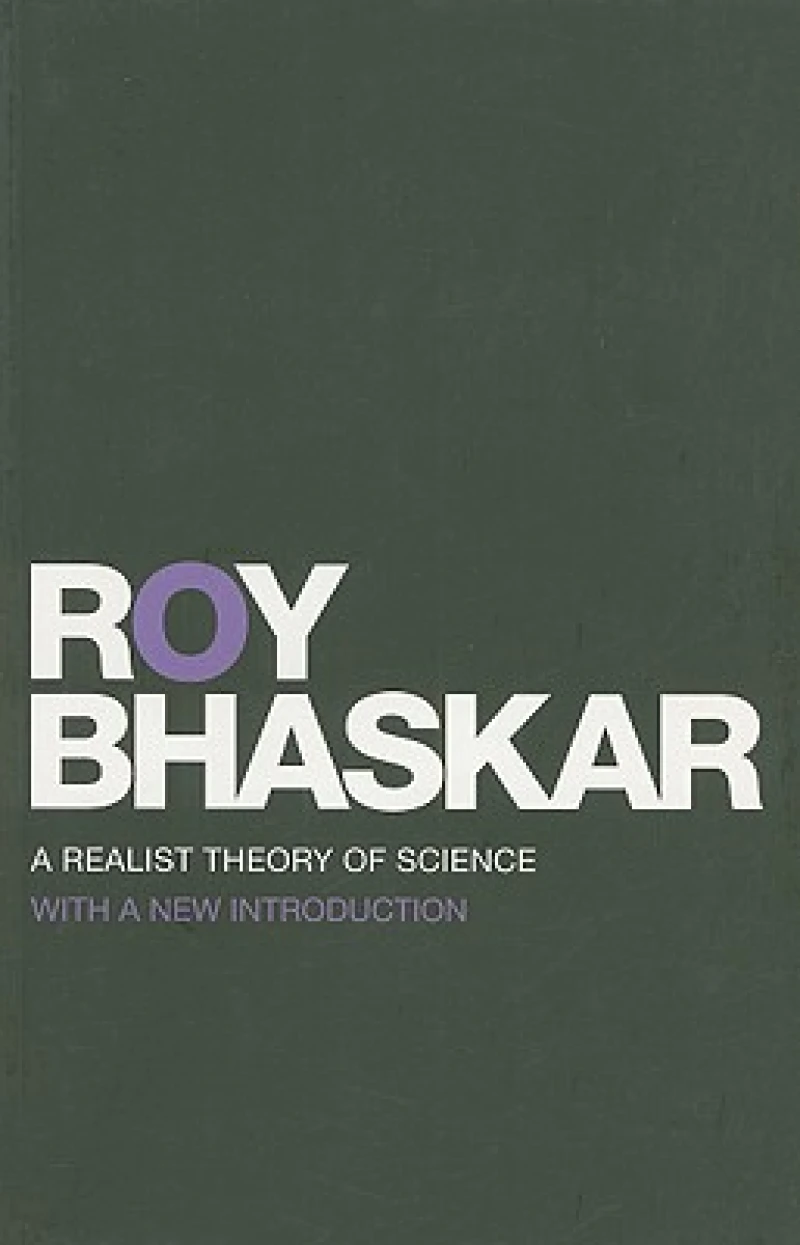
A Realist Theory of Science
by
Roy Bhaskar
Book Details
Format
Paperback / Softback
ISBN-10
0415454948
ISBN-13
9780415454940
Publisher
Taylor & Francis Ltd
Imprint
Routledge
Country of Manufacture
GB
Country of Publication
GB
Publication Date
Jul 4th, 2008
Print length
304 Pages
Weight
384 grams
Dimensions
21.60 x 14.00 x 1.80 cms
Product Classification:
Philosophy
Ksh 10,050.00
Werezi Extended Catalogue
0 in stock
Delivery Location
Delivery fee: Select location
Secure
Quality
Fast
Now acknowledged as a classic in the philosophy of science, A Realist Theory of Science is one of the very few books to transform not only our understanding of science, but that of the nature of the world it studies. The book has inspired the multi-disciplinary and international movement of thought known as "critical realism". Re-issued with a new introduction.
First Published in 2008. Now acknowledged as a classic in the philosophy of science, A Realist Theory of Science is one of the very few books which has transformed not only our understanding of science, but that of the nature of the world it studies. Since its original publication in 1975, the book has inspired the multi-disciplinary and international movement of thought known as critical realism; and its ideas have been influential across the whole spectrum of the sciences, arts and humanities and in a diverse array of social practices and professions.
In this book, Roy Bhaskar sets out to revindicate ontology, critiquing the reduction of being in favor of knowledge, which he calls the epistemic fallacy. Employing a transcendental argument from the nature of experimental activity, he establishes a critique of the dominant positivist and neo-Kantian traditions in the philosophy of science, developing a new ontology in which concepts of structure, difference and change come to the fore. Then, analyzing the nature of scientific discovery and development, he shows how, against both the empiricist and rationalist traditions, science can come to have a posteriori knowledge of natural necessity.
The resultant position, which the author characterizes as transcendental realism, has the power to resolve many traditional philosophical problems, such as the problem of induction. At the same time it lays the basis for radically new accounts of social science, ethics and the project of human emancipation.
A new introduction to this edition by Mervyn Hartwig decribes the significance of A Realist Theory of Science throughout the humanities world, and offers an expert critique of its content.
In this book, Roy Bhaskar sets out to revindicate ontology, critiquing the reduction of being in favor of knowledge, which he calls the epistemic fallacy. Employing a transcendental argument from the nature of experimental activity, he establishes a critique of the dominant positivist and neo-Kantian traditions in the philosophy of science, developing a new ontology in which concepts of structure, difference and change come to the fore. Then, analyzing the nature of scientific discovery and development, he shows how, against both the empiricist and rationalist traditions, science can come to have a posteriori knowledge of natural necessity.
The resultant position, which the author characterizes as transcendental realism, has the power to resolve many traditional philosophical problems, such as the problem of induction. At the same time it lays the basis for radically new accounts of social science, ethics and the project of human emancipation.
A new introduction to this edition by Mervyn Hartwig decribes the significance of A Realist Theory of Science throughout the humanities world, and offers an expert critique of its content.
Get A Realist Theory of Science by at the best price and quality guaranteed only at Werezi Africa's largest book ecommerce store. The book was published by Taylor & Francis Ltd and it has pages.

