
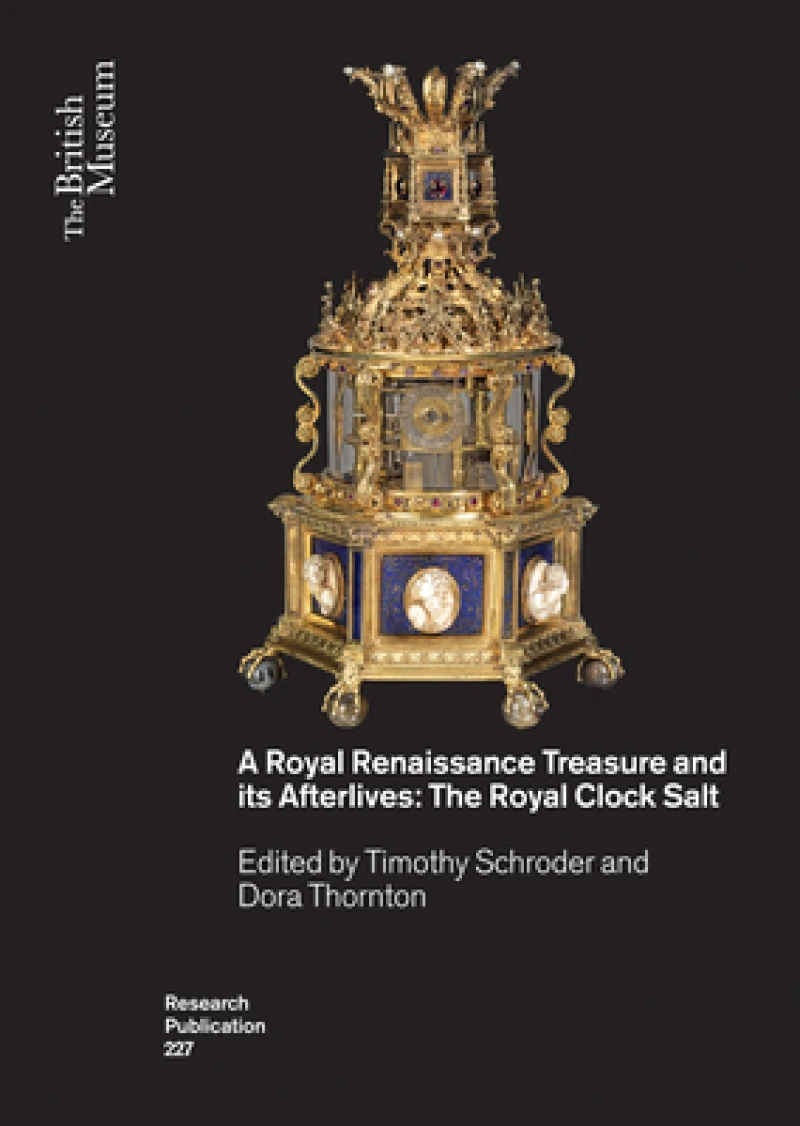
A Royal Renaissance Treasure and its Afterlives : The Royal Clock Salt
Book Details
Format
Paperback / Softback
ISBN-10
0861592271
ISBN-13
9780861592272
Publisher
British Museum Press
Imprint
British Museum Press
Country of Manufacture
GB
Country of Publication
GB
Publication Date
Feb 28th, 2022
Print length
196 Pages
Weight
646 grams
Dimensions
29.70 x 20.90 x 1.30 cms
Product Classification:
Precious metal, precious stones & jewellery: artworks & designHistoryArchaeology
Ksh 7,200.00
Publisher Out of Stock
0 in stock
Delivery Location
Delivery fee: Select location
Secure
Quality
Fast
Beautifully illustrated publication, showcasing spectacular contextual objects from the collection of the British Museum and other museums.
At center stage in this volume is the Royal Clock Salt, an exceptional national treasure from the courtly culture of the Renaissance. Most probably made in Paris around 1530 by Pierre Mangot, the royal goldsmith to Francis I, the Clock Salt is somewhere between a jewel and a table ornament. Now part of the collection of the Goldsmiths’ Company in London, it is one of only a handful of treasures surviving from the renowned Jewel House of Henry VIII. It is unknown whether it was a diplomatic gift from Francis I or whether Henry VIII bought the Clock Salt himself; regardless, the object raises interesting questions about the role of diplomatic gifts at the Tudor court which is a subject addressed by a number of the authors.
Many questions still remain about the Clock Salt’s history following its sale in the aftermath of the English Civil War, but this publication presents the fullest account to date of what is known about the object. Importantly, the authors also place it within a wider European Renaissance context by comparing it with other similar objects known to have been made or designed by Mangot and his contemporaries such as Hans Holbein. A secondary strand in the volume places the Clock Salt in the context of nineteenth- and twentieth-century taste in England and, in particular, reflects recent trends in scholarship by considering the influence of European collectors such as the Rothschilds on the British taste for historic silver. The volume therefore sheds new light on an exquisite object that has beguiled and fascinated owners and viewers for centuries. It also marks the completion of a collaborative research project between the British Museum, the Goldsmiths’ Company and The Rothschild Foundation.
Many questions still remain about the Clock Salt’s history following its sale in the aftermath of the English Civil War, but this publication presents the fullest account to date of what is known about the object. Importantly, the authors also place it within a wider European Renaissance context by comparing it with other similar objects known to have been made or designed by Mangot and his contemporaries such as Hans Holbein. A secondary strand in the volume places the Clock Salt in the context of nineteenth- and twentieth-century taste in England and, in particular, reflects recent trends in scholarship by considering the influence of European collectors such as the Rothschilds on the British taste for historic silver. The volume therefore sheds new light on an exquisite object that has beguiled and fascinated owners and viewers for centuries. It also marks the completion of a collaborative research project between the British Museum, the Goldsmiths’ Company and The Rothschild Foundation.
Get A Royal Renaissance Treasure and its Afterlives by at the best price and quality guaranteed only at Werezi Africa's largest book ecommerce store. The book was published by British Museum Press and it has pages.

