
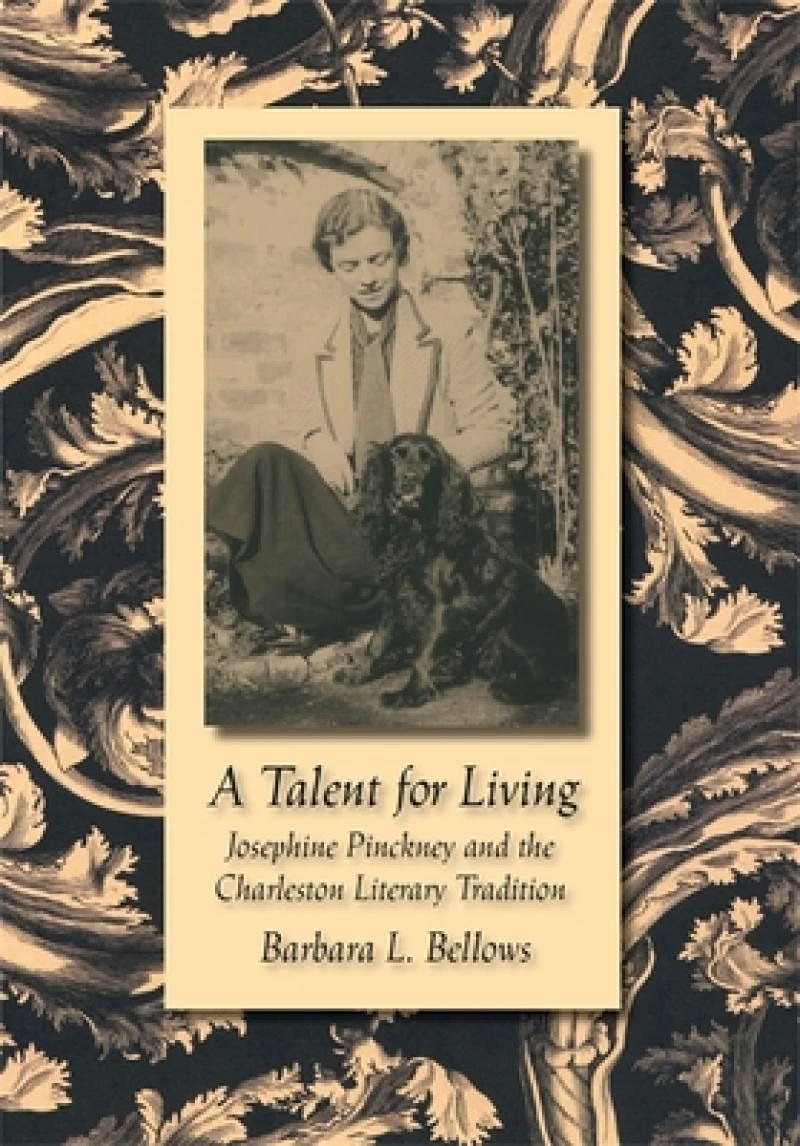
A Talent for Living : Josephine Pinckney and the Charleston Literary Tradition
Book Details
Format
Hardback or Cased Book
Book Series
Southern Literary Studies
ISBN-10
0807131636
ISBN-13
9780807131633
Publisher
Louisiana State University Press
Imprint
Louisiana State University Press
Country of Manufacture
US
Country of Publication
GB
Publication Date
Jun 21st, 2006
Print length
336 Pages
Weight
333 grams
Dimensions
23.60 x 17.00 x 2.90 cms
Ksh 7,200.00
Werezi Extended Catalogue
0 in stock
Delivery Location
Delivery fee: Select location
Secure
Quality
Fast
Josephine Pinckney (1895-1957) was an award-winning, best-selling author whose work critics frequently compared to that of Jane Austen, Edith Wharton, and Isak Dinesen. Barbara Bellows has produced the first biography of this private woman and emotionally complex writer, whose life story is also the history of a place and time.
Josephine Pinckney (1895-1957) was an award-winning, best-selling author whose work critics frequently compared to that of Jane Austen, Edith Wharton, and Isak Dinesen. Her flair for storytelling and trenchant social commentary found expression in poetry, five novels - Three O'Clock Dinner was the most successful - stories, essays, and reviews. Pinckney belonged to a distinguished South Carolina family and often used Charleston as her setting, writing in the tradition of Ellen Glasgow by blending social realism with irony, tragedy, and humor in chronicling the foibles of the South's declining upper class. Barbara L. Bellows has produced the first biography of this very private woman and emotionally complex writer, whose life story is also the history of a place and time - Charleston in the first half of the twentieth century.
In A Talent for Living, Pinckney's life unfolds like a novel as she struggles to escape aristocratic codes and the ensnaring bonds of southern ladyhood and to embrace modern freedoms. In 1920, with DuBose Heyward and Hervey Allen, she founded the Poetry Society of South Carolina, which helped spark the southern literary renaissance. Her home became a center of intellectual activity with visitors such as the poet Amy Lowell, the charismatic presidential candidate Wendell Willkie, and the founding editor of the Saturday Review of Literature Henry Seidel Canby. Sophisticated and cosmopolitan, she absorbed popular contemporary influences, particularly that of Freudian psychology, even as she retained an almost Gothic imagination shaped in her youth by the haunting, tragic beauty of the Low Country and its mystical Gullah culture.
A skilled stylist, Pinckney excelled in creating memorable characters, but she never scripted an individual as engaging or intriguing as herself. Bellows offers a fascinating, exhaustively researched portrait of this onetime cultural icon and her well-concealed personal life.
In A Talent for Living, Pinckney's life unfolds like a novel as she struggles to escape aristocratic codes and the ensnaring bonds of southern ladyhood and to embrace modern freedoms. In 1920, with DuBose Heyward and Hervey Allen, she founded the Poetry Society of South Carolina, which helped spark the southern literary renaissance. Her home became a center of intellectual activity with visitors such as the poet Amy Lowell, the charismatic presidential candidate Wendell Willkie, and the founding editor of the Saturday Review of Literature Henry Seidel Canby. Sophisticated and cosmopolitan, she absorbed popular contemporary influences, particularly that of Freudian psychology, even as she retained an almost Gothic imagination shaped in her youth by the haunting, tragic beauty of the Low Country and its mystical Gullah culture.
A skilled stylist, Pinckney excelled in creating memorable characters, but she never scripted an individual as engaging or intriguing as herself. Bellows offers a fascinating, exhaustively researched portrait of this onetime cultural icon and her well-concealed personal life.
Get A Talent for Living by at the best price and quality guaranteed only at Werezi Africa's largest book ecommerce store. The book was published by Louisiana State University Press and it has pages.

