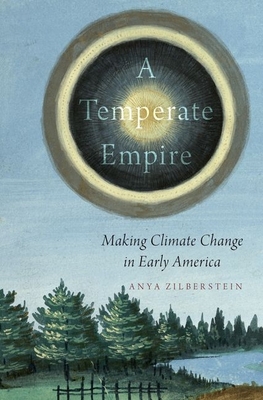
A Temperate Empire : Making Climate Change in Early America
Book Details
Format
Paperback / softback
ISBN-10
0190055510
ISBN-13
9780190055516
Publisher
Oxford University Press Inc
Imprint
Oxford University Press Inc
Country of Manufacture
GB
Country of Publication
GB
Publication Date
May 30th, 2019
Print length
280 Pages
Weight
431 grams
Dimensions
23.10 x 15.50 x 2.00 cms
Product Classification:
History of the AmericasEarly modern history: c 1450/1500 to c 1700Human geographyLocal history
KSh 6,650.00
Currently unavailable
0 in stock
Delivery Location
Delivery fee: Select location
Secure
Quality
Fast
A Temperate Empire explores how early North American settlers understood the widespread process of climate warming and tried to remake local climates through colonial settlement and economic development.
Controversy over the role of human activity in causing climate change is pervasive in contemporary society. But, as Anya Zilberstein shows in this work, debates about the politics and science of climate are nothing new. Indeed, they began as early as the settlement of English colonists in North America, well before the age of industrialization. In the seventeenth and eighteenth centuries, many early Americans believed that human activity and population growth were essential to moderating the harsh extremes of cold and heat in the New World. In the preindustrial British settler colonies in particular, it was believed that the right kinds of people were agents of climate warming and that this was a positive and deliberate goal of industrious activity, rather than an unintended and lamentable side effect of development. A Temperate Empire explores the ways that colonists studied and tried to remake local climates in New England and Nova Scotia according to their plans for settlement and economic growth. For colonial officials, landowners, naturalists, and other elites, the frigid, long winters and short, muggy summers were persistent sources of anxiety. These early Americans became intensely interested in reimagining and reducing their vulnerability to the climate. Linking climate to race, they assured would-be migrants that hardy Europeans were already habituated to the severe northern weather and Caribbean migrants'' temperaments would be improved by it. Even more, they drew on a widespread understanding of a reciprocal relationship between a mild climate and the prosperity of empire, promoting the notion that land cultivation and the expansion of colonial farms would increasingly moderate the climate. One eighteenth-century naturalist observed that European settlement and industry had already brought about a "more temperate, uniform, and equal" climate worldwide-a forecast of a permanent, global warming that was wholeheartedly welcomed. Illuminating scientific arguments that once celebrated the impact of economic activities on environmental change, A Temperate Empire showcases an imperial, colonial, and early American history of climate change.
Get A Temperate Empire by Anya Zilberstein at the best price and quality guaranteed only at Werezi Africa's largest book ecommerce store. The book was published by Oxford University Press Inc and it has 280 pages.
Customers Who Bought This Also Bought

Crusade for Justice – The Autobiography of Ida B. Wells, Second Edition
KSh 4,050.00

Killers of the Flower Moon
KSh 2,000.00
Warmth of Other Suns
KSh 3,050.00

Frederick Douglass
KSh 3,350.00

107 Days
KSh 4,500.00

Second Treatise of Government – Norton Library
KSh 1,600.00

Tuesdays With Morrie
KSh 2,000.00
My Bondage and My Freedom
KSh 1,600.00

Hidden Figures
KSh 2,000.00

America, América
KSh 3,650.00

Holding the Line
KSh 2,000.00

Nuclear Folly
KSh 3,050.00