
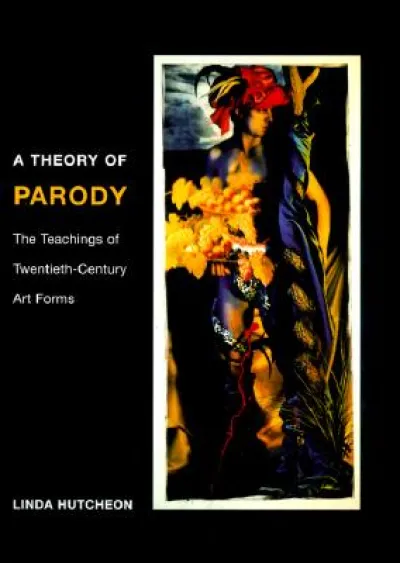
A Theory of Parody : The Teachings of Twentieth-Century Art Forms
Book Details
Format
Paperback / Softback
ISBN-10
0252069382
ISBN-13
9780252069383
Publisher
University of Illinois Press
Imprint
University of Illinois Press
Country of Manufacture
US
Country of Publication
GB
Publication Date
Sep 27th, 2000
Print length
168 Pages
Weight
280 grams
Dimensions
23.00 x 15.30 x 1.20 cms
Ksh 3,050.00
Werezi Extended Catalogue
Delivery in 14 days
2 copies in stock
Delivery Location
Delivery fee: Select location
Delivery in 14 days
Secure
Quality
Fast
Looks at works of modern literature, visual art, music, film, theater, and architecture to arrive at an assessment of what parody is and what it does. This title identifies parody as one of the major forms of modern self-reflexivity, one that marks the intersection of invention. It discusses the remarkable range of intent in modern parody.
In this major study of a flexible and multifaceted mode of expression, Linda Hutcheon looks at works of modern literature, visual art, music, film, theater, and architecture to arrive at a comprehensive assessment of what parody is and what it does.
Hutcheon identifies parody as one of the major forms of modern self-reflexivity, one that marks the intersection of invention and critique and offers an important mode of coming to terms with the texts and discourses of the past. Looking at works as diverse as Tom Stoppard''s Rosenkrantz and Guildenstern Are Dead, Brian de Palma''s Dressed to Kill, Woody Allen''s Zelig, Karlheinz Stockhausen''s Hymnen, James Joyce''s Ulysses, and Magritte''s This Is Not a Pipe, Hutcheon discusses the remarkable range of intent in modern parody while distinguishing it from pastiche, burlesque, travesty, and satire. She shows how parody, through ironic playing with multiple conventions, combines creative expression with critical commentary. Its productive-creative approach to tradition results in a modern recoding that establishes difference at the heart of similarity.
In a new introduction, Hutcheon discusses why parody continues to fascinate her and why it is commonly viewed as suspect-–for being either too ideologically shifty or too much of a threat to the ownership of intellectual and creative property.
Hutcheon identifies parody as one of the major forms of modern self-reflexivity, one that marks the intersection of invention and critique and offers an important mode of coming to terms with the texts and discourses of the past. Looking at works as diverse as Tom Stoppard''s Rosenkrantz and Guildenstern Are Dead, Brian de Palma''s Dressed to Kill, Woody Allen''s Zelig, Karlheinz Stockhausen''s Hymnen, James Joyce''s Ulysses, and Magritte''s This Is Not a Pipe, Hutcheon discusses the remarkable range of intent in modern parody while distinguishing it from pastiche, burlesque, travesty, and satire. She shows how parody, through ironic playing with multiple conventions, combines creative expression with critical commentary. Its productive-creative approach to tradition results in a modern recoding that establishes difference at the heart of similarity.
In a new introduction, Hutcheon discusses why parody continues to fascinate her and why it is commonly viewed as suspect-–for being either too ideologically shifty or too much of a threat to the ownership of intellectual and creative property.
Get A Theory of Parody by at the best price and quality guaranteed only at Werezi Africa's largest book ecommerce store. The book was published by University of Illinois Press and it has pages.

