
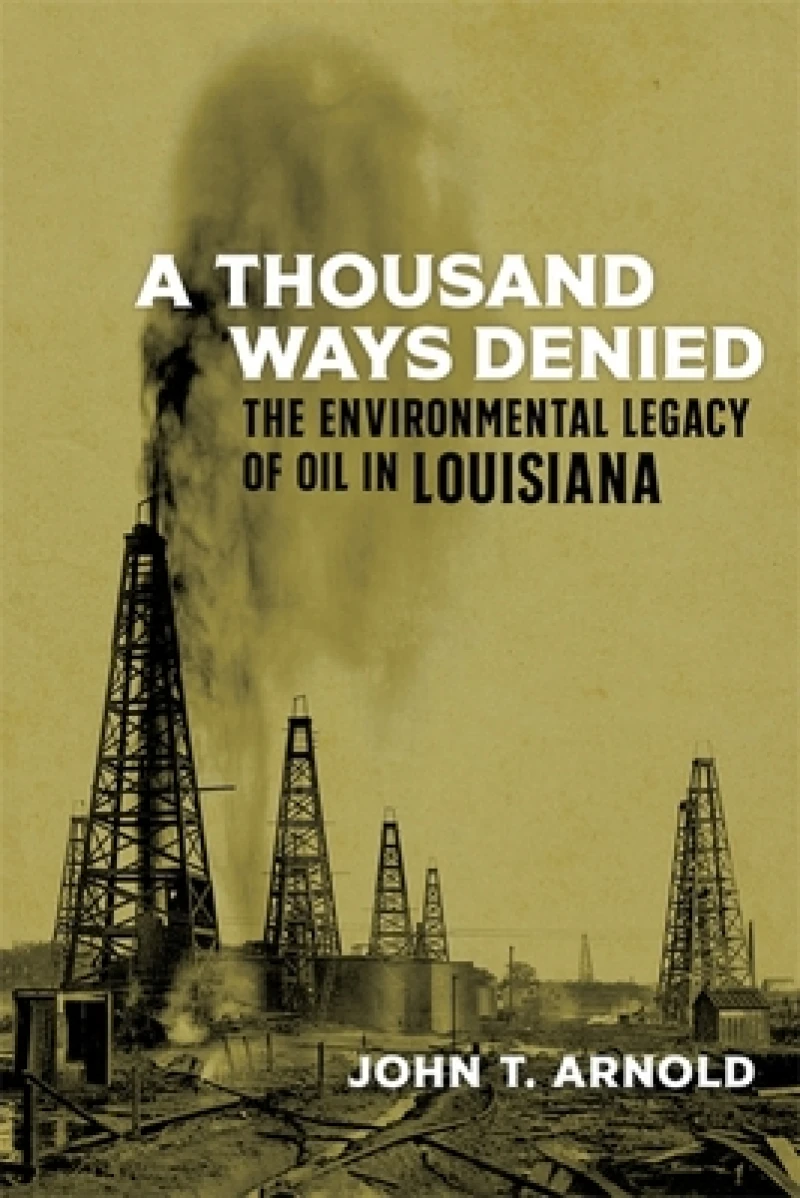
A Thousand Ways Denied : The Environmental Legacy of Oil in Louisiana
Book Details
Format
Hardback or Cased Book
Book Series
The Natural World of the Gulf South 10
ISBN-10
0807174041
ISBN-13
9780807174043
Publisher
Louisiana State University Press
Imprint
Louisiana State University Press
Country of Manufacture
US
Country of Publication
GB
Publication Date
Nov 11th, 2020
Print length
282 Pages
Weight
566 grams
Dimensions
15.90 x 23.50 x 2.80 cms
Ksh 7,200.00
Werezi Extended Catalogue
0 in stock
Delivery Location
Delivery fee: Select location
Secure
Quality
Fast
Documents the oil industry's sharp interface with Louisiana's environment. Drawing on government, corporate, and personal files, many previously untapped, John Arnold traces the history of oil-field practices and their ecological impacts in tandem with battles over regulation.
From the hill country in the north to the marshy lowlands in the south, Louisiana and its citizens have long enjoyed the hard-earned fruits of the oil and gas industry's labor. Economic prosperity flowed from pioneering exploration as the industry heralded engineering achievements and innovative production technologies. Those successes, however, often came at the expense of other natural resources, leading to contamination and degradation of land and water. In A Thousand Ways Denied, John T. Arnold documents the oil industry's sharp interface with Louisiana's environment. Drawing on government, corporate, and personal files, many previously untapped, he traces the history of oil-field practices and their ecological impacts in tandem with battles over regulation.
Arnold reveals that in the early twentieth century, Louisiana helped lead the nation in conservation policy, instituting some of the first programs to sustain its vast wealth of natural resources. But with the proliferation of oil output, government agencies splintered between those promoting production and others committed to preventing pollution. As oil's economic and political strength grew, regulations commonly went unobserved and unenforced. Over the decades, oil, saltwater, and chemicals flowed across the ground, through natural drainages, and down waterways. Fish and wildlife fled their habitats, and drinking-water supplies were ruined. In the wetlands, drilling facilities sat like factories in the midst of a maze of interconnected canals dredged to support exploration, manufacture, and transportation of oil and gas. In later years, debates raged over the contribution of these activities to coastal land loss.
Oil is an inseparable part of Louisiana's culture and politics, Arnold asserts, but the state's original vision for safeguarding its natural resources has become compromised. He urges a return to those foundational conservation principles. Otherwise, Louisiana risks the loss of viable uses of its land and, in some places, its very way of life.
Arnold reveals that in the early twentieth century, Louisiana helped lead the nation in conservation policy, instituting some of the first programs to sustain its vast wealth of natural resources. But with the proliferation of oil output, government agencies splintered between those promoting production and others committed to preventing pollution. As oil's economic and political strength grew, regulations commonly went unobserved and unenforced. Over the decades, oil, saltwater, and chemicals flowed across the ground, through natural drainages, and down waterways. Fish and wildlife fled their habitats, and drinking-water supplies were ruined. In the wetlands, drilling facilities sat like factories in the midst of a maze of interconnected canals dredged to support exploration, manufacture, and transportation of oil and gas. In later years, debates raged over the contribution of these activities to coastal land loss.
Oil is an inseparable part of Louisiana's culture and politics, Arnold asserts, but the state's original vision for safeguarding its natural resources has become compromised. He urges a return to those foundational conservation principles. Otherwise, Louisiana risks the loss of viable uses of its land and, in some places, its very way of life.
Get A Thousand Ways Denied by at the best price and quality guaranteed only at Werezi Africa's largest book ecommerce store. The book was published by Louisiana State University Press and it has pages.

