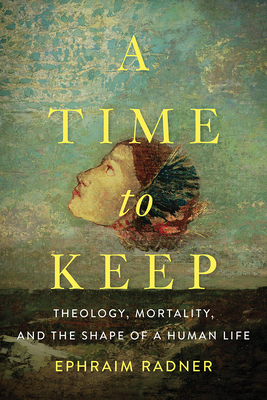
A Time to Keep : Theology, Mortality, and the Shape of a Human Life
Book Details
Format
Hardback
ISBN-10
1481309463
ISBN-13
9781481309462
Publisher
Baylor University Press
Imprint
Baylor University Press
Country of Manufacture
US
Country of Publication
GB
Publication Date
Jan 17th, 2018
Print length
304 Pages
Weight
620 grams
Dimensions
23.60 x 15.90 x 2.10 cms
Product Classification:
ChristianityChristian theologyChristianityChristianity
KSh 7,900.00
Currently unavailable
0 in stock
Delivery Location
Delivery fee: Select location
Secure
Quality
Fast
Revalues mortality, reclaiming it as God's own. Mortality should not be resisted but received. Ephraim Radner reveals mortality's true nature as a gift, God's gift, and thus reveals that the many limitations that mortality imposes should be celebrated.
The miracle of birth and the mystery of death mark human life. Mortality, like a dark specter, looms over all that lies in between. Human character, behavior, aims, and community are all inescapably shaped by this certainty of human ends. Mortality, like an unwanted guest, intrudes, becoming a burden and a constant struggle. Mortality, like a thief who steals, even threatens the ability to live life rightly. Life is short. Death is certain. Mortality, at all costs, should be resisted or transcended.
In A Time to Keep Ephraim Radner revalues mortality, reclaiming it as God's own. Mortality should not be resisted but received. Radner reveals mortality's true nature as a gift, God's gift, and thus reveals that the many limitations that mortality imposes should be celebrated. Radner demonstrates how faithfulness - and not resignation, escape, denial, redefinition, or excess - is the proper response to the gift of humanity's temporal limitation. To live rightly is to recognize and then willingly accept life's limitations.
In chapters on sex and sexuality, singleness and family, education and vocation, and a panoply of end of life issues, A Time to Keep plumbs the depths of the secular imagination, uncovering the constant struggle with human finitude in its myriad forms. Radner shows that by wrongly positioning creaturely mortality, these parts of human experience have received an inadequate reckoning. A Time to Keep retrieves the most basic confession of the Christian faith, that life is God's, which Radner offers as grace, as the basis for a Christian understanding of human existence bound by its origin and telos. The possibility and purpose of what comes between birth and death is ordered by the pattern of Scripture, but is performed faithfully only in obedience to the limits that bind it.
In A Time to Keep Ephraim Radner revalues mortality, reclaiming it as God's own. Mortality should not be resisted but received. Radner reveals mortality's true nature as a gift, God's gift, and thus reveals that the many limitations that mortality imposes should be celebrated. Radner demonstrates how faithfulness - and not resignation, escape, denial, redefinition, or excess - is the proper response to the gift of humanity's temporal limitation. To live rightly is to recognize and then willingly accept life's limitations.
In chapters on sex and sexuality, singleness and family, education and vocation, and a panoply of end of life issues, A Time to Keep plumbs the depths of the secular imagination, uncovering the constant struggle with human finitude in its myriad forms. Radner shows that by wrongly positioning creaturely mortality, these parts of human experience have received an inadequate reckoning. A Time to Keep retrieves the most basic confession of the Christian faith, that life is God's, which Radner offers as grace, as the basis for a Christian understanding of human existence bound by its origin and telos. The possibility and purpose of what comes between birth and death is ordered by the pattern of Scripture, but is performed faithfully only in obedience to the limits that bind it.
Get A Time to Keep by Ephraim Radner at the best price and quality guaranteed only at Werezi Africa's largest book ecommerce store. The book was published by Baylor University Press and it has 304 pages.
Customers Who Bought This Also Bought
Mere Christianity
KSh 2,000.00

On Birth
KSh 1,250.00
What Is Reformed Theology?
KSh 2,700.00

History of Christianity
KSh 3,800.00

Into the Heart of Romans
KSh 3,600.00
Theological Interpretation of the New Testament
KSh 3,800.00
The Unseen Realm
KSh 3,600.00

Jesus and the Powers – Christian Political Witness in an Age of Totalitarian Terror and Dysfunctional Democracies
KSh 2,500.00

The Old Testament in Seven Sentences – A Small Introduction to a Vast Topic
KSh 1,800.00

Mere Christianity
KSh 2,350.00

Till We Have Faces
KSh 2,000.00

Cold-Case Christianity (Updated & Expanded Edition)
KSh 2,700.00