
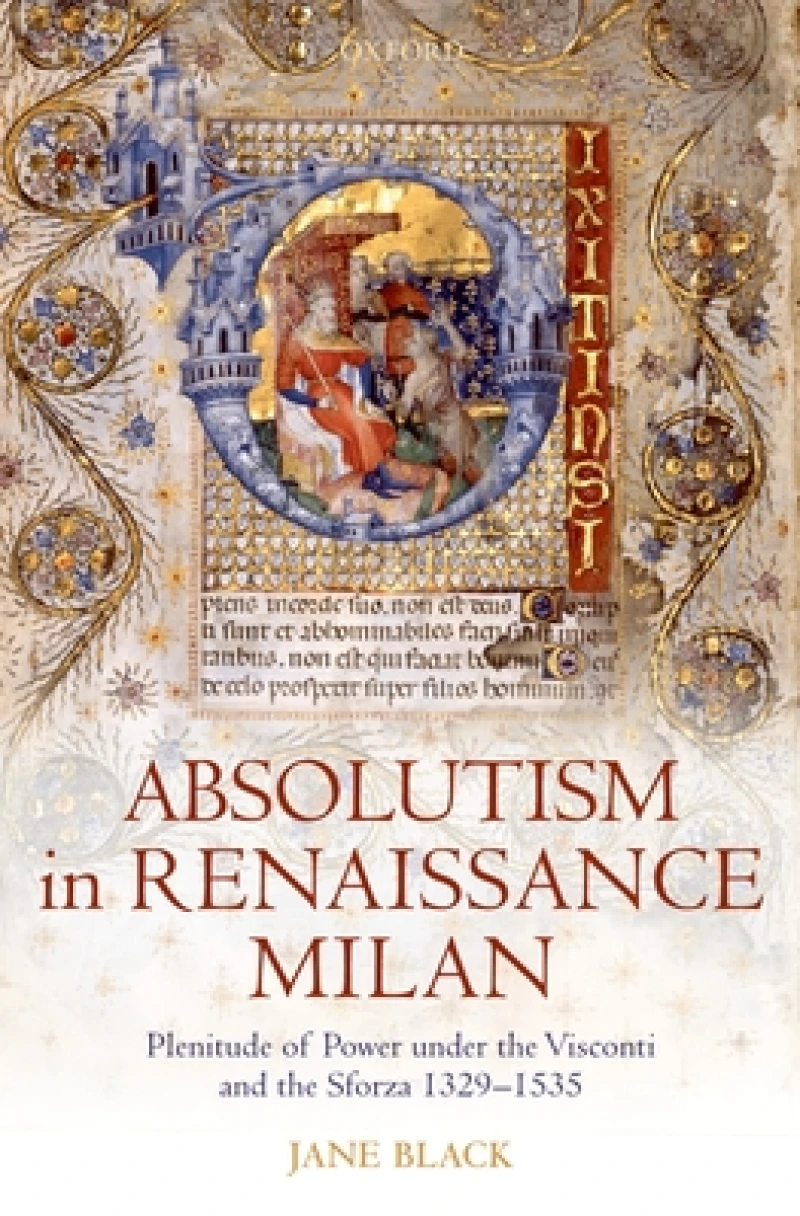
Absolutism in Renaissance Milan : Plenitude of Power under the Visconti and the Sforza 1329-1535
by
Jane Black
Book Details
Format
Hardback or Cased Book
ISBN-10
0199565295
ISBN-13
9780199565290
Publisher
Oxford University Press
Imprint
Oxford University Press
Country of Manufacture
GB
Country of Publication
GB
Publication Date
Oct 8th, 2009
Print length
258 Pages
Weight
542 grams
Dimensions
24.10 x 16.60 x 2.60 cms
Product Classification:
European historyEarly modern history: c 1450/1500 to c 1700Legal historyGovernment powers
Ksh 26,550.00
Manufactured on Demand
0 in stock
Delivery Location
Delivery fee: Select location
Secure
Quality
Fast
Black shows how authority above the law, once the preserve of pope and emperor, was seized, exploited, and eventually relinquished, by the ruling Milanese dynasties. Lawyers supported the free use of absolute power at first, but both sides eventually realized that society could not function unless property and other rights were respected.
Absolutism in Renaissance Milan shows how authority above the law, once the preserve of pope and emperor, was claimed by the ruling Milanese dynasties, the Visconti and the Sforza, and why this privilege was finally abandoned by Francesco II Sforza (d. 1535), the last duke. As new rulers, the Visconti and the Sforza had had to impose their regime by rewarding supporters at the expense of opponents. That process required absolute power, also known as ''plenitude of power'', meaning the capacity to overrule even fundamental laws and rights, including titles to property. The basis for such power reflected the changing status of Milanese rulers, first as signori and then as dukes. Contemporary lawyers, schooled in the sanctity of fundamental laws, were at first prepared to overturn established doctrines in support of the free use of absolute power: even the leading jurist of the day, Baldo degli Ubaldi (d. 1400), accepted the new teaching. However, lawyers came eventually to regret the new approach and to reassert the principle that laws could not be set aside without compelling justification. The Visconti and the Sforza too saw the dangers of absolute power: as legitimate princes they were meant to champion law and justice, not condone arbitrary acts that disregarded basic rights. Jane Black traces these developments in Milan over the course of two centuries, showing how the Visconti and Sforza regimes seized, exploited and finally relinquished absolute power.
Get Absolutism in Renaissance Milan by at the best price and quality guaranteed only at Werezi Africa's largest book ecommerce store. The book was published by Oxford University Press and it has pages.

