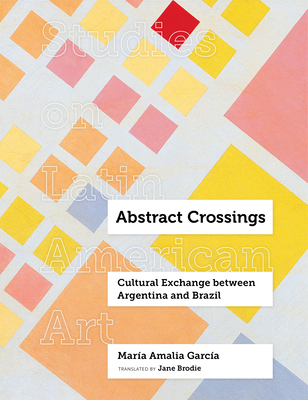
Abstract Crossings : Cultural Exchange between Argentina and Brazil
Book Details
Format
Hardback
Book Series
Studies on Latin American Art and Latinx Art
ISBN-10
0520302192
ISBN-13
9780520302198
Publisher
University of California Press
Imprint
University of California Press
Country of Manufacture
US
Country of Publication
GB
Publication Date
Jul 16th, 2019
Print length
320 Pages
Weight
896 grams
Dimensions
19.10 x 23.80 x 2.20 cms
Product Classification:
Art & design styles: Abstract Expressionism
KSh 7,550.00
Currently unavailable
0 in stock
Delivery Location
Delivery fee: Select location
Secure
Quality
Fast
Toward the middle of the 1950s, abstract art became a dominant trend in the Latin American cultural scene. Many artists incorporated elements of abstraction into their rigorous artistic vocabularies, while at the same time, the representation of geometric lines and structures filtered into everyday life, appearing in textiles, posters, murals, and landscapes. The translation of a field-changing Spanish-language book, Abstract Crossings analyzes the relationship between, on the one hand, the emergence of abstract proposals in avant-garde groups and, on the other, the institutionalization and newfound hegemony of abstract poetics as part of Latin America’s imaginary of modernization. A profusion of mid-century artistic institutional exchanges between Argentina and Brazil makes a study of the trajectories of abstraction in these two countries particularly valuable. Examining the work of artists such as Max Bill, Lygia Clark, Waldemar Cordeiro, and Tomás Maldonado, author María Amalia García rewrites the artistic history of the period and proposes a novel reading of the cultural dialogue between Argentina and Brazil. This is the first book in the new Studies on Latin American Art series, supported by a gift from the Institute for Studies on Latin American Art (ISLAA).
Get Abstract Crossings by Maria Amalia Garcia at the best price and quality guaranteed only at Werezi Africa's largest book ecommerce store. The book was published by University of California Press and it has 320 pages.
Customers Who Bought This Also Bought
Pollock
KSh 3,250.00
Abstract Expressionism
KSh 1,950.00
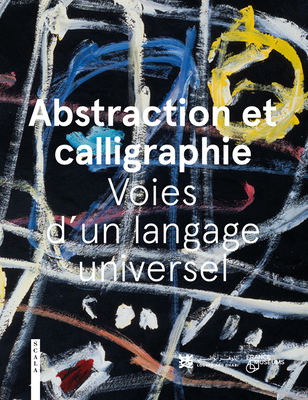
Abstraction and Calligraphy
KSh 7,900.00
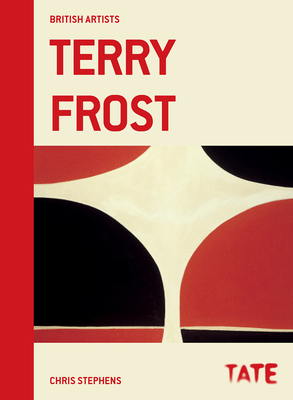
British Artists: Terry Frost
KSh 2,700.00

With Darkness Came Stars – A Memoir
KSh 6,250.00
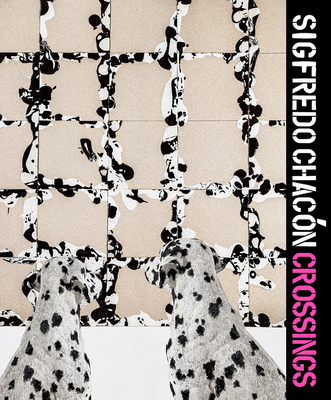
Sigfredo Chacón - Crossings
KSh 6,300.00

Helen Frankenthaler (English edition)
KSh 4,600.00

Lee Krasner
KSh 2,400.00

Blue Poles
KSh 3,800.00

Richard Diebenkorn
KSh 20,700.00

The Loft Generation
KSh 3,600.00

Helen Frankenthaler (Deutsche Ausgabe)
KSh 4,600.00