
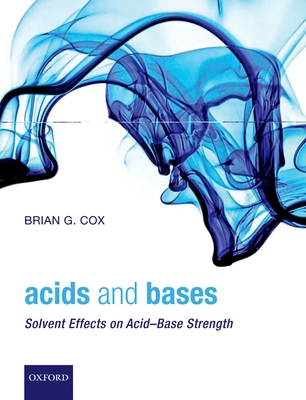
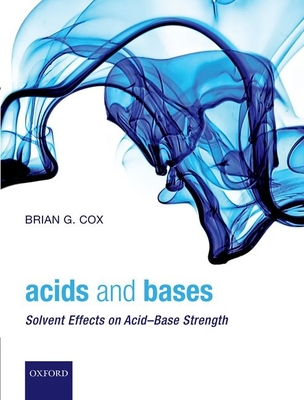
Acids and Bases : Solvent Effects on Acid-Base Strength
by
Brian G. Cox
Book Details
Format
Paperback / softback
ISBN-10
0199670528
ISBN-13
9780199670529
Publisher
Oxford University Press
Imprint
Oxford University Press
Country of Manufacture
GB
Country of Publication
GB
Publication Date
Jan 31st, 2013
Print length
156 Pages
Weight
364 grams
Dimensions
24.50 x 19.00 x 0.80 cms
Product Classification:
Chemical physicsInorganic chemistryOrganic chemistryPhysical chemistry
KSh 7,400.00
Currently unavailable
0 in stock
Delivery Location
Delivery fee: Select location
Secure
Quality
Fast
This book seeks to enhance our understanding of acids and bases by reviewing and analysing their behaviour in non-aqueous solvents. The behaviour is related where possible to that in water, but correlations and contrasts between solvents are also presented.
Acids and bases are ubiquitous in chemistry. Our understanding of them, however, is dominated by their behaviour in water. Transfer to non-aqueous solvents leads to profound changes in acid-base strengths and to the rates and equilibria of many processes: for example, synthetic reactions involving acids, bases and nucleophiles; isolation of pharmaceutical actives through salt formation; formation of zwitter- ions in amino acids; and chromatographic separation of substrates. This book seeks to enhance our understanding of acids and bases by reviewing and analysing their behaviour in non-aqueous solvents. The behaviour is related where possible to that in water, but correlations and contrasts between solvents are also presented.Fundamental background material is provided in the initial chapters: quantitative aspects of acid-base equilibria, including definitions and relationships between solution pH and species distribution; the influence of molecular structure on acid strengths; and acidity in aqueous solution. Solvent properties are reviewed, along with the magnitude of the interaction energies of solvent molecules with (especially) ions; the ability of solvents to participate in hydrogen bonding and to accept or donate electron pairs is seen to be crucial. Experimental methods for determining dissociation constants are described in detail.In the remaining chapters, dissociation constants of a wide range of acids in three distinct classes of solvents are discussed: protic solvents, such as alcohols, which are strong hydrogen-bond donors; basic, polar aprotic solvents, such as dimethylformamide; and low-basicity and low polarity solvents, such as acetonitrile and tetrahydrofuran. Dissociation constants of individual acids vary over more than 20 orders of magnitude among the solvents, and there is a strong differentiation between the response of neutral and charged acids to solvent change. Ion-pairing and hydrogen-bonding equilibria, such as between phenol and phenoxide ions, play an increasingly important role as the solvent polarity decreases, and their influence on acid-base equilibria and salt formation is described.
Get Acids and Bases by Brian G. Cox at the best price and quality guaranteed only at Werezi Africa's largest book ecommerce store. The book was published by Oxford University Press and it has 156 pages.
Customers Who Bought This Also Bought

Advancing Theory for Kinetics and Dynamics of Comp lex, Many–Dimensional Systems: Clusters and Protei ns, Advances in Chemical Physics Volume 145
KSh 35,100.00

Coulomb Excitations and Decays in Graphene-Related Systems
KSh 10,150.00

Introduction to Photocatalysis
KSh 9,450.00

Silicon Surfaces And Formation Of Interfaces: Basic Science In The Industrial World
KSh 32,400.00

Computational Spectroscopy of Polyatomic Molecules
KSh 9,000.00

Transport Properties and Potential Energy Models for Monatomic Gases
KSh 20,750.00

Origins of Life Volume II
KSh 10,300.00

Flows and Chemical Reactions
KSh 28,450.00
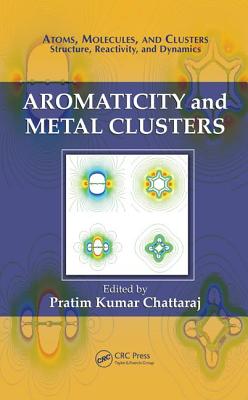
Aromaticity and Metal Clusters
KSh 37,800.00

Vacuum
KSh 9,700.00
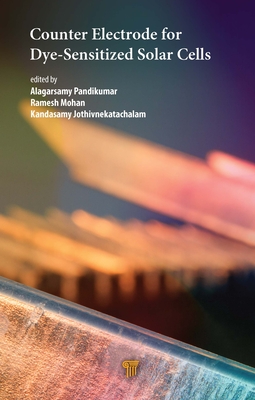
Counter Electrode for Dye-Sensitized Solar Cells
KSh 20,900.00

Termolecular Reactions
KSh 8,100.00
More by Brian G. Cox
More in This Genre
Advancing Theory for Kinetics and Dynamics of Comp lex, Many–Dimensional Systems: Clusters and Protei ns, Advances in Chemical Physics Volume 145
KSh 35,100.00
Coulomb Excitations and Decays in Graphene-Related Systems
KSh 10,150.00
Introduction to Photocatalysis
KSh 9,450.00
Silicon Surfaces And Formation Of Interfaces: Basic Science In The Industrial World
KSh 32,400.00
Computational Spectroscopy of Polyatomic Molecules
KSh 9,000.00
Transport Properties and Potential Energy Models for Monatomic Gases
KSh 20,750.00
