

Actuality Inferences : Causality, Aspect, and Modality
Book Details
Format
Hardback
Book Series
Oxford Studies in Semantics and Pragmatics
ISBN-10
0192849883
ISBN-13
9780192849885
Publisher
Oxford University Press
Imprint
Oxford University Press
Country of Manufacture
GB
Country of Publication
GB
Publication Date
Mar 30th, 2023
Print length
312 Pages
Weight
736 grams
Dimensions
25.00 x 18.00 x 2.30 cms
KSh 21,100.00
Currently unavailable
0 in stock
Delivery Location
Delivery fee: Select location
Secure
Quality
Fast
This book investigates the phenomenon of actuality inferences, in which claims of ability are interpreted as descriptions of actual events, instead of as descriptions of potentiality or possibility. The findings contribute to a growing body of research in which computational models serve as an analytic tool for lexical and compositional semantics.
This book investigates the phenomenon of actuality inferences, in which claims of ability are-in certain temporal contexts-interpreted as descriptions of actual events, instead of as descriptions of potentialities or possibilities. Although actuality inferences evidently arise in the interaction between modality and aspect, they have long resisted compositional explication in standard treatments of these semantic categories. Prerna Nadathur here pursues a new approach, in which actuality inferences are linked to a novel component in the semantics of ability: causal dependence relations. The account is developed through a comparative, crosslinguistic semantic analysis of three predicate classes that license similar inferences: implicative verbs in Finnish and English, enough/too predicates in French and English, and (modal) ability predicates in French, Hindi, and English. Similarities in the inferential profiles of these predicates are tied to their shared causal background structure, while their differences-including in sensitivity to grammatical aspect-derive from differences in asserted content and associated aspectual class contrasts. The central argument is that a complex causal structure for ability interacts with the compositional requirements of aspect to derive the observed actuality-ability ambiguity. The volume shows that causal structure and causal relationships shape patterns of linguistic inference beyond the overtly causal domain, and thus contributes to a new and growing body of research in which formal, computational causal models are employed as an analytic tool for lexical and compositional semantics.
Get Actuality Inferences by Prerna Nadathur at the best price and quality guaranteed only at Werezi Africa's largest book ecommerce store. The book was published by Oxford University Press and it has 312 pages.
Customers Who Bought This Also Bought

Recognising the Stranger
KSh 1,800.00
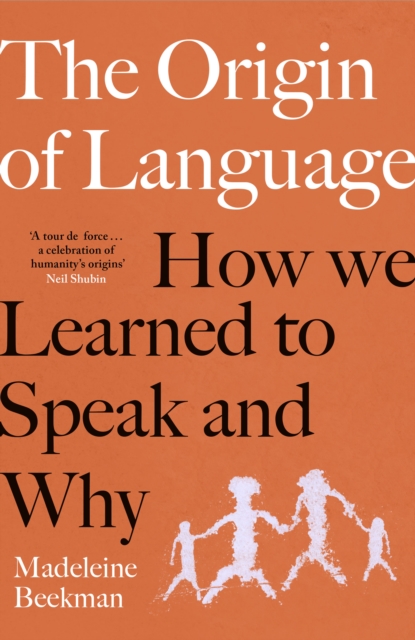
The Origin of Language
KSh 4,500.00

Sharing Thoughts
KSh 17,000.00

An Inquiry Into Meaning and Truth
KSh 3,750.00

Semiotics and the Philosophy of Language
KSh 3,400.00

An Introduction to Logic
KSh 6,650.00

Walker Percy''s Search for Community
KSh 5,950.00
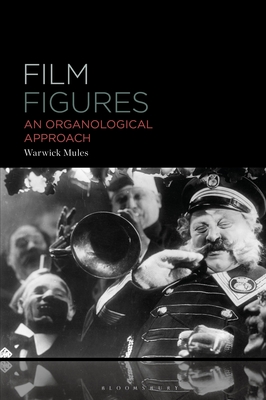
Film Figures
KSh 16,450.00

The Tacit Dimensions of Language and Logic
KSh 15,800.00

Metaphors in Action
KSh 21,600.00
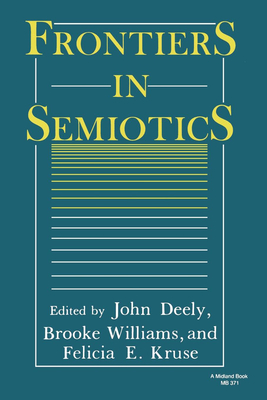
Frontiers in Semiotics
KSh 3,000.00

A Theory of Death
KSh 11,900.00
