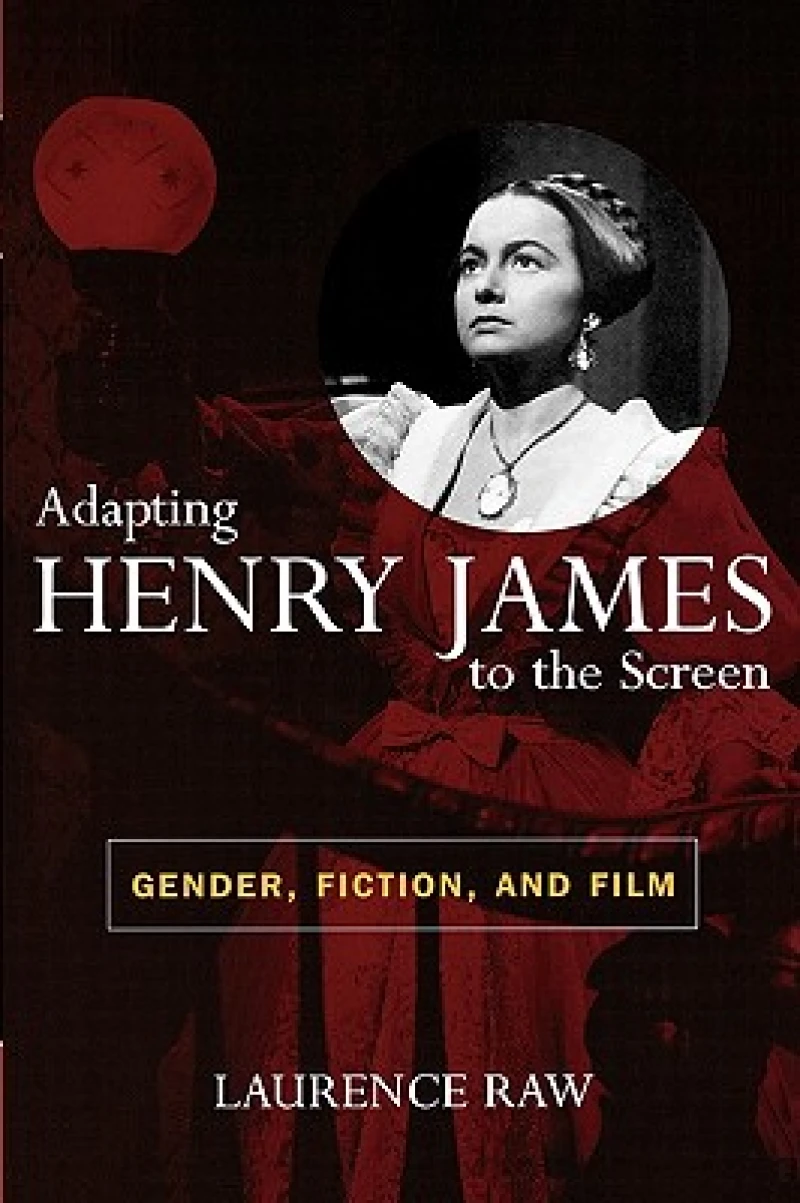
Adapting Henry James to the Screen : Gender, Fiction, and Film
by
Laurence Raw
Book Details
Format
Paperback / Softback
ISBN-10
0810857073
ISBN-13
9780810857070
Publisher
Scarecrow Press
Imprint
Scarecrow Press
Country of Manufacture
GB
Country of Publication
GB
Publication Date
Sep 27th, 2006
Print length
336 Pages
Weight
464 grams
Dimensions
15.20 x 22.80 x 2.00 cms
Product Classification:
Film theory & criticismFilm history, theory or criticism
Ksh 14,650.00
Manufactured on Demand
0 in stock
Delivery Location
Delivery fee: Select location
Secure
Quality
Fast
Raw shows how changing priorities have affected the ways in which Henry James's novels have been translated to the screen, looking at everything from The Turn of the Screw and The Portrait of a Lady to The Wings of the Dove and The Haunting of Hell House.
One of Henry James''s main achievements as a novelist was his ability to demonstrate how the notions of "masculinity" and "femininity" are socially constructed, depending on a variety of contradictory factors: social, political, sexual, and economic. His unique capacity to understand the ideological function of relationships often accepted as "natural" in late nineteenth century culture resulted in works of fiction that impress upon readers the oppressiveness inherent within them. Most adaptations of literary classics, however, tend to be influenced by Hollywood conventions that tend to reinforce dominant notions of gender and heterosexual relations. Adapting a novel for cinema or television is first and foremost a business enterprise, where the screenwriter has to take into account the wishes of conflicting interest groups: producers, stars, directors, and spectators. In Adapting Henry James to The Screen: Gender, Fiction and Film, author Laurence Raw suggests that most James adaptations have sought to shift attention away from the classical narrative to the spectator''s interaction with that narrative. Raw demonstrates that while several adaptations have critically engaged with the subject of gender relations, they have often ended up by reinforcing rather than questioning accepted norms. Yet, there are instances where individual directors and/or screenwriters have bucked the trend and directly engaged with what people understand by ''masculine'' and ''feminine'' behavior, thus focusing on how the notions of ''masculinity'' and ''femininity'' are socially constructed, not only in the societies represented on screen, but in the spectators'' world as well. This book shows how changing priorities affected the ways in which James''s novels were translated to the screen, and how they examined the theme of gender relations. Not only does this represent a new departure for adaptation studies (which hitherto has largely focused on issues of textual fidelity), but it is a particularly appropriate methodology for stu
Get Adapting Henry James to the Screen by at the best price and quality guaranteed only at Werezi Africa's largest book ecommerce store. The book was published by Scarecrow Press and it has pages.