
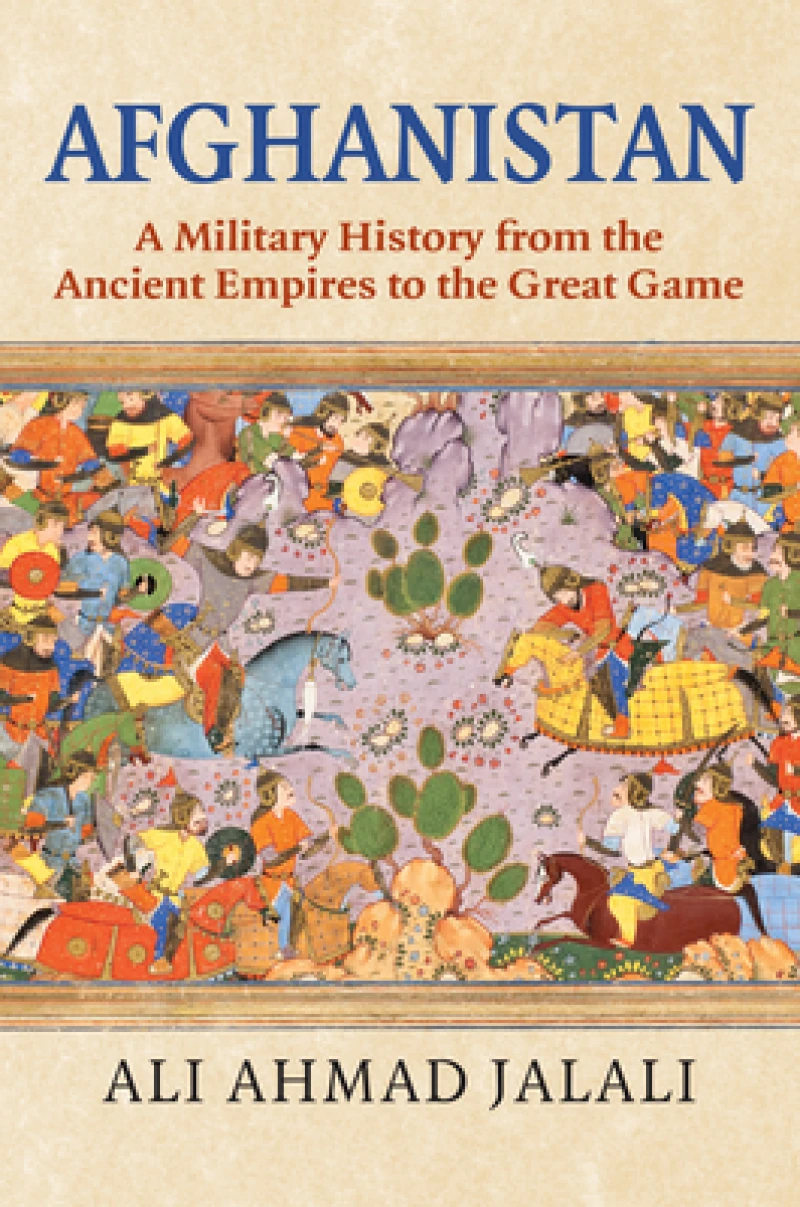
Afghanistan : A Military History from the Ancient Empires to the Great Game
Book Details
Format
Hardback or Cased Book
ISBN-10
0700632638
ISBN-13
9780700632633
Publisher
University Press of Kansas
Imprint
University Press of Kansas
Country of Manufacture
GB
Country of Publication
GB
Publication Date
Dec 30th, 2021
Print length
384 Pages
Weight
706 grams
Dimensions
16.10 x 23.90 x 3.10 cms
Ksh 10,600.00
Werezi Extended Catalogue
Delivery in 14 days
5 copies in stock
Delivery Location
Delivery fee: Select location
Delivery in 14 days
Secure
Quality
Fast
Covers the military history of a region encompassing Afghanistan, Central and South Asia, and West Asia, over some 2,500 years. This is the first comprehensive study in any language published on the millennia-long competition for domination and influence in one of the key regions of the Eurasian continent.
Afghanistan: A Military History from the Ancient Empires to the Great Game covers the military history of a region encompassing Afghanistan, Central and South Asia, and West Asia, over some 2,500 years. This is the first comprehensive study in any language published on the millennia-long competition for domination and influence in one of the key regions of the Eurasian continent.
Jalali’s work covers some of the most important events and figures in world military history, including the armies commanded by Cyrus the Great, Alexander the Great, the Muslim conquerors, Chinggis Khan, Tamerlane, and Babur. Afghanistan was the site of their campaigns and the numerous military conquests that facilitated exchange of military culture and technology that influenced military developments far beyond the region. An enduring theme throughout Afghanistan is the strong influence of the geography and the often extreme nature of the local terrain. Invaders mostly failed because the locals outmaneuvered them in an unforgiving environment. Important segments include Alexander the Great, remembered to this day as a great victor, though not a grand builder; the rise of Islam in the early seventh century in the Arabian Peninsula and the monumental and enduring shift in the social and political map of the world brought by its conquering armies; the medieval Islamic era, when the constant rise and fall of ruling dynasties and the prevalence of an unstable security environment reinforced localism in political, social, and military life; the centuries-long impact of the destruction caused by Chinggis Khan’s thirteenth century; early eighteenth century, when the Afghans achieved a remarkable military victory with extremely limited means leading to the downfall of the Persian Safavid dynasty; and the Battle of Panipat (1761), where Afghan Emperor Ahmad Shah Abdali decisively routed the Hindu confederacy under Maratha leadership, widely considered as one of the decisive battles of the world. It was in this period when the Afghans founded their modern state and a vast empire under Ahmad Shah Durrani, which shaped the environment for the arrival of the European powers and the Great Game.
Jalali’s work covers some of the most important events and figures in world military history, including the armies commanded by Cyrus the Great, Alexander the Great, the Muslim conquerors, Chinggis Khan, Tamerlane, and Babur. Afghanistan was the site of their campaigns and the numerous military conquests that facilitated exchange of military culture and technology that influenced military developments far beyond the region. An enduring theme throughout Afghanistan is the strong influence of the geography and the often extreme nature of the local terrain. Invaders mostly failed because the locals outmaneuvered them in an unforgiving environment. Important segments include Alexander the Great, remembered to this day as a great victor, though not a grand builder; the rise of Islam in the early seventh century in the Arabian Peninsula and the monumental and enduring shift in the social and political map of the world brought by its conquering armies; the medieval Islamic era, when the constant rise and fall of ruling dynasties and the prevalence of an unstable security environment reinforced localism in political, social, and military life; the centuries-long impact of the destruction caused by Chinggis Khan’s thirteenth century; early eighteenth century, when the Afghans achieved a remarkable military victory with extremely limited means leading to the downfall of the Persian Safavid dynasty; and the Battle of Panipat (1761), where Afghan Emperor Ahmad Shah Abdali decisively routed the Hindu confederacy under Maratha leadership, widely considered as one of the decisive battles of the world. It was in this period when the Afghans founded their modern state and a vast empire under Ahmad Shah Durrani, which shaped the environment for the arrival of the European powers and the Great Game.
Get Afghanistan by at the best price and quality guaranteed only at Werezi Africa's largest book ecommerce store. The book was published by University Press of Kansas and it has pages.

