
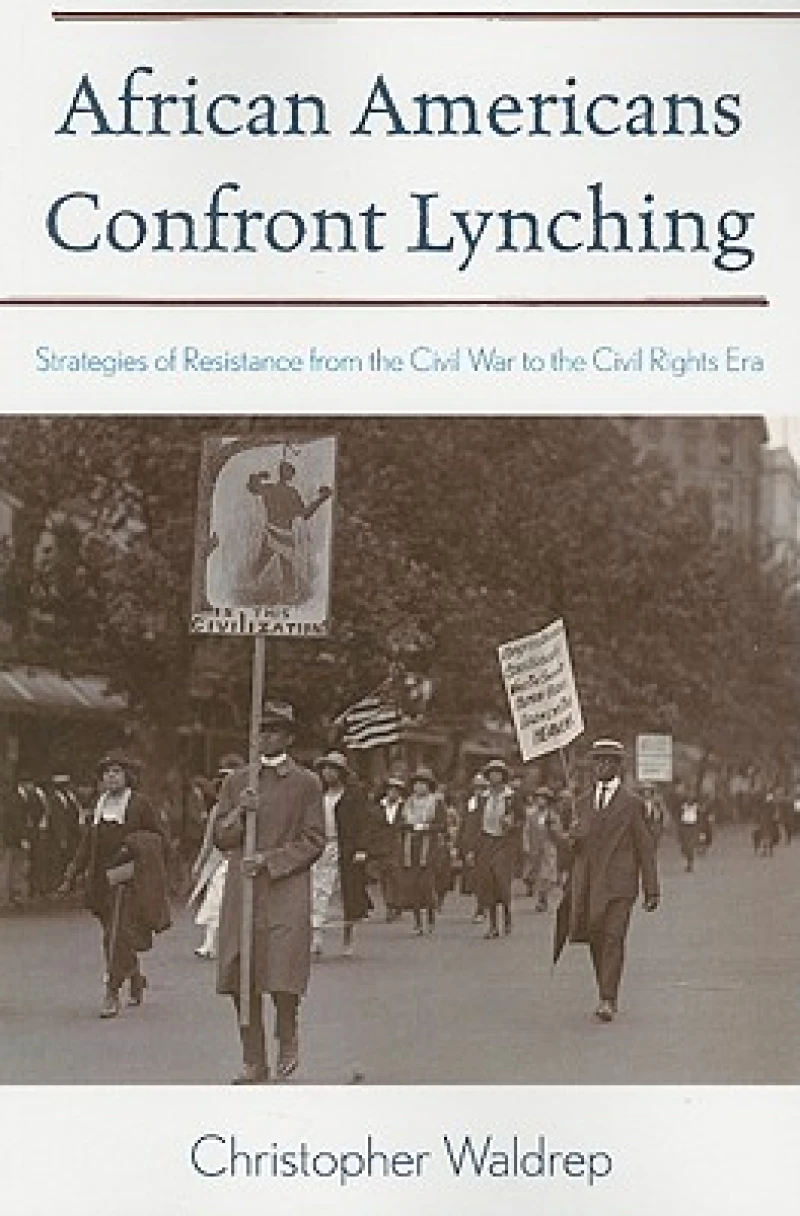
African Americans Confront Lynching : Strategies of Resistance from the Civil War to the Civil Rights Era
Book Details
Format
Paperback / Softback
Book Series
The African American Experience Series
ISBN-10
074255273X
ISBN-13
9780742552739
Publisher
Bloomsbury Publishing Plc
Imprint
Rowman & Littlefield Publishers
Country of Manufacture
GB
Country of Publication
GB
Publication Date
Nov 16th, 2009
Print length
232 Pages
Weight
376 grams
Dimensions
22.70 x 15.40 x 1.70 cms
Product Classification:
History of the AmericasSocial & cultural history
Ksh 5,750.00
Manufactured on Demand
0 in stock
Delivery Location
Delivery fee: Select location
Secure
Quality
Fast
This book examines African Americans' strategies for resisting white racial violence from the Civil War until the assassination of Martin Luther King, Jr., in 1968 and up to the Clinton era. Christopher Waldrep's semi-biographical approach to the pioneers in the anti-lynching campaign portrays African Americans as active participants in the effort to end racial violence rather than as passive victims. In telling this more than 100-year-old story of violence and resistance, Waldrep describes how white Americans legitimized racial violence after the Civil War, and how black journalists campaigned against the violence by invoking the Constitution and the law as a source of rights. He shows how, toward the end of the nineteenth century and into the twentieth, anti-lynching crusaders Ida B. Wells and Monroe Work adopted a more sociological approach, offering statistics and case studies to thwart white claims that a black propensity for crime justified racial violence. Waldrep describes how the NAACP, founded in 1909, represented an organized, even bureaucratic approach to the fight against lynching. Despite these efforts, racial violence continued after World War II, as racists changed tactics, using dynamite more than the rope or the gun. Waldrep concludes by showing how modern day hate crimes continue the lynching tradition, and how the courts and grass-roots groups have continued the tradition of resistance to racial violence. A rich selection of documents helps give the story a sense of immediacy. Sources include nineteenth-century eyewitness accounts of lynching, courtroom testimony of Ku Klux Klan victims, South Carolina senator Ben Tillman's 1907 defense of lynching, and the text of the first federal hate crimes law.
This book examines African Americans'' strategies for resisting white racial violence from the Civil War until the assassination of Martin Luther King, Jr., in 1968 and up to the Clinton era. Christopher Waldrep''s semi-biographical approach to the pioneers in the anti-lynching campaign portrays African Americans as active participants in the effort to end racial violence rather than as passive victims. In telling this more than 100-year-old story of violence and resistance, Waldrep describes how white Americans legitimized racial violence after the Civil War, and how black journalists campaigned against the violence by invoking the Constitution and the law as a source of rights. He shows how, toward the end of the nineteenth century and into the twentieth, anti-lynching crusaders Ida B. Wells and Monroe Work adopted a more sociological approach, offering statistics and case studies to thwart white claims that a black propensity for crime justified racial violence. Waldrep describes how the NAACP, founded in 1909, represented an organized, even bureaucratic approach to the fight against lynching. Despite these efforts, racial violence continued after World War II, as racists changed tactics, using dynamite more than the rope or the gun. Waldrep concludes by showing how modern day hate crimes continue the lynching tradition, and how the courts and grass-roots groups have continued the tradition of resistance to racial violence. A rich selection of documents helps give the story a sense of immediacy. Sources include nineteenth-century eyewitness accounts of lynching, courtroom testimony of Ku Klux Klan victims, South Carolina senator Ben Tillman''s 1907 defense of lynching, and the text of the first federal hate crimes law.
Get African Americans Confront Lynching by at the best price and quality guaranteed only at Werezi Africa's largest book ecommerce store. The book was published by Bloomsbury Publishing Plc and it has pages.

