
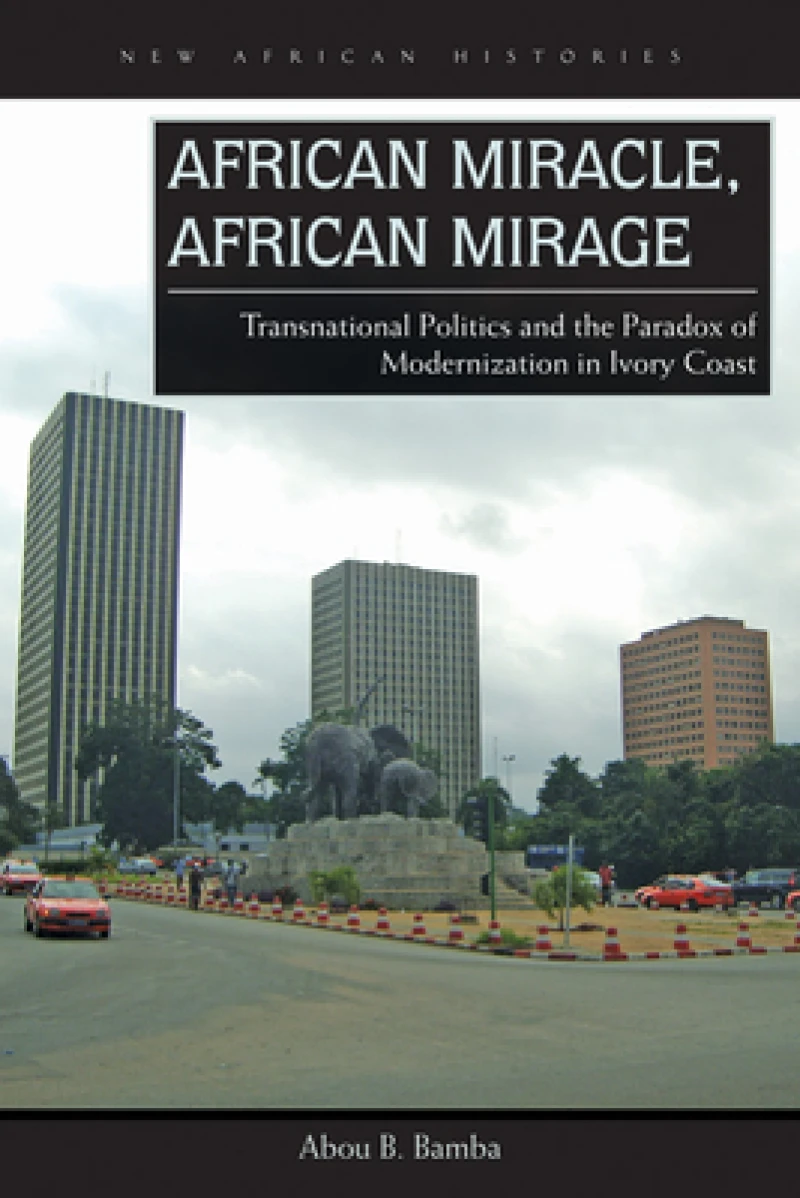
African Miracle, African Mirage : Transnational Politics and the Paradox of Modernization in Ivory Coast
Book Details
Format
Paperback / Softback
Book Series
New African Histories
ISBN-10
0821422391
ISBN-13
9780821422397
Publisher
Ohio University Press
Imprint
Ohio University Press
Country of Manufacture
GB
Country of Publication
GB
Publication Date
Nov 15th, 2016
Print length
320 Pages
Weight
448 grams
Dimensions
20.70 x 23.00 x 1.90 cms
Ksh 5,050.00
Werezi Extended Catalogue
0 in stock
Delivery Location
Delivery fee: Select location
Secure
Quality
Fast
Throughout the 1960s and 1970s, Ivory Coast was touted as an African miracle, a poster child for modernization and the ways that Western aid and multinational corporations would develop the continent. At the same time, Marxist scholars—most notably Samir Amin—described the capitalist activity in Ivory Coast as empty, unsustainable, and incapable of bringing real change to the lives of ordinary people. To some extent, Amin's criticisms were validated when, in the 1980s, the Ivorian economy collapsed. In African Miracle, African Mirage, Abou B. Bamba incorporates economics, political science, and history to craft a bold, transnational study of the development practices and intersecting colonial cultures that continue to shape Ivory Coast today. He considers French, American, and Ivorian development discourses in examining the roles of hydroelectric projects and the sugar, coffee, and cocoa industries in the country's boom and bust. In so doing, he brings the agency of Ivorians themselves to the fore in a way not often seen in histories of development. Ultimately, he concludes that the "maldevelopment" evident by the mid-1970s had less to do with the Ivory Coast's "insufficiently modern" citizens than with the conflicting missions of French and American interests within the context of an ever-globalizing world.
Get African Miracle, African Mirage by at the best price and quality guaranteed only at Werezi Africa's largest book ecommerce store. The book was published by Ohio University Press and it has pages.

