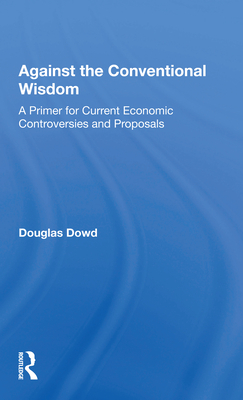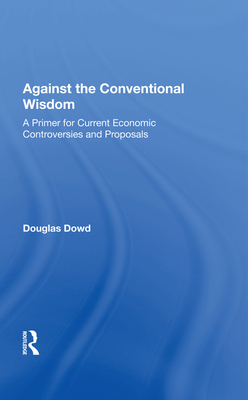
Against The Conventional Wisdom : A Primer For Current Economic Controversies And Proposals
by
Douglas Dowd
Book Details
Format
Hardback
ISBN-10
0367010291
ISBN-13
9780367010294
Publisher
Taylor & Francis Ltd
Imprint
Routledge
Country of Manufacture
GB
Country of Publication
GB
Publication Date
May 23rd, 2019
Print length
208 Pages
Weight
540 grams
Product Classification:
Politics & governmentPolitics and government
KSh 30,950.00
Currently unavailable
0 in stock
Delivery Location
Delivery fee: Select location
Secure
Quality
Fast
For the past twenty-five years, the United States has undergone a retrogression in its socioeconomic policies–facilitated and supported by most economists–thanks to the steady drumbeat of arguments by entrepreneurs and politicians who celebrate the free market for anything and everything and who advocate, among other follies, balanced budgets and reduced social expenditures. The consequences of these developments have already harmed millions of Americans; but in the present climate of opinion and politics, the policy direction is unlikely to be reversed. Against the Conventional Wisdom is a rallying cry against this stampede. It seeks to provide an analytical counterattack, showing that what has become “common sense” is not good sense economically or socially; is neither necessary nor desirable; and will deepen existing troubles, not resolve them. We cannot afford to continue to relive the 1920s–when the same arguments (and lack of disagreement) prevailed, when budgets were balanced, when finance capitalism and speculation took center stage. At that time a large proportion of the workforce found itself pushed aside by the 1920s version of downsizing and outsourcing, and the rich became much richer. In the opening chapters of the book, Douglas Dowd explores the reasoning and the realities of the free market ideology, in its original and present forms. Succeeding chapters treat in detail the human, social, and natural consequences of “rule by the market” over time and the dangers of allowing the market to rule today and tomorrow. The book concludes with suggested alternatives to current tendencies–alternatives that are simultaneously desirable, necessary, and realistic.
Get Against The Conventional Wisdom by Douglas Dowd at the best price and quality guaranteed only at Werezi Africa's largest book ecommerce store. The book was published by Taylor & Francis Ltd and it has 208 pages.
Customers Who Bought This Also Bought

Regime Change
KSh 5,050.00

Art of War / The Book of Lord Shang
KSh 1,100.00

Wretched of the Earth
KSh 2,000.00

White Saviorism In International Development
KSh 3,800.00
How To Do Nothing
KSh 2,700.00

How Civil Wars Start
KSh 2,000.00

Tomorrow Is Yesterday
KSh 4,700.00

The Thinking Machine
KSh 2,350.00

Second Treatise of Government – Norton Library
KSh 1,600.00

Becoming
KSh 2,350.00

A River in Darkness
KSh 1,250.00

Warning to the West
KSh 1,600.00