
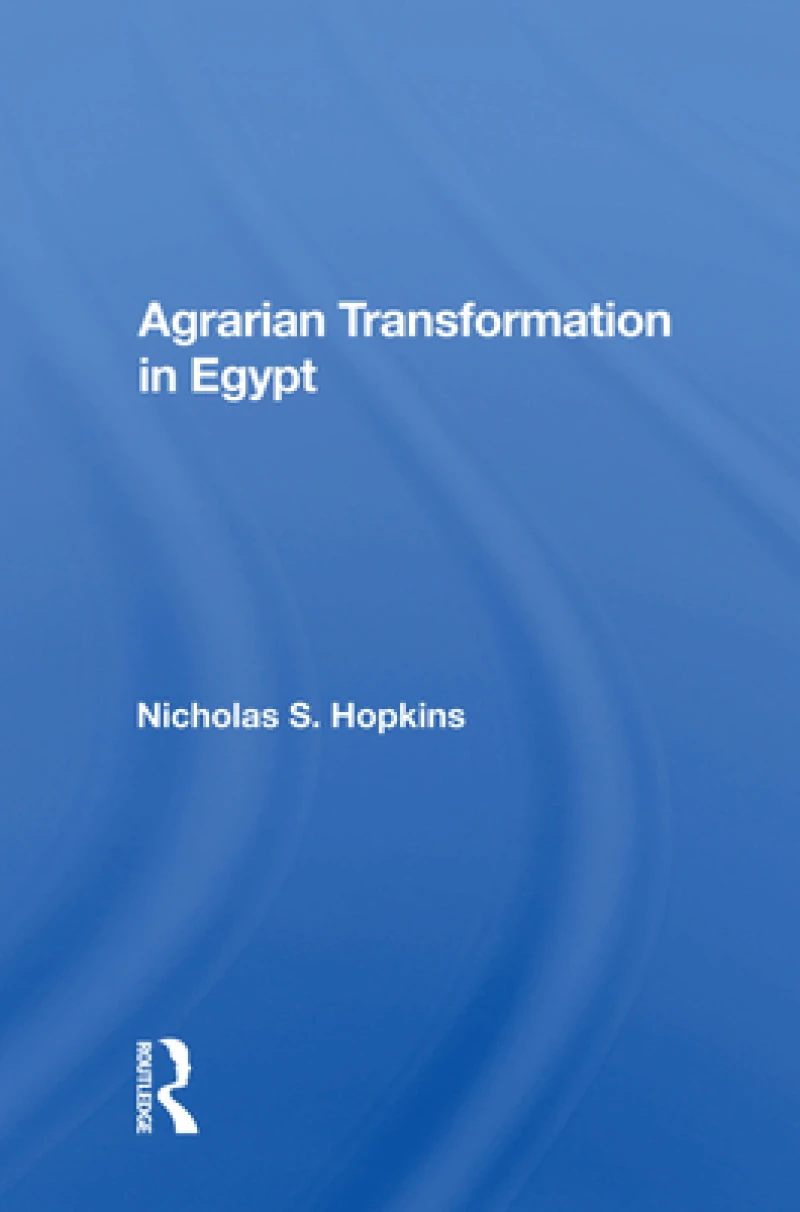
Agrarian Transformation In Egypt
Book Details
Format
Hardback or Cased Book
ISBN-10
0367013622
ISBN-13
9780367013622
Publisher
Taylor & Francis Ltd
Imprint
Routledge
Country of Manufacture
GB
Country of Publication
GB
Publication Date
Apr 28th, 2020
Print length
234 Pages
Weight
590 grams
Product Classification:
Regional studiesPolitics & government
Ksh 27,900.00
Werezi Extended Catalogue
0 in stock
Delivery Location
Delivery fee: Select location
Secure
Quality
Fast
The role of agricultural mechanization in the labor process in rural Egypt is the focus of this book, the first major anthropological study in Upper Egypt in a generation. Based on data gathered from a large village, the book portrays population trends, land-tenure patterns, irrigation practices, agricultural labor, mechanization, and marketing, and examines their implications for religion and local politics. The author emphasizes the changing role of the household and the relations between households, particularly the role of women and children. Especially important is Dr. Hopkins''s interpretation of the process of differentiation, where class is seen as a dynamic outgrowth of the labor process rather than simply deduced from ownership or control of property. The paradox of his Egypt study is that while objective differentiation is present, class consciousness is not. Patterns of social control based on hierarchy and deference are still strong and ensure the reproduction of the social system.
The role of agricultural mechanization in the labor process in rural Egypt is the focus of this book, the first major anthropological study in Upper Egypt in a generation. Based on data gathered from a large village, the book portrays population trends, land-tenure patterns, irrigation practices, agricultural labor, mechanization, and marketing, and examines their implications for religion and local politics. The author emphasizes the changing role of the household and the relations between households, particularly the role of women and children. Especially important is Dr. Hopkins''s interpretation of the process of differentiation, where class is seen as a dynamic outgrowth of the labor process rather than simply deduced from ownership or control of property. The paradox of his Egypt study is that while objective differentiation is present, class consciousness is not. Patterns of social control based on hierarchy and deference are still strong and ensure the reproduction of the social system.
Get Agrarian Transformation In Egypt by at the best price and quality guaranteed only at Werezi Africa's largest book ecommerce store. The book was published by Taylor & Francis Ltd and it has pages.

