
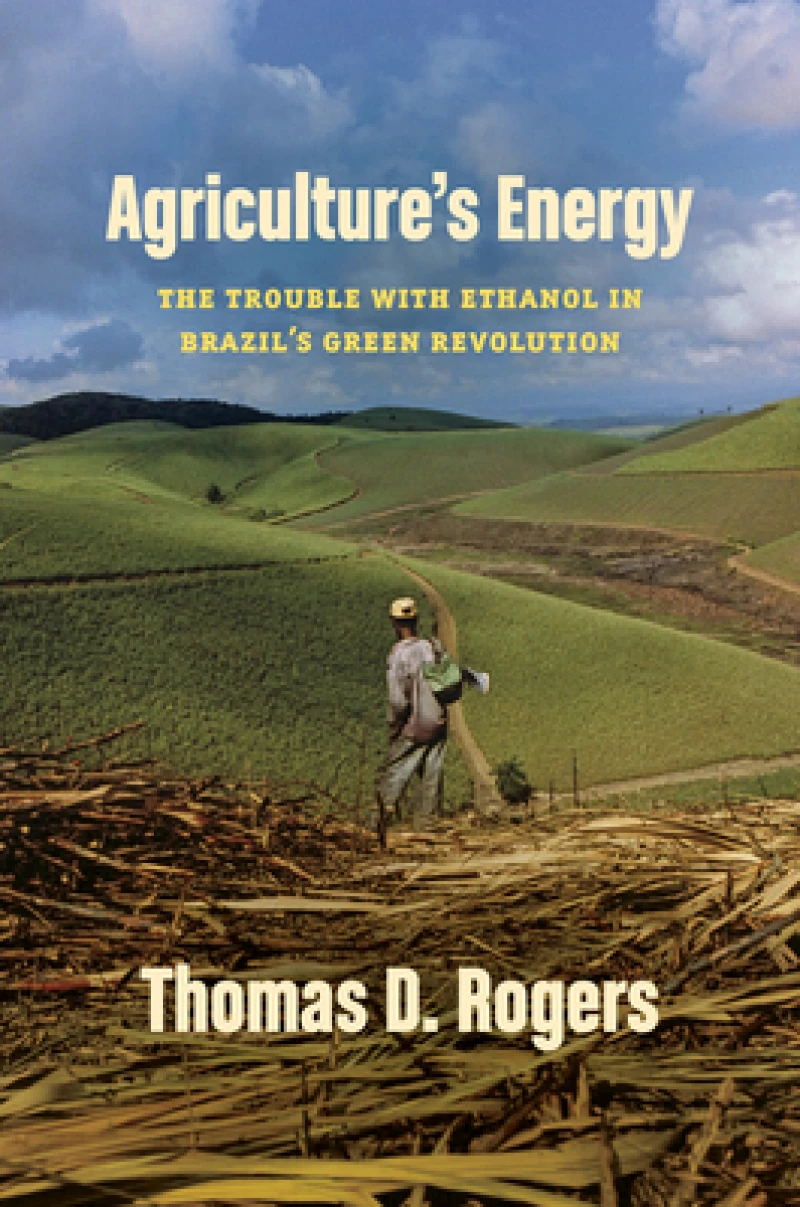
Agriculture''s Energy : The Trouble with Ethanol in Brazil's Green Revolution
Book Details
Format
Paperback / Softback
ISBN-10
1469670453
ISBN-13
9781469670454
Publisher
The University of North Carolina Press
Imprint
The University of North Carolina Press
Country of Manufacture
GB
Country of Publication
GB
Publication Date
Dec 6th, 2022
Print length
306 Pages
Weight
363 grams
Dimensions
23.30 x 15.50 x 1.70 cms
Ksh 4,500.00
Werezi Extended Catalogue
0 in stock
Delivery Location
Delivery fee: Select location
Secure
Quality
Fast
Thomas D. Rogers’s history of a modernizing Brazil tracks what happened when a key government program - created in the 1970s by the nation’s military regime - aspired to harness energy produced by sugarcane agriculture to power the country’s economy.
Thomas D. Rogers's history of a modernizing Brazil tracks what happened when a key government program—created in the 1970s by the nation's military regime—aspired to harness energy produced by sugarcane agriculture to power the country's economy. The National Alcohol Program, known as Proalcool, was a deliberate economic strategy designed to incentivize ethanol production and reduce gasoline consumption. As Brazil's capacity grew and as international oil shocks continued, the regime's planners doubled down on Proalcool. Drawing financing from international lenders and curiosity from other oil-dependent countries, for a time it was the world's largest oil-substitution and renewable-energy program.
Chronicling how Proalcool experimented with and exemplified the consolidation of government, agribusiness, large planters, agricultural and chemical research companies, and oil producers, this book expands into a rich investigation of the arc of Brazil's Green Revolution. The ethanol boom epitomized the vector of that arc, but Rogers keeps in view the wider development imperatives. He dramatizes the choices and trade-offs that ultimately resulted in a losing energy strategy, for Proalcool ended up creating a large contingent of impoverished workers, serious environmental degradation, and persistent hunger. The full consequences of the Green Revolution–fueled consolidation are still taking a toll today.
Chronicling how Proalcool experimented with and exemplified the consolidation of government, agribusiness, large planters, agricultural and chemical research companies, and oil producers, this book expands into a rich investigation of the arc of Brazil's Green Revolution. The ethanol boom epitomized the vector of that arc, but Rogers keeps in view the wider development imperatives. He dramatizes the choices and trade-offs that ultimately resulted in a losing energy strategy, for Proalcool ended up creating a large contingent of impoverished workers, serious environmental degradation, and persistent hunger. The full consequences of the Green Revolution–fueled consolidation are still taking a toll today.
Get Agriculture''s Energy by at the best price and quality guaranteed only at Werezi Africa's largest book ecommerce store. The book was published by The University of North Carolina Press and it has pages.

