
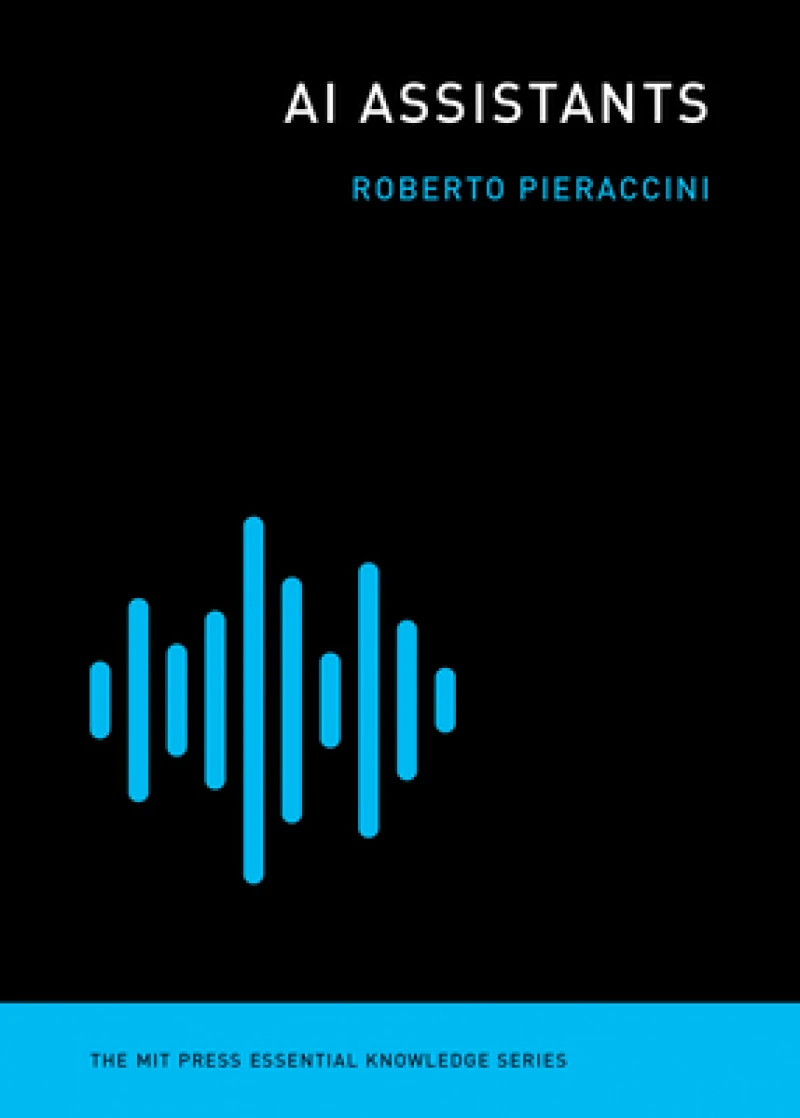
AI Assistants
Book Details
Format
Paperback / Softback
Book Series
The MIT Press Essential Knowledge series
ISBN-10
0262542552
ISBN-13
9780262542555
Publisher
MIT Press Ltd
Imprint
MIT Press
Country of Manufacture
US
Country of Publication
GB
Publication Date
Sep 7th, 2021
Print length
288 Pages
Weight
270 grams
Dimensions
13.00 x 17.70 x 2.20 cms
Product Classification:
Artificial intelligenceArtificial intelligence (AI)
Ksh 2,700.00
Re-Printing
0 in stock
Delivery Location
Delivery fee: Select location
Secure
Quality
Fast
An accessible explanation of the technologies that enable such popular voice-interactive applications as Alexa, Siri, and Google Assistant.
Have you talked to a machine lately? Asked Alexa to play a song, asked Siri to call a friend, asked Google Assistant to make a shopping list? This volume in the MIT Press Essential Knowledge series offers a nontechnical and accessible explanation of the technologies that enable these popular devices. Roberto Pieraccini, drawing on more than thirty years of experience at companies including Bell Labs, IBM, and Google, describes the developments in such fields as artificial intelligence, machine learning, speech recognition, and natural language understanding that allow us to outsource tasks to our ubiquitous virtual assistants.
Pieraccini describes the software components that enable spoken communication between humans and computers, and explains why it''s so difficult to build machines that understand humans. He explains speech recognition technology; problems in extracting meaning from utterances in order to execute a request; language and speech generation; the dialog manager module; and interactions with social assistants and robots. Finally, he considers the next big challenge in the development of virtual assistants: building in more intelligence--enabling them to do more than communicate in natural language and endowing them with the capacity to know us better, predict our needs more accurately, and perform complex tasks with ease.
Have you talked to a machine lately? Asked Alexa to play a song, asked Siri to call a friend, asked Google Assistant to make a shopping list? This volume in the MIT Press Essential Knowledge series offers a nontechnical and accessible explanation of the technologies that enable these popular devices. Roberto Pieraccini, drawing on more than thirty years of experience at companies including Bell Labs, IBM, and Google, describes the developments in such fields as artificial intelligence, machine learning, speech recognition, and natural language understanding that allow us to outsource tasks to our ubiquitous virtual assistants.
Pieraccini describes the software components that enable spoken communication between humans and computers, and explains why it''s so difficult to build machines that understand humans. He explains speech recognition technology; problems in extracting meaning from utterances in order to execute a request; language and speech generation; the dialog manager module; and interactions with social assistants and robots. Finally, he considers the next big challenge in the development of virtual assistants: building in more intelligence--enabling them to do more than communicate in natural language and endowing them with the capacity to know us better, predict our needs more accurately, and perform complex tasks with ease.
Get AI Assistants by at the best price and quality guaranteed only at Werezi Africa's largest book ecommerce store. The book was published by MIT Press Ltd and it has pages.

