
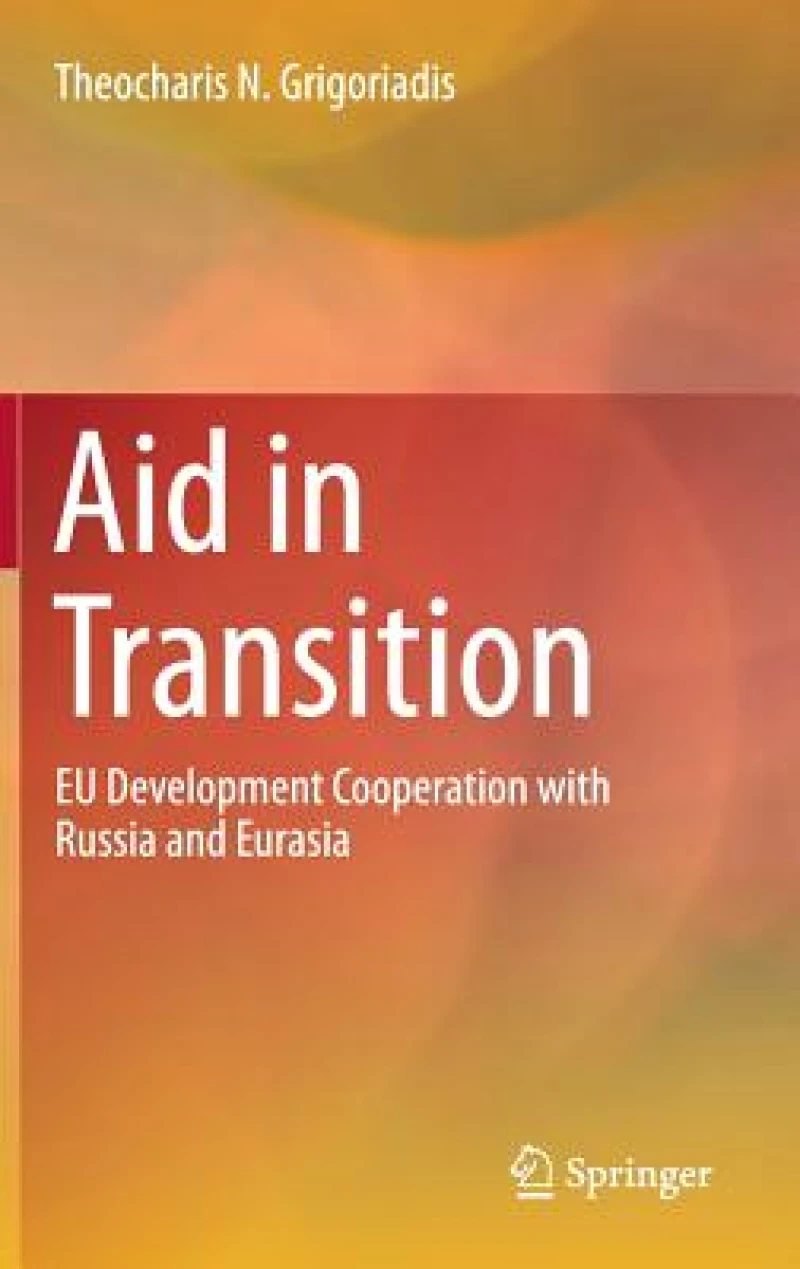
Aid in Transition : EU Development Cooperation with Russia and Eurasia
Book Details
Format
Hardback or Cased Book
ISBN-10
1461465818
ISBN-13
9781461465812
Publisher
Springer-Verlag New York Inc.
Imprint
Springer-Verlag New York Inc.
Country of Manufacture
US
Country of Publication
GB
Publication Date
Oct 15th, 2014
Print length
103 Pages
Weight
366 grams
Dimensions
24.30 x 16.80 x 1.30 cms
Ksh 8,100.00
Werezi Extended Catalogue
0 in stock
Delivery Location
Delivery fee: Select location
Secure
Quality
Fast
Evaluation reports indicate the problems and challenges faced by aid bureaucrats and suggest that the weakly institutionalized environments of Ukraine and Central Asia/Kazakhstan are less conducive to aid effectiveness than the heavily bureaucratized environment of Russia.
This book is the one of the first to address aid effectiveness as a political and comparative economics question. Since the collapse of the Soviet Union and the transition of its republics to market structures and more representative forms of government, the European Commission has recognized the necessity of a closer economic cooperation with Russia, Ukraine and Kazakhstan, the three largest economies of the former Soviet Union. This book suggests that the foreign aid of the European Union provided a set of reform incentives to post-Soviet planners. It created the grounds for the institutional and social transformation of the bureaucracy at both central and regional levels by integrating it into the aid allocation process. In Russia, Ukraine and Kazakhstan, the observed subordination of NGOs to the developmental priorities of the bureaucracy occurred at the expense of diversity and political openness. Nevertheless, this reality led to the emergence of transnational sovereignty partnerships that reduced poverty for the general population and motivated both bureaucrats and entrepreneurs to cooperate. Empirical models alone are not sufficient to delineate all the aspects of principal-agent relationships in post-Soviet bureaucracies. This is why formal modeling and analysis of qualitative data are extremely useful. Evaluation reports indicate the problems and challenges faced by aid bureaucrats and suggest that the weakly institutionalized environments of Ukraine and Central Asia/Kazakhstan are less conducive to aid effectiveness than the heavily bureaucratized environment of Russia. The proposed incentives system for the allocation of foreign aid links EU foreign policy with bureaucratic decision-making and reflects the choice sets of the donor and the recipient. Multilevel definitions of aid effectiveness are provided in the course of the book chapters.
Get Aid in Transition by at the best price and quality guaranteed only at Werezi Africa's largest book ecommerce store. The book was published by Springer-Verlag New York Inc. and it has pages.

