
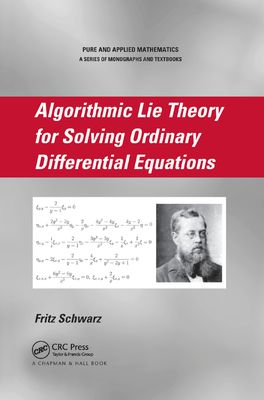
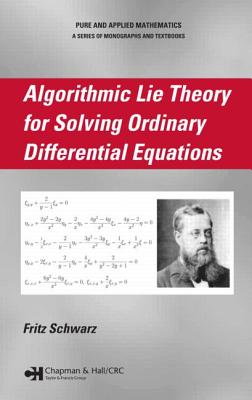
Algorithmic Lie Theory for Solving Ordinary Differential Equations
Book Details
Format
Paperback / softback
Book Series
Chapman & Hall/CRC Pure and Applied Mathematics
ISBN-10
0367388545
ISBN-13
9780367388546
Publisher
Taylor & Francis Ltd
Imprint
Chapman & Hall/CRC
Country of Manufacture
GB
Country of Publication
GB
Publication Date
Sep 5th, 2019
Print length
448 Pages
Weight
612 grams
KSh 12,800.00
Currently unavailable
0 in stock
Delivery Location
Delivery fee: Select location
Secure
Quality
Fast
Despite the fact that Sophus Lie''s theory was virtually the only systematic method for solving nonlinear ordinary differential equations (ODEs), it was rarely used for practical problems because of the massive amount of calculations involved. But with the advent of computer algebra programs, it became possible to apply Lie theory to concrete problems. Taking this approach, Algorithmic Lie Theory for Solving Ordinary Differential Equations serves as a valuable introduction for solving differential equations using Lie''s theory and related results.
After an introductory chapter, the book provides the mathematical foundation of linear differential equations, covering Loewy''s theory and Janet bases. The following chapters present results from the theory of continuous groups of a 2-D manifold and discuss the close relation between Lie''s symmetry analysis and the equivalence problem. The core chapters of the book identify the symmetry classes to which quasilinear equations of order two or three belong and transform these equations to canonical form. The final chapters solve the canonical equations and produce the general solutions whenever possible as well as provide concluding remarks. The appendices contain solutions to selected exercises, useful formulae, properties of ideals of monomials, Loewy decompositions, symmetries for equations from Kamke''s collection, and a brief description of the software system ALLTYPES for solving concrete algebraic problems.
After an introductory chapter, the book provides the mathematical foundation of linear differential equations, covering Loewy''s theory and Janet bases. The following chapters present results from the theory of continuous groups of a 2-D manifold and discuss the close relation between Lie''s symmetry analysis and the equivalence problem. The core chapters of the book identify the symmetry classes to which quasilinear equations of order two or three belong and transform these equations to canonical form. The final chapters solve the canonical equations and produce the general solutions whenever possible as well as provide concluding remarks. The appendices contain solutions to selected exercises, useful formulae, properties of ideals of monomials, Loewy decompositions, symmetries for equations from Kamke''s collection, and a brief description of the software system ALLTYPES for solving concrete algebraic problems.
Get Algorithmic Lie Theory for Solving Ordinary Differential Equations by Fritz Schwarz at the best price and quality guaranteed only at Werezi Africa's largest book ecommerce store. The book was published by Taylor & Francis Ltd and it has 448 pages.
Customers Who Bought This Also Bought

Locally Flat Embeddings of 3-Manifolds in S4
KSh 8,100.00
Advanced Problems in Mathematics
KSh 4,800.00

Algebra and Discrete Mathematics for Economics
KSh 13,150.00

Sets and Groups
KSh 18,600.00
Operator Algebras
KSh 32,400.00
The Shaping of Arithmetic after C.F. Gauss''s Disquisitiones Arithmeticae
KSh 16,200.00

Higher Category Theory
KSh 20,000.00

Abstract Algebra
KSh 16,200.00

Residues and Duality for Projective Algebraic Varieties
KSh 10,600.00
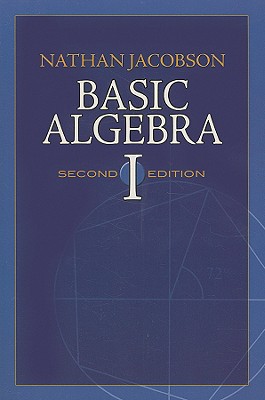
Basic Algebra I
KSh 4,500.00
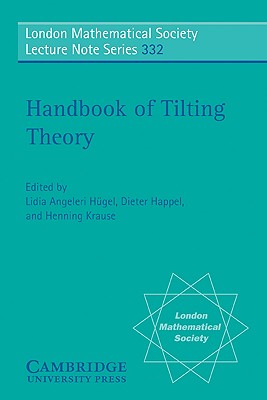
Handbook of Tilting Theory
KSh 17,100.00
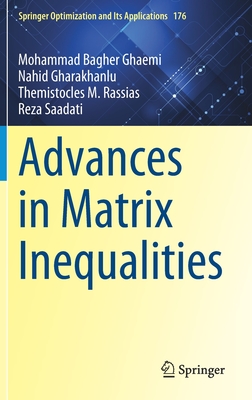
Advances in Matrix Inequalities
KSh 19,800.00
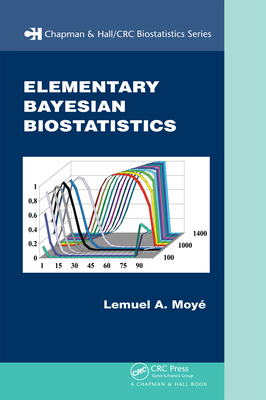
More in This Genre
Locally Flat Embeddings of 3-Manifolds in S4
KSh 8,100.00
Advanced Problems in Mathematics
KSh 4,800.00
Algebra and Discrete Mathematics for Economics
KSh 13,150.00
Sets and Groups
KSh 18,600.00
Operator Algebras
KSh 32,400.00
The Shaping of Arithmetic after C.F. Gauss''s Disquisitiones Arithmeticae
KSh 16,200.00
