
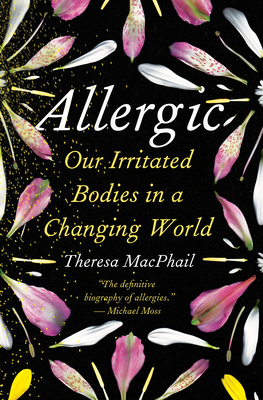
Allergic : Our Irritated Bodies in a Changing World
Book Details
Format
Paperback / softback
ISBN-10
0593229193
ISBN-13
9780593229194
Publisher
Not Stated
Country of Manufacture
GB
Country of Publication
GB
Publication Date
Jan 1st, 1900
KSh 4,500.00
Currently unavailable
0 in stock
Delivery Location
Delivery fee: Select location
Secure
Quality
Fast
An “important and deeply researched” (The Wall Street Journal) exploration of allergies, from their first medical description in 1819 to the cutting-edge science that is illuminating the changes in our environment and lifestyles that are making so many of us sick
Hay fever. Peanut allergies. Eczema. Either you have an allergy or you know someone who does. Billions of people worldwide—an estimated 30 to 40 percent of the global population—have some form of allergy. Even more concerning, over the last decade the number of people diagnosed with an allergy has been steadily increasing, placing an ever-growing medical burden on individuals, families, communities, and healthcare systems.
Medical anthropologist Theresa MacPhail, herself an allergy sufferer whose father died of a beesting, set out to understand why. In pursuit of answers, MacPhail studied the dangerous experiments of early immunologists as well as the mind-bending recent development of biologics and immunotherapies that are giving the most severely impacted patients hope. She scaled a roof with an air-quality controller who diligently counts pollen by hand for hours every day; met a mother who struggled to use WIC benefits for her daughter with severe food allergies; spoke with doctors at some of the finest allergy clinics in the world; and discussed the intersecting problems of climate change, pollution, and pollen with biologists who study seasonal respiratory allergies.
This is the story of allergies: what they are, why we have them, and what that might mean about the fate of humanity in a rapidly changing world.
Hay fever. Peanut allergies. Eczema. Either you have an allergy or you know someone who does. Billions of people worldwide—an estimated 30 to 40 percent of the global population—have some form of allergy. Even more concerning, over the last decade the number of people diagnosed with an allergy has been steadily increasing, placing an ever-growing medical burden on individuals, families, communities, and healthcare systems.
Medical anthropologist Theresa MacPhail, herself an allergy sufferer whose father died of a beesting, set out to understand why. In pursuit of answers, MacPhail studied the dangerous experiments of early immunologists as well as the mind-bending recent development of biologics and immunotherapies that are giving the most severely impacted patients hope. She scaled a roof with an air-quality controller who diligently counts pollen by hand for hours every day; met a mother who struggled to use WIC benefits for her daughter with severe food allergies; spoke with doctors at some of the finest allergy clinics in the world; and discussed the intersecting problems of climate change, pollution, and pollen with biologists who study seasonal respiratory allergies.
This is the story of allergies: what they are, why we have them, and what that might mean about the fate of humanity in a rapidly changing world.
Get Allergic at the best price and quality guaranteed only at Werezi Africa's largest book ecommerce store. The book was published by Not Stated.
