
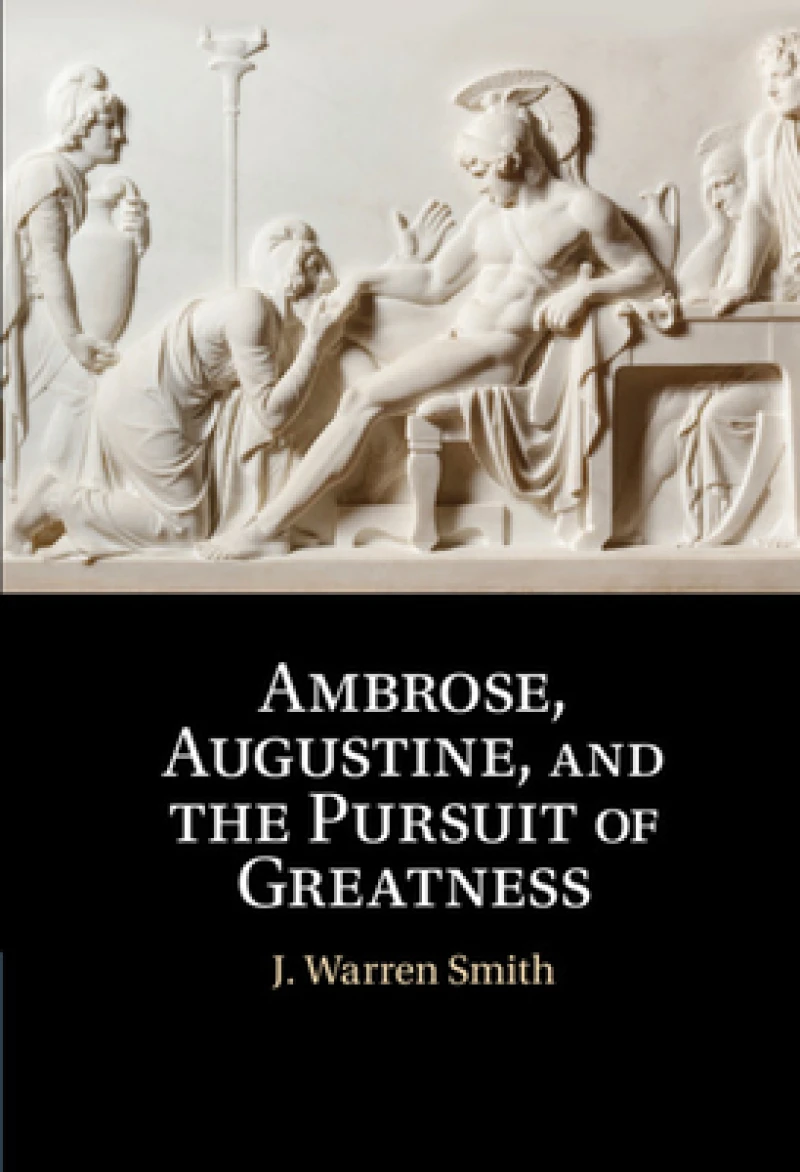
Ambrose, Augustine, and the Pursuit of Greatness
Book Details
Format
Hardback or Cased Book
ISBN-10
1108490743
ISBN-13
9781108490740
Publisher
Cambridge University Press
Imprint
Cambridge University Press
Country of Manufacture
US
Country of Publication
GB
Publication Date
Dec 10th, 2020
Print length
350 Pages
Weight
620 grams
Dimensions
15.90 x 23.60 x 2.80 cms
Product Classification:
Philosophy of religionTheology
Ksh 15,650.00
Manufactured on Demand
0 in stock
Delivery Location
Delivery fee: Select location
Secure
Quality
Fast
Two important theologians of early Christianity were Ambrose of Milan and Augustine of Hippo. Both were intellectually formed by philosophers, such as Cicero, who taught that virtue was the way to greatness. Yet they saw contradictions between Roman and Christian ethical ideals. Could these competing visions of greatness be reconciled?
Since Aristotle, the concept of the magnanimous or great-souled man was employed by philosophers of antiquity to describe individuals who attained the highest degree of virtue. Greatness of soul (magnitudo animi or magnanimitas) was part of the language of Classical and Hellenistic virtue theory central to the education of Ambrose and Augustine. Yet as bishops they were conscious of fundamental differences between Christian and pagan visions of virtue. Greatness of soul could not be appropriated whole cloth. Instead, the great-souled man had to be baptized to conform with Christian understandings of righteousness, compassion, and humility. In this book, J. Warren Smith traces the development of the ideal of the great-souled man from Plato and Aristotle to latter adaptions by Cicero, Seneca, and Plutarch. He then examines how Ambrose''s and Augustine''s theological commitments influenced their different critiques, appropriations, and modifications of the language of magnanimity.
Get Ambrose, Augustine, and the Pursuit of Greatness by at the best price and quality guaranteed only at Werezi Africa's largest book ecommerce store. The book was published by Cambridge University Press and it has pages.

