
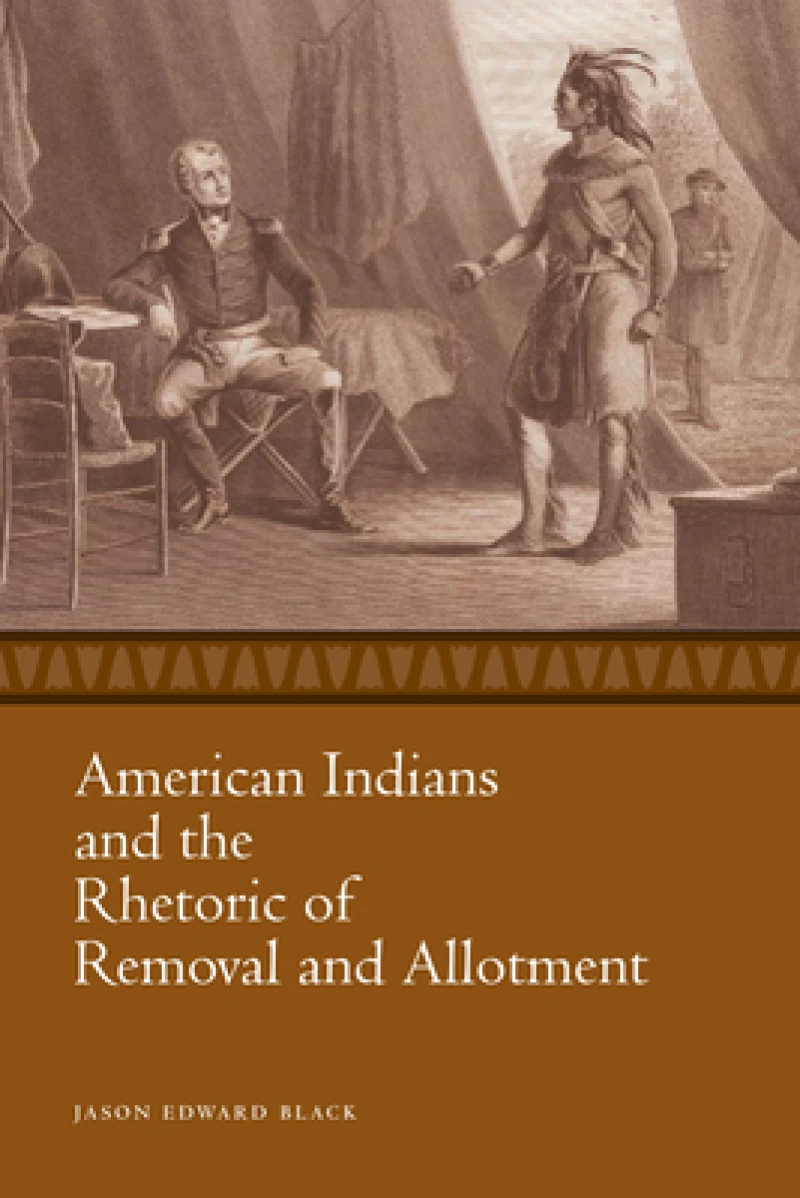
American Indians and the Rhetoric of Removal and Allotment
Book Details
Format
Hardback or Cased Book
Book Series
Race, Rhetoric, and Media Series
ISBN-10
1628461969
ISBN-13
9781628461961
Publisher
University Press of Mississippi
Imprint
University Press of Mississippi
Country of Manufacture
US
Country of Publication
GB
Publication Date
Feb 28th, 2015
Print length
214 Pages
Weight
486 grams
Dimensions
16.00 x 23.60 x 2.30 cms
Product Classification:
History of the AmericasModern history to 20th century: c 1700 to c 1900Indigenous peoples
Ksh 15,850.00
Werezi Extended Catalogue
0 in stock
Delivery Location
Delivery fee: Select location
Secure
Quality
Fast
Examines the ways the US government's rhetoric and American Indian responses contributed to the policies of Native-US relations throughout the nineteenth century's removal and allotment eras. Black shows how these discourses together constructed the perception of the US government and of American Indian communities.
Jason Black examines the ways the U.S. government''s rhetoric and American Indian voices contributed to the policies of Native-U.S. relations throughout the nineteenth century''s removal and allotment eras. Black shows how these discourses co-constructed the perception of the U.S. government and American Indian communities and contributed to the relationship. Such interactions - though certainly not equal between the two - illustrated the hybrid nature of Native-U.S. rhetoric in the nineteenth century. That is, both governmental colonizing discourse and indigenous decolonizing discourse added arguments, identity constructions, and rhetorical moves to the colonizing relationship.Native Dualities demonstrates how American Indians decolonized dominant rhetoric in terms of impeding the removal and allotment policies. By turning around the U.S. government''s discursive frameworks and inventing their own rhetorical tactics, American Indian communities helped restyle their own and the government''s identities. During the first third of the twentieth century, Native decolonization impacted the Native-U.S. relationship as American Indians urged for the successful passage of the Indian Citizenship Act of 1924 and the Indian New Deal of 1934. In the end, Native communities were granted increased rhetorical power through decolonization, though the U.S. government retained a powerful colonial influence through its territorial management of Natives. The Indian Citizenship Act and the Indian New Deal - where this book concludes - emblemize the prevalence of the identity duality of U.S. citizenship that amalgamated American Indians to the nation, yet segregated them on reservations outside the spaces of U.S. society. This duality of inclusion and exclusion was built incrementally and existed as residues of nineteenth century Native-U.S. rhetorical relations.
Get American Indians and the Rhetoric of Removal and Allotment by at the best price and quality guaranteed only at Werezi Africa's largest book ecommerce store. The book was published by University Press of Mississippi and it has pages.

