
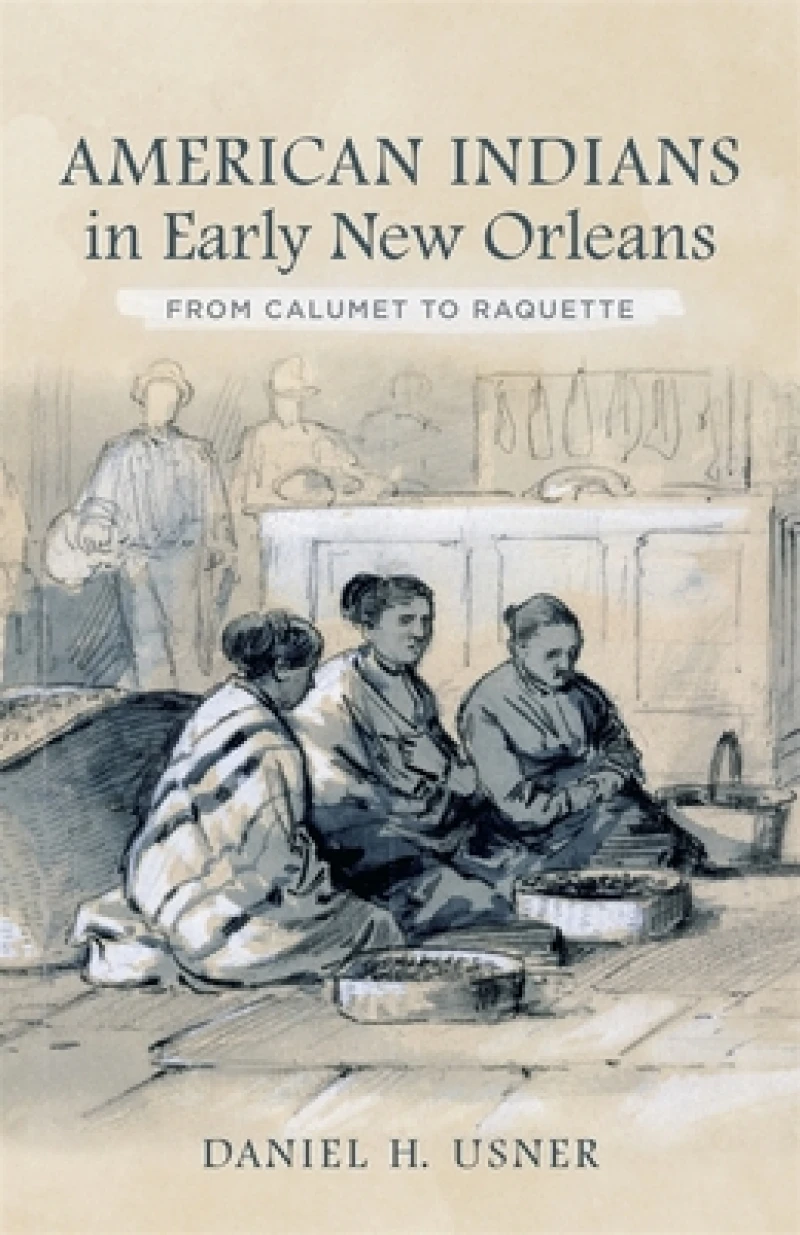
American Indians in Early New Orleans : From Calumet to Raquette
Book Details
Format
Hardback or Cased Book
ISBN-10
0807170097
ISBN-13
9780807170090
Publisher
Louisiana State University Press
Imprint
Louisiana State University Press
Country of Manufacture
US
Country of Publication
GB
Publication Date
Sep 10th, 2018
Print length
208 Pages
Weight
404 grams
Dimensions
21.60 x 14.00 x 2.20 cms
Ksh 5,900.00
Temporarily out of stock, due soon
0 in stock
Delivery Location
Delivery fee: Select location
Secure
Quality
Fast
Lays to rest assumptions that American Indian communities vanished long ago from urban south Louisiana and recovers the experiences of Native Americans in Old New Orleans from their perspective.
From a peace ceremony conducted by Chitimacha diplomats before Governor Bienville's makeshift cabin in 1718 to a stickball match played by Choctaw teams in 1897 in Athletic Park, American Indians greatly influenced the history and culture of the Crescent City during its first two hundred years. In American Indians in Early New Orleans, Daniel H. Usner lays to rest assumptions that American Indian communities vanished long ago from urban south Louisiana and recovers the experiences of Native Americans in Old New Orleans from their perspective.
Centuries before the arrival of Europeans, American Indians controlled the narrow strip of land between the Mississippi River and present-day Lake Pontchartrain to transport goods, harvest resources, and perform rituals. The birth and growth of colonial New Orleans depended upon the materials and services provided by Native inhabitants as liaisons, traders, soldiers, and even slaves. Despite losing much of their homeland and political power after the Louisiana Purchase, Lower Mississippi Valley Indians refused to retreat from New Orleans's streets and markets; throughout the 1800s, Choctaw and other nearby communities improvised ways of expressing their cultural autonomy and economic interests- as peddlers, laborers, and performers- in the face of prejudice and hostility from non-Indian residents. Numerous other American Indian tribes, forcibly removed from the southeastern United States, underwent a painful passage through the city before being transported farther up the Mississippi River. At the dawn of the twentieth century, a few Indian communities on the north shore of Lake Pontchartrain continued to maintain their creative relationship with New Orleans by regularly vending crafts and plants in the French Market.
In this groundbreaking narrative, Usner explores the array of ways that Native people used this river port city, from its founding to the World War I era, and demonstrates their crucial role in New Orleans's history.
Centuries before the arrival of Europeans, American Indians controlled the narrow strip of land between the Mississippi River and present-day Lake Pontchartrain to transport goods, harvest resources, and perform rituals. The birth and growth of colonial New Orleans depended upon the materials and services provided by Native inhabitants as liaisons, traders, soldiers, and even slaves. Despite losing much of their homeland and political power after the Louisiana Purchase, Lower Mississippi Valley Indians refused to retreat from New Orleans's streets and markets; throughout the 1800s, Choctaw and other nearby communities improvised ways of expressing their cultural autonomy and economic interests- as peddlers, laborers, and performers- in the face of prejudice and hostility from non-Indian residents. Numerous other American Indian tribes, forcibly removed from the southeastern United States, underwent a painful passage through the city before being transported farther up the Mississippi River. At the dawn of the twentieth century, a few Indian communities on the north shore of Lake Pontchartrain continued to maintain their creative relationship with New Orleans by regularly vending crafts and plants in the French Market.
In this groundbreaking narrative, Usner explores the array of ways that Native people used this river port city, from its founding to the World War I era, and demonstrates their crucial role in New Orleans's history.
Get American Indians in Early New Orleans by at the best price and quality guaranteed only at Werezi Africa's largest book ecommerce store. The book was published by Louisiana State University Press and it has pages.

