
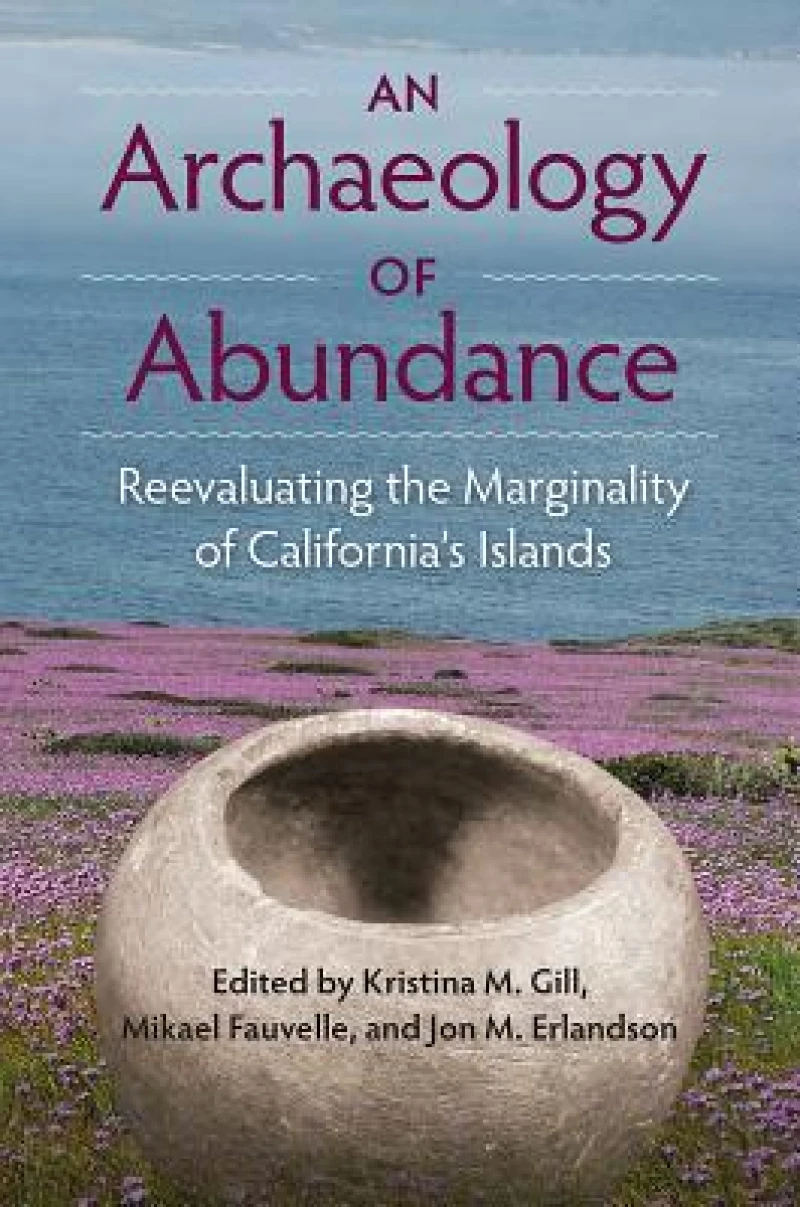
An Archaeology of Abundance : Re-evaluating the Marginality of California""s Islands
Book Details
Format
Hardback or Cased Book
ISBN-10
0813056160
ISBN-13
9780813056166
Publisher
University Press of Florida
Imprint
University Press of Florida
Country of Manufacture
US
Country of Publication
GB
Publication Date
Feb 26th, 2019
Print length
320 Pages
Weight
683 grams
Dimensions
23.30 x 15.50 x 2.20 cms
Product Classification:
ArchaeologyArchaeology
Ksh 14,400.00
Temporarily out of stock, due soon
0 in stock
Delivery Location
Delivery fee: Select location
Secure
Quality
Fast
The Alta and Baja California islands changed dramatically in the centuries after Spanish colonists arrived. Modern scientists have assumed the islands were sparse before European contact, but this book reassesses this belief, analysing new lines of evidence showing that the California Islands were rich in resources important to human populations.
The Alta and Baja California islands changed dramatically in the centuries after Spanish colonists arrived. Native populations were decimated, and their lives were altered through forced assimilation and the cessation of burning and traditional foraging practices. Overgrazing, overfishing, and the introduction of nonnative species depleted natural resources severely. Modern scientists have assumed the islands were similarly sparse before European contact, but An Archaeology of Abundance reassesses this long-held belief, analyzing new lines of evidence showing that the California Islands were rich in resources important to human populations. Contributors examine data from Paleocoastal to historic times that suggest the islands were optimal habitats that provided food, fresh water, minerals, and fuel for the people living there. Botanical remains from these sites, together with the modern resurgence of plant communities after the removal of livestock, challenge theories formed during the historical ranching era. Geoarchaeological surveys contradict claims that the islands had few high-quality materials for making stone tools. Trade exchange routes, underwater forests of edible seaweeds, and reconstructions of population densities also support the case for abundance on the islands. Reinforcing the argument that these islands were not marginal environments in the early human history of the region, the discoveries presented in this volume hold significant implications for reassessing the ancient history of islands around the world that have undergone similar ecological transformations. A volume in the series Society and Ecology in Island and Coastal Archaeology, edited by Victor D. Thompson.
Get An Archaeology of Abundance by at the best price and quality guaranteed only at Werezi Africa's largest book ecommerce store. The book was published by University Press of Florida and it has pages.

