
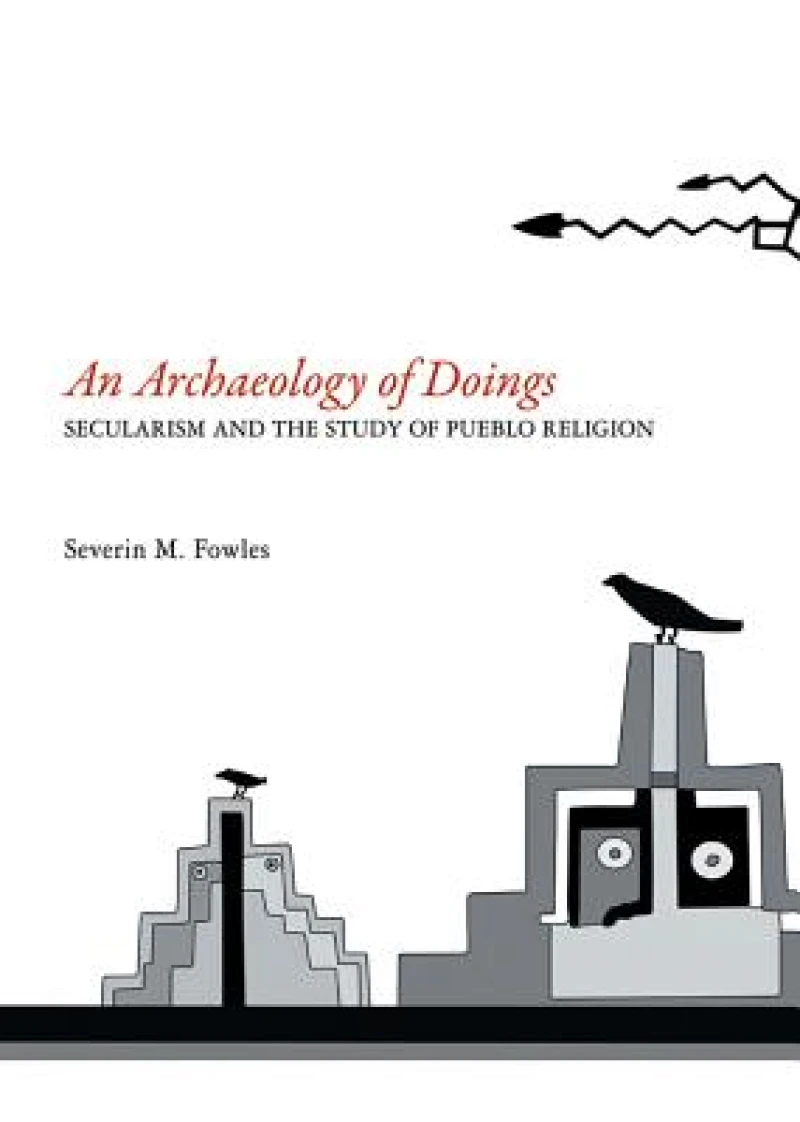
An Archaeology of Doings : Secularism and the Study of Pueblo Religion
Book Details
Format
Paperback / Softback
ISBN-10
1934691569
ISBN-13
9781934691564
Publisher
SAR Press
Imprint
SAR Press
Country of Manufacture
US
Country of Publication
GB
Publication Date
Apr 30th, 2013
Print length
304 Pages
Weight
647 grams
Dimensions
25.40 x 17.70 x 2.20 cms
Product Classification:
History of the AmericasHistory of the Americas
Ksh 4,900.00
Werezi Extended Catalogue
0 in stock
Delivery Location
Delivery fee: Select location
Secure
Quality
Fast
There is an unsettling paradox in the anthropology of religion. A large body of scholarship now questions the universality of “religion” as an analytical category in ethnographic and historical studies. Modern understandings of religion emerged out of a specifically Western genealogy, and noting this, many have grown suspicious of any claim that such understandings can be applied with fidelity to premodern or non-Western contexts. Contemporary archaeologists, in contrast, now use the terms “religion” and “ritual” with greater ease than ever, even though their deeply premodern and fully non-Western objects of study would seem to present the greatest challenges to universal definitions of religion as a distinct sphere of human belief and practice.
In this probing study, Severin Fowles undertakes a sustained critique of religion as an analytical category in archaeological research. Building from a careful dissection of the relationship between secularism, premodernity, and archaeology, Fowles explores just what is at stake in our reconstructions of an enchanted past. In doing so, he offers a detailed examination of the case of Ancestral Pueblo society in the American Southwest, widely regarded in the anthropological literature as a native tradition that was consumed with religious ritual. Moving against this orthodoxy, Fowles provocatively argues that—prior to Catholic missionization during the colonial era—the Pueblo people did not, in fact, have a religion at all. They had, he suggests, something else, something that cannot be easily translated into Western categories. Drawing upon the indigenous vernacular, Fowles concludes that Pueblo “doings” were this something else, and he charts a course toward a new archaeology of doings that moves us far beyond the familiar terrain of premodern religion.
In this probing study, Severin Fowles undertakes a sustained critique of religion as an analytical category in archaeological research. Building from a careful dissection of the relationship between secularism, premodernity, and archaeology, Fowles explores just what is at stake in our reconstructions of an enchanted past. In doing so, he offers a detailed examination of the case of Ancestral Pueblo society in the American Southwest, widely regarded in the anthropological literature as a native tradition that was consumed with religious ritual. Moving against this orthodoxy, Fowles provocatively argues that—prior to Catholic missionization during the colonial era—the Pueblo people did not, in fact, have a religion at all. They had, he suggests, something else, something that cannot be easily translated into Western categories. Drawing upon the indigenous vernacular, Fowles concludes that Pueblo “doings” were this something else, and he charts a course toward a new archaeology of doings that moves us far beyond the familiar terrain of premodern religion.
Get An Archaeology of Doings by at the best price and quality guaranteed only at Werezi Africa's largest book ecommerce store. The book was published by SAR Press and it has pages.

