
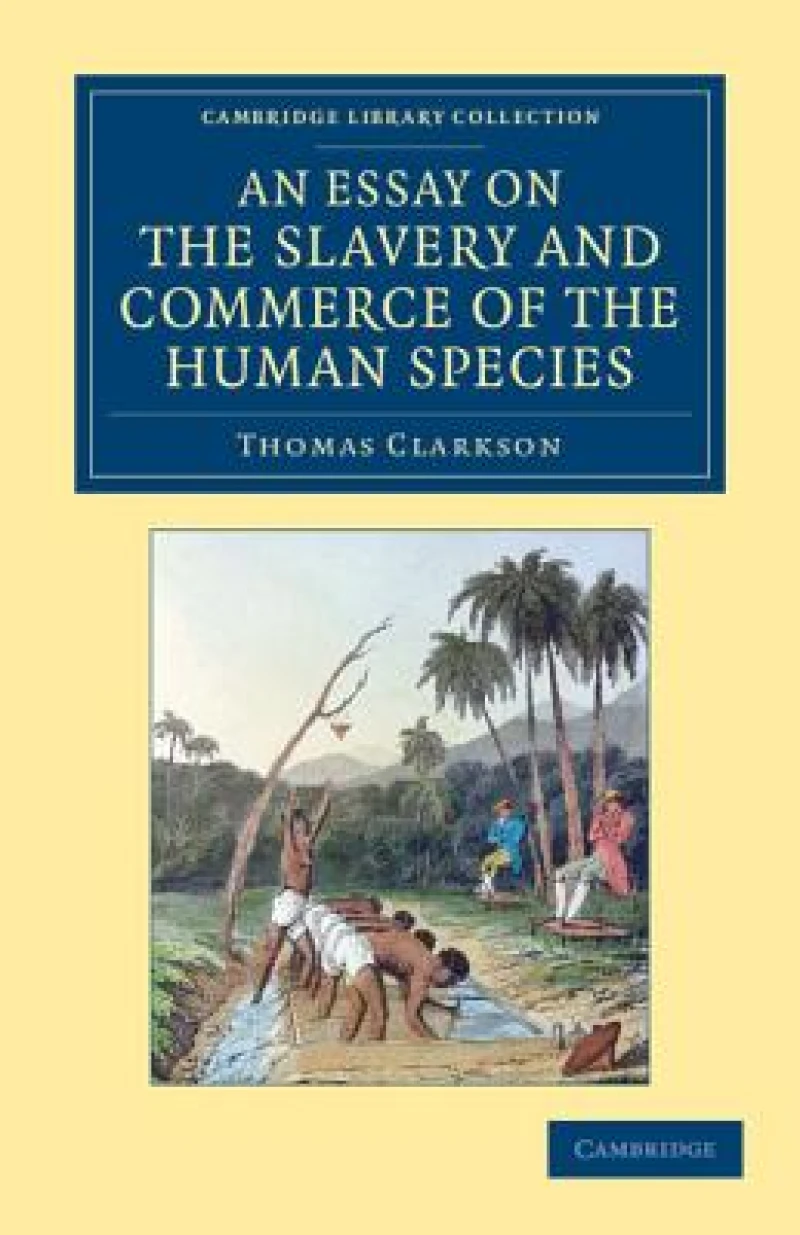
An Essay on the Slavery and Commerce of the Human Species : Particularly the African, Translated from a Latin Dissertation, Which Was Honoured with the First Prize in the University of Cambridge, for the Year 1785
Book Details
Format
Paperback / Softback
ISBN-10
1108060145
ISBN-13
9781108060141
Publisher
Cambridge University Press
Imprint
Cambridge University Press
Country of Manufacture
GB
Country of Publication
GB
Publication Date
Jun 6th, 2013
Print length
336 Pages
Weight
440 grams
Dimensions
13.80 x 21.70 x 2.20 cms
Ksh 6,650.00
Manufactured on Demand
0 in stock
Delivery Location
Delivery fee: Select location
Secure
Quality
Fast
This reissue incorporates Thomas Clarkson's 1786 Essay alongside John Newton's graphic Thoughts on the African Slave Trade (1788), a first-hand account of his experiences of the Middle Passage in the 1750s. Clarkson's highly influential piece marks the beginning of the anti-slavery campaigning to which he devoted his life.
This 1786 publication is a translation of a prizewinning Latin essay written by Thomas Clarkson (1760–1846) at Cambridge the previous year. Clarkson's deep research into the Atlantic slave trade instilled in him a sense of duty, inspiring him to devote his life to abolitionism. The publication of the essay introduced Clarkson to like-minded campaigners, notably William Wilberforce (1759–1833) and Granville Sharpe (1735–1813), with whom he helped to establish in 1787 the pioneering Society for Effecting the Abolition of the Slave Trade. Thoughts on the African Slave Trade (1788) by the sailor, slave trader and Anglican clergyman John Newton (1725–1807) is also reissued in this volume. Published thirty-four years after Newton's retirement from the slave trade, this pamphlet apologises for his 'too late' conversion to the abolitionist movement and describes the horrific conditions aboard slave ships during the Middle Passage.
Get An Essay on the Slavery and Commerce of the Human Species by at the best price and quality guaranteed only at Werezi Africa's largest book ecommerce store. The book was published by Cambridge University Press and it has pages.

