
Book Details
Format
Hardback or Cased Book
ISBN-10
0199594686
ISBN-13
9780199594689
Edition
2 Revised edition
Publisher
Oxford University Press
Imprint
Oxford University Press
Country of Manufacture
GB
Country of Publication
GB
Publication Date
Oct 27th, 2011
Print length
376 Pages
Weight
984 grams
Dimensions
24.70 x 19.50 x 4.50 cms
Ksh 28,950.00
Manufactured on Demand
0 in stock
Delivery Location
Delivery fee: Select location
Secure
Quality
Fast
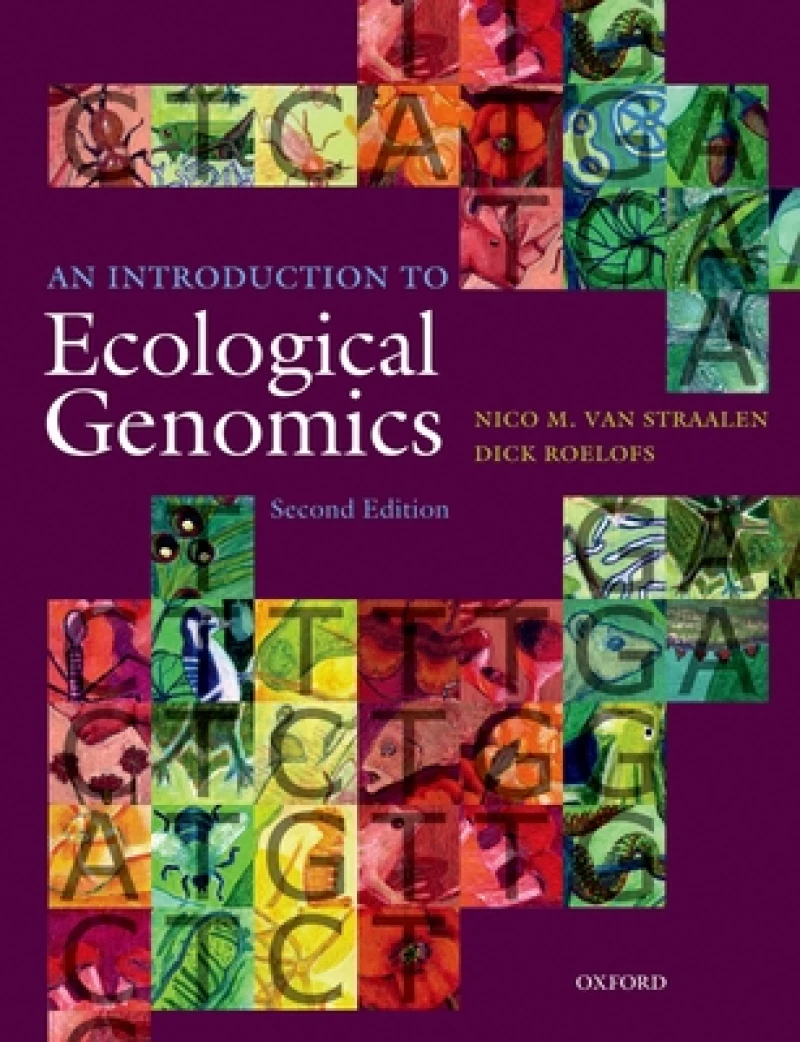
The genomics revolution has expanded from its origins in molecular biology to impact upon every discipline in the life sciences, including ecology. This new edition incorporates a balance of plant, animal, and microbial examples, and continues to define the new and exciting field of ecological genomics.
The genomics revolution has expanded from its origins in molecular biology to impact upon every discipline in the life sciences, including ecology. Several lines of ecological research can now be profitably addressed using genomics technology, including issues of nutrient cycling, population structure, life-history variation, trophic interaction, stress responses, and adaptation to environmental change. This new edition addresses a series of fundamental ecological questions: the relationship between community structure and ecological function in ecosystems; how variation in life-history patterns among species can be explained from interaction between the genome and the environment; the molecular responses to changing and toxic environmental conditions; adaptive phenotypes and their relationship to genetic variation. Each of these questions is evaluated in the light of recent advances in genomics research, paying particular attention to data obtained from sequencing and screening of environmental genomes (metagenomics), microarray-based transcription profiling, gene expression directed by signal-transduction pathways, and the analysis of genomic polymorphisms. The chapters covering these key areas are preceded by discussions of genomics methodology (including an overview of next-generation sequencing technologies) and comparative genomics, and the book concludes with a chapter on integrative approaches such as ecological control analysis. The authors also provide a comparative survey of the properties of genomes (genome size, gene families, synteny, and polymorphism) for prokaryotes as well as the main eukaryotic models. An Introduction to Ecological Genomics incorporates a balance of plant, animal, and microbial examples, and continues to define the new and exciting field of ecological genomics.
Get An Introduction to Ecological Genomics by at the best price and quality guaranteed only at Werezi Africa's largest book ecommerce store. The book was published by Oxford University Press and it has pages.

