
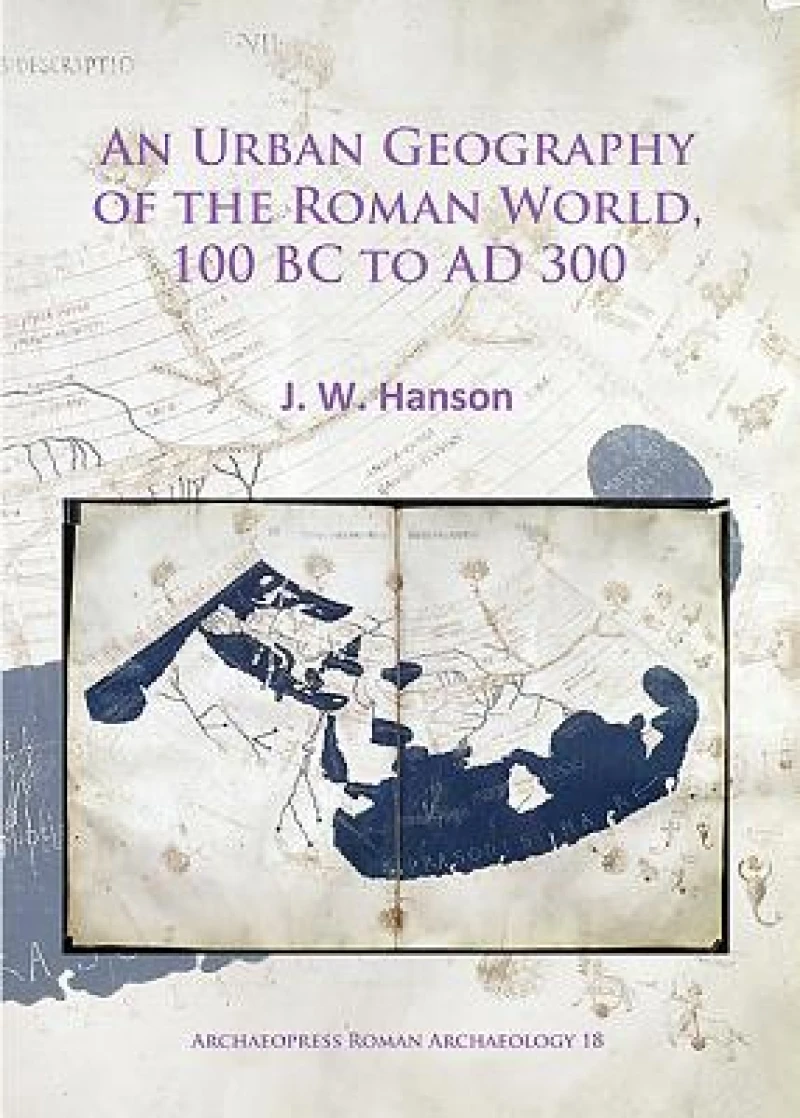
An Urban Geography of the Roman World, 100 BC to AD 300
by
J. W. Hanson
Book Details
Format
Paperback / Softback
Book Series
Archaeopress Roman Archaeology
ISBN-10
178491472X
ISBN-13
9781784914721
Publisher
Archaeopress
Imprint
Archaeopress Archaeology
Country of Manufacture
GB
Country of Publication
GB
Publication Date
Nov 7th, 2016
Print length
832 Pages
Weight
2,834 grams
Dimensions
20.00 x 14.00 x 2.00 cms
Product Classification:
Classical Greek & Roman archaeology
Ksh 14,950.00
Werezi Extended Catalogue
Delivery in 14 days
2 copies in stock
Delivery Location
Delivery fee: Select location
Delivery in 14 days
Secure
Quality
Fast
This book provides a new account of the urbanism of the Roman world between 100 BC and AD 300. To do so, it draws on a combination of textual sources and archaeological material to provide a new catalogue of cities, calculates new estimates of their areas and uses a range of population densities to estimate their populations.
Although there have been numerous studies of individual cities or groups of cities, there has never been a study of the urbanism of the Roman world as a whole, meaning that we have been poorly informed not only about the number of cities and how they were distributed and changed over time, but also about their sizes and populations, monumentality, and civic status. This book provides a new account of the urbanism of the Roman world between 100 BC and AD 300. To do so, it draws on a combination of textual sources and archaeological material to provide a new catalogue of cities, calculates new estimates of their areas and uses a range of population densities to estimate their populations, and brings together available information about their monumentality and civic status for the first time. This evidence demonstrates that, although there were relatively few cities, many had considerable sizes and populations, substantial amounts of monumentality, and held various kinds of civic status. This indicates that there was significant economic growth in this period, including both extensive and intensive economic growth, which resulted from an influx of wealth through conquest and the intrinsic changes that came with Roman rule (including the expansion of urbanism). This evidence also suggests that there was a system that was characterized by areas of intense urban demand, which was met through an efficient system for the extraction of necessity and luxury goods from immediate hinterlands and an effective system for bringing these items from further afield. The disruption of these links seems to have put this system under considerable strain towards the end of this period and may have been sufficient to cause its ultimate collapse. This appears to have been in marked contrast to the medieval and early modern periods, when urbanism was more able to respond to changes in supply and demand.
Get An Urban Geography of the Roman World, 100 BC to AD 300 by at the best price and quality guaranteed only at Werezi Africa's largest book ecommerce store. The book was published by Archaeopress and it has pages.

