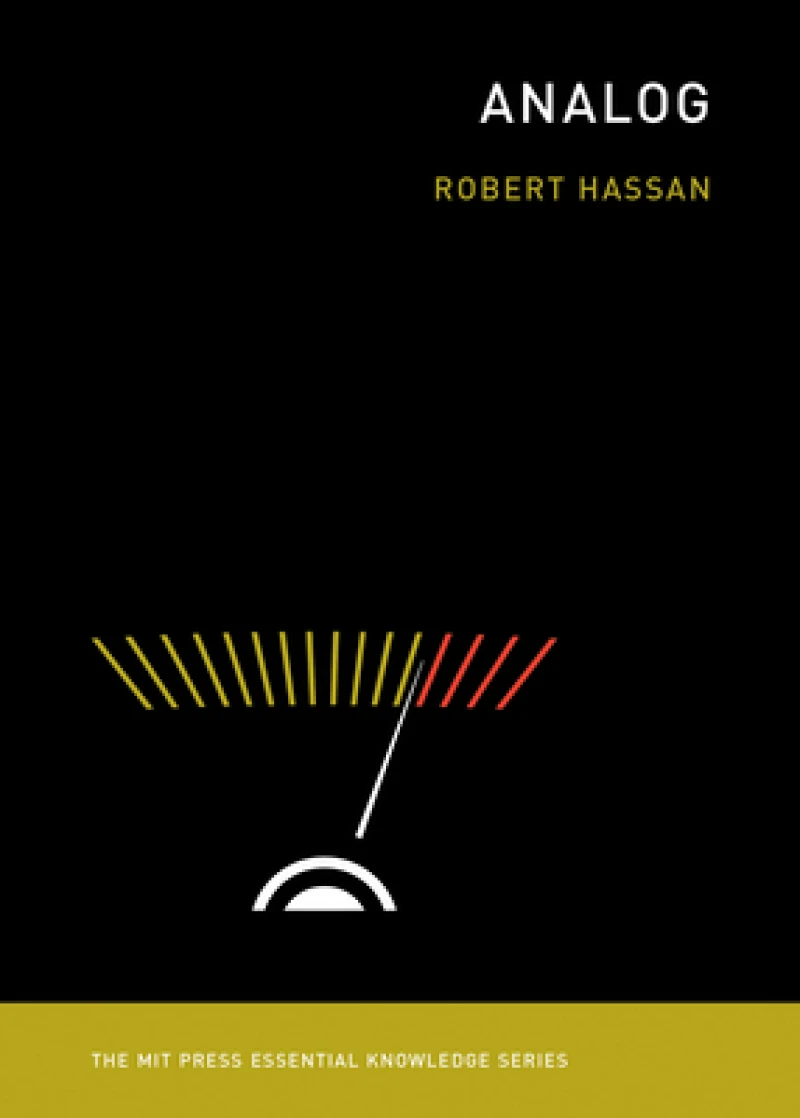
Analog
Book Details
Format
Paperback / Softback
Book Series
The MIT Press Essential Knowledge series
ISBN-10
0262544490
ISBN-13
9780262544498
Publisher
MIT Press Ltd
Imprint
MIT Press
Country of Manufacture
US
Country of Publication
GB
Publication Date
Jan 3rd, 2023
Print length
256 Pages
Weight
258 grams
Dimensions
12.70 x 17.80 x 2.10 cms
Product Classification:
Technology: general issues
Ksh 2,900.00
Werezi Extended Catalogue
Delivery in 7 days
2 copies in stock
Delivery Location
Delivery fee: Select location
Delivery in 7 days
Secure
Quality
Fast
Why, surrounded by screens and smart devices, we feel a deep connection to the analog—vinyl records, fountain pens, Kodak film, and other nondigital tools.
We’re surrounded by screens; our music comes in the form of digital files; we tap words into a notes app. Why do we still crave the “realness” of analog, seeking out vinyl records, fountain pens, cameras with film? In this volume in the MIT Press Essential Knowledge series, Robert Hassan explores our deep connection to analog technology. Our analog urge, he explains, is about what we’ve lost from our technological past, something that’s not there in our digital present. We’re nostalgic for what we remember indistinctly as somehow more real, more human. Surveying some of the major developments of analog technology, Hassan shows us what’s been lost with the digital.
Along the way, he discusses the appeal of the 2011 silent, black-and-white Oscar-winning film The Artist; the revival of the non-e-book book; the early mechanical clocks that enforced prayer and worship times; and the programmable loom. He describes the effect of the typewriter on Nietzsche’s productivity, the pivotal invention of the telegraph, and the popularity of the first televisions despite their iffy picture quality.
The transition to digital is marked by the downgrading of human participation in the human-technology relationship. We have unwittingly unmoored ourselves, Hassan warns, from the anchors of analog technology and the natural world. Our analog nostalgia is for those ancient aspects of who and what we are.
We’re surrounded by screens; our music comes in the form of digital files; we tap words into a notes app. Why do we still crave the “realness” of analog, seeking out vinyl records, fountain pens, cameras with film? In this volume in the MIT Press Essential Knowledge series, Robert Hassan explores our deep connection to analog technology. Our analog urge, he explains, is about what we’ve lost from our technological past, something that’s not there in our digital present. We’re nostalgic for what we remember indistinctly as somehow more real, more human. Surveying some of the major developments of analog technology, Hassan shows us what’s been lost with the digital.
Along the way, he discusses the appeal of the 2011 silent, black-and-white Oscar-winning film The Artist; the revival of the non-e-book book; the early mechanical clocks that enforced prayer and worship times; and the programmable loom. He describes the effect of the typewriter on Nietzsche’s productivity, the pivotal invention of the telegraph, and the popularity of the first televisions despite their iffy picture quality.
The transition to digital is marked by the downgrading of human participation in the human-technology relationship. We have unwittingly unmoored ourselves, Hassan warns, from the anchors of analog technology and the natural world. Our analog nostalgia is for those ancient aspects of who and what we are.
Get Analog by at the best price and quality guaranteed only at Werezi Africa's largest book ecommerce store. The book was published by MIT Press Ltd and it has pages.