
Analyzing Schubert
Book Details
Format
Paperback / softback
ISBN-10
1316620751
ISBN-13
9781316620755
Publisher
Cambridge University Press
Imprint
Cambridge University Press
Country of Manufacture
GB
Country of Publication
GB
Publication Date
Sep 1st, 2016
Print length
302 Pages
Weight
528 grams
Dimensions
17.20 x 24.30 x 2.10 cms
KSh 5,250.00
Currently unavailable
0 in stock
Delivery Location
Delivery fee: Select location
Secure
Quality
Fast
Since the nineteenth century, critics and scholars have emphasized the mystical rather than the logical qualities of Schubert's music. Clark examines the historical influences behind existing analyses of Schubert's harmony and form, illustrating instead that Schubert's harmonic practice can be used to question the most basic tenets of music theory.
When Schubert's contemporary reviewers first heard his modulations, they famously claimed that they were excessive, odd and unplanned. This book argues that these claims have haunted the analysis of Schubert's harmony ever since, outlining why Schubert's music occupies a curiously marginal position in the history of music theory. Analyzing Schubert traces how critics, analysts and historians from the early nineteenth century to the present day have preserved cherished narratives of wandering, alienation, memory and trance by emphasizing the mystical rather than the logical quality of the composer's harmony. This study proposes a new method for analyzing the harmony of Schubert's works. Rather than pursuing an approach that casts Schubert's famous harmonic moves as digressions from the norms of canonical theoretical paradigms, Suzannah Clark explores how the harmonic fingerprints in Schubert's songs and instrumental sonata forms challenge pedigreed habits of thought about what constitutes a theory of tonal and formal order.
Get Analyzing Schubert by Suzannah Clark at the best price and quality guaranteed only at Werezi Africa's largest book ecommerce store. The book was published by Cambridge University Press and it has 302 pages.
Customers Who Bought This Also Bought

Mark Kermode''s Surround Sound
KSh 3,400.00
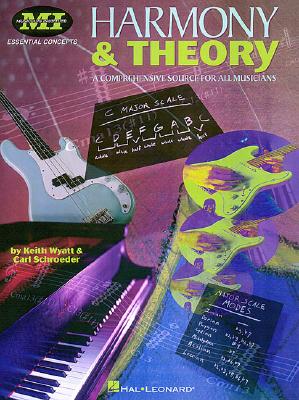
Harmony and Theory
KSh 4,850.00

Fundamentals of Musical Composition
KSh 3,050.00

Music Theory: the essential guide
KSh 1,450.00

How Music Works
KSh 3,700.00

Essential Dictionary of Music Notation
KSh 1,950.00

Structural Functions of Harmony
KSh 2,700.00
Quantum Listening
KSh 1,450.00

The Technique of Orchestration
KSh 14,250.00

The Shortest History of Music
KSh 2,700.00

On The Musically Beautiful
KSh 3,250.00

The Study of Counterpoint
KSh 2,900.00