
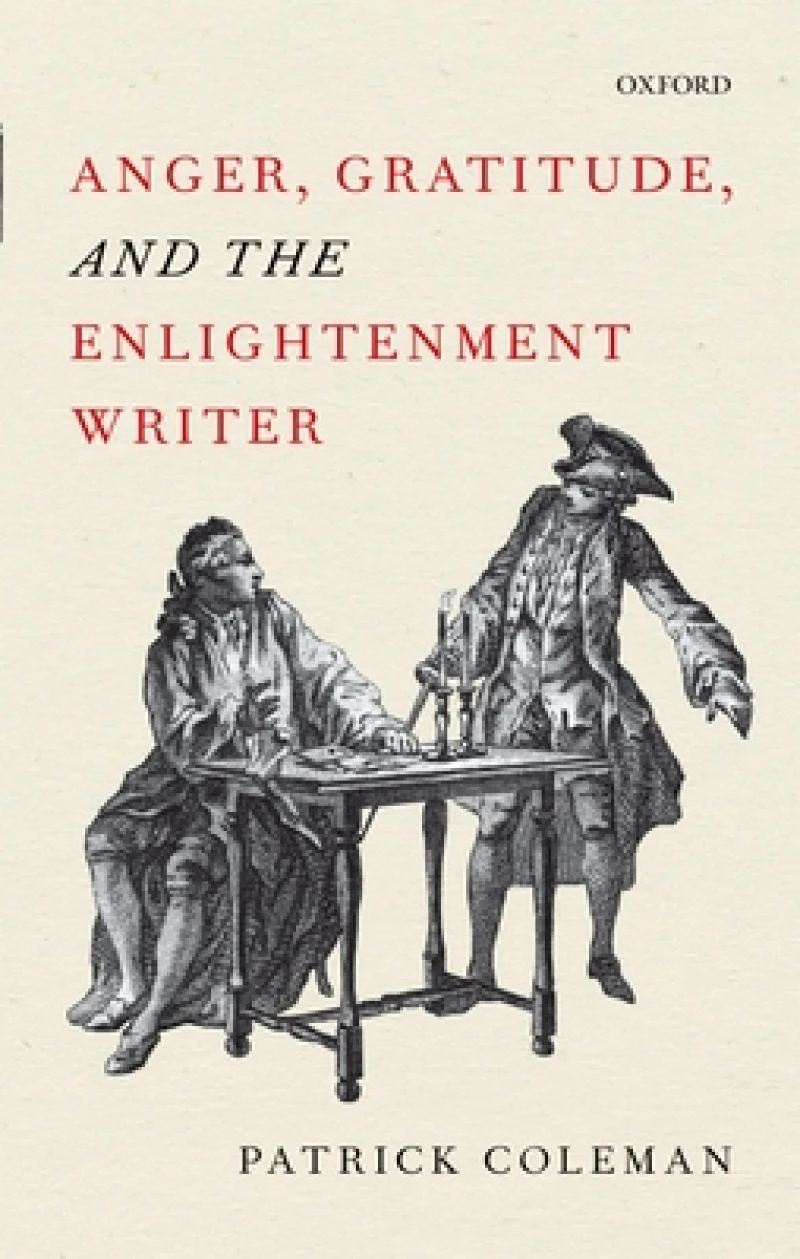
Anger, Gratitude, and the Enlightenment Writer
Book Details
Format
Hardback or Cased Book
ISBN-10
0199589348
ISBN-13
9780199589340
Publisher
Oxford University Press
Imprint
Oxford University Press
Country of Manufacture
GB
Country of Publication
GB
Publication Date
Jan 6th, 2011
Print length
272 Pages
Weight
462 grams
Dimensions
22.30 x 14.90 x 2.00 cms
Ksh 19,750.00
Manufactured on Demand
0 in stock
Delivery Location
Delivery fee: Select location
Secure
Quality
Fast
On the one hand, anger and gratitude are crucial in appreciating what one owes to oneself or others; on the other, they disturb one's internal balance and reinforce one's dependence upon others. This book explores the tension between these two attitudes in the work of French Enlightenment writers such as Rousseau, Diderot, Marivaux, and Challe.
Anger, Gratitude, and the Enlightenment Writer examines how writers as diverse as Rousseau, Diderot, Marivaux, and Challe discuss the social appropriateness of anger and gratitude in regulating social life. Emotions are social transactions, with rules identifying when and where it is appropriate to express one''s feelings and, especially in the case of anger and gratitude, who is allowed or expected to put them on display. Defining the kinds of slight or favor that demand an angry or a grateful response became problematic in eighteenth-century France under the pressure of two contradictory developments which were both crucial to Enlightenment thinking about sociability. The first drew on the ideal of moral equality as it spread beyond the salons to the social world at large. Writers claimed for themselves an entitlement to anger at personal slight that had been hitherto reserved for aristocrats, and a respectful hearing for their indignation at public injustice despite their lack of official standing. The philosophes also argued their writing made them social benefactors in their own right, more deserving of their readers'' gratitude than obliged to any patron. The second gave a new twist to longstanding philosophical notions about transcending emotional disturbance and dependence altogether. A personal ideal became a public goal as Enlightenment thinkers imagined a society where all significant social interaction was governed by the impersonal rule of law. Occasions for personal slight or obligation would disappear, and with them reasons for anger and gratitude. Instead of serving as a model of emotional legitimacy, authors would derive their prestige from their rationality and objectivity. By exploring the interplay between these two attitudes toward anger and gratitude this book provides a fresh perspective on the French Enlightenment.
Get Anger, Gratitude, and the Enlightenment Writer by at the best price and quality guaranteed only at Werezi Africa's largest book ecommerce store. The book was published by Oxford University Press and it has pages.

