
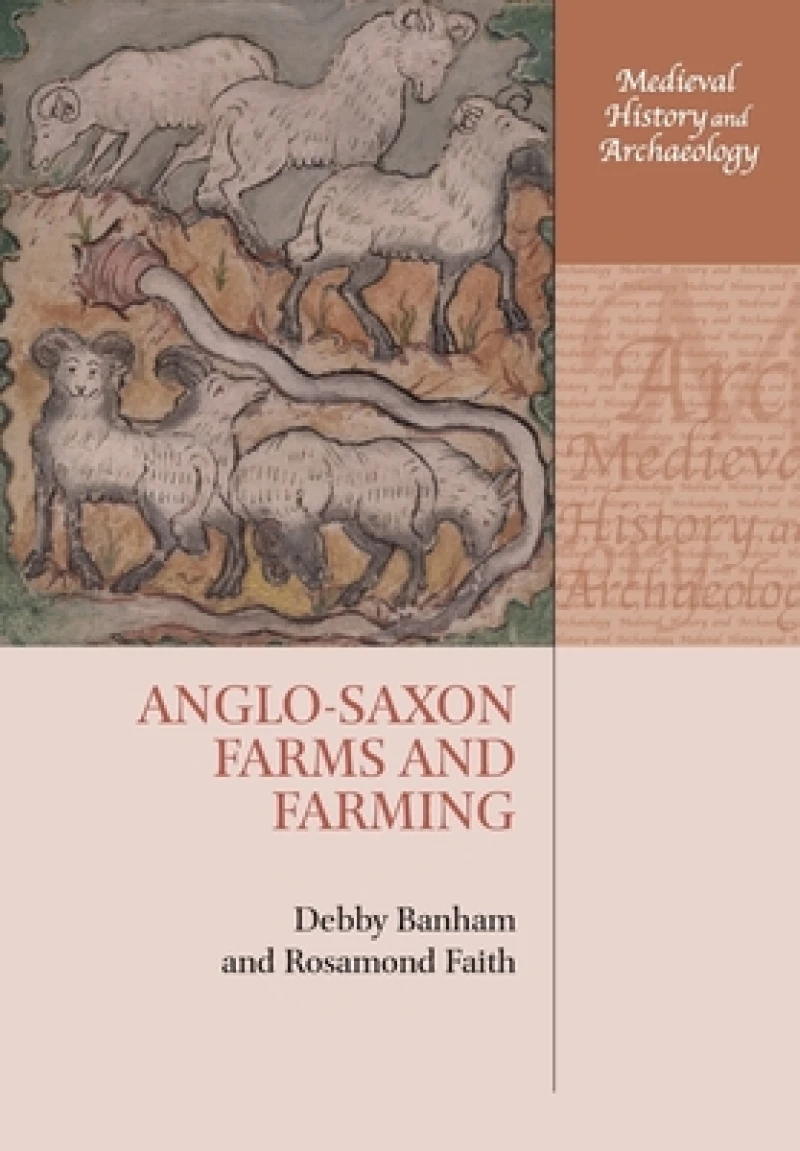
Anglo-Saxon Farms and Farming
Book Details
Format
Paperback / Softback
Book Series
Medieval History and Archaeology
ISBN-10
0198855508
ISBN-13
9780198855507
Publisher
Oxford University Press
Imprint
Oxford University Press
Country of Manufacture
GB
Country of Publication
GB
Publication Date
Feb 12th, 2020
Print length
352 Pages
Weight
612 grams
Dimensions
17.10 x 24.60 x 1.50 cms
Product Classification:
British & Irish historyMedieval historyHistorical geographyMedieval European archaeology
Ksh 9,000.00
Manufactured on Demand
Delivery in 14 days
1 copies in stock
Delivery Location
Delivery fee: Select location
Delivery in 14 days
Secure
Quality
Fast
A study of farming in England before the Norman Conquest, in a period before trade was an important way of making a living, exploring what tools and methods were used in Anglo-Saxon farming, what kind of livestock was kept, and what crops were grown.
Anglo-Saxon farming made England so wealthy by the eleventh century that it attracted two full-scale invasions. In Anglo-Saxon Farms and Farming, Debby Banham and Rosamond Faith explore how Anglo-Saxon farmers produced the food and other crops and animal products that sustained England''s economy, society, and culture before the Norman Conquest.The volume is made up of two complementary sections: the first examines written and pictorial sources, archaeological evidence, place-names, and the history of the English language to discover what kind of crops and livestock people raised, and what tools and techniques they used in producing them. The second part assembles a series of local landscape studies to explore how these techniques were combined into working agricultural regimes in different environments. These perspectives allow the authors to take new approaches to the chronology and development of open-field farming, to the changing relationship between livestock husbandry and arable cultivation, and to the values and social relationships which under-pinned rural life. The elite are not ignored, but peasant famers are represented as agents, making decisions about the way they managed their resources and working lives.A picture emerges of an agriculture that changed from an essentially prehistoric state in the sub-Roman period to what was, by the time of the Conquest, recognizably the beginning of a tradition that only ended in the modern period. Anglo-Saxon farming was not only sustainable, but infinitely adaptable to different soils and geology, and to a climate changing as unpredictably as it is today.
Get Anglo-Saxon Farms and Farming by at the best price and quality guaranteed only at Werezi Africa's largest book ecommerce store. The book was published by Oxford University Press and it has pages.

