
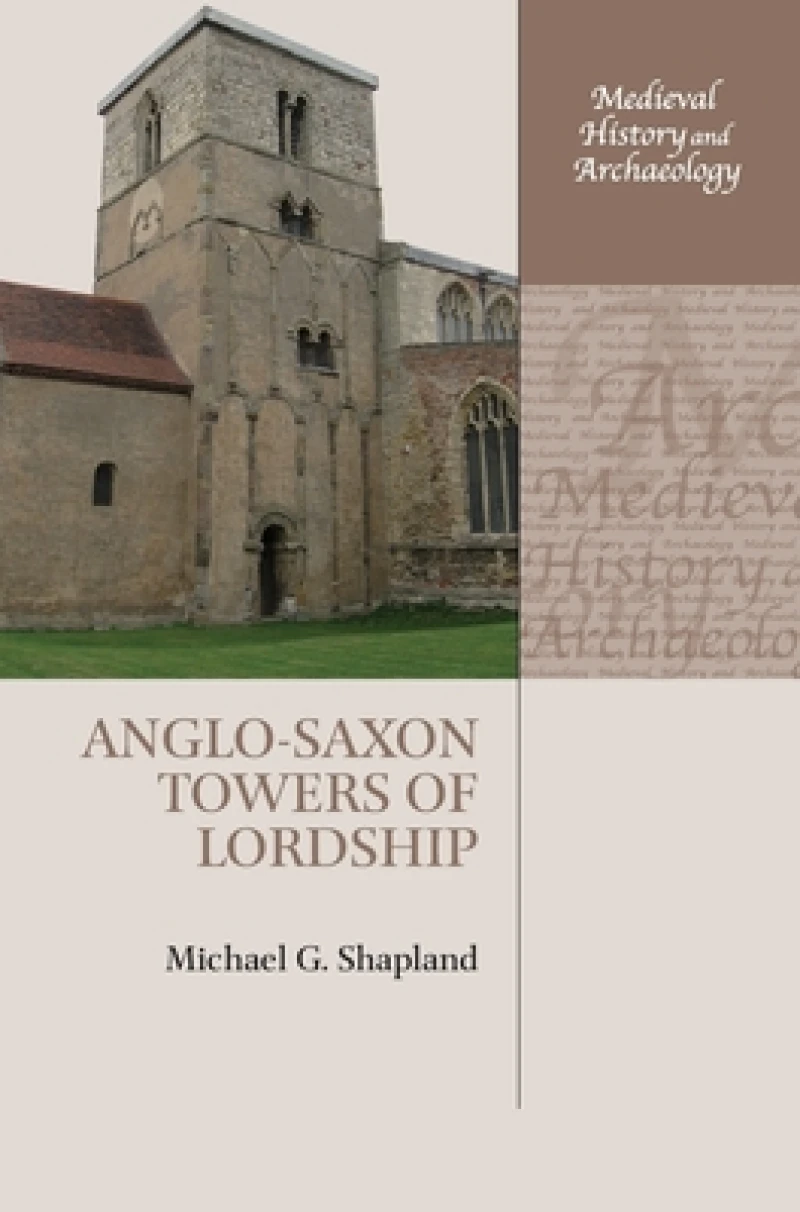
Anglo-Saxon Towers of Lordship
Book Details
Format
Hardback or Cased Book
Book Series
Medieval History and Archaeology
ISBN-10
0198809468
ISBN-13
9780198809463
Publisher
Oxford University Press
Imprint
Oxford University Press
Country of Manufacture
GB
Country of Publication
GB
Publication Date
Jan 29th, 2019
Print length
288 Pages
Weight
754 grams
Dimensions
18.10 x 25.20 x 2.60 cms
Product Classification:
British & Irish historyMedieval historyMedieval European archaeology
Ksh 24,350.00
Werezi Extended Catalogue
0 in stock
Delivery Location
Delivery fee: Select location
Secure
Quality
Fast
A detailed study of the towers constructed by lords at their residences across England during the late tenth and eleventh centuries. Although these towers contained chapels, their role in the exercise of secular power mean that that they provide a unique opportunity to study standing aristocratic architecture from before the Norman Conquest.
It has long been assumed that England lay outside the Western European tradition of castle-building until after the Norman Conquest of 1066. It is now becoming apparent that Anglo-Saxon lords had been constructing free-standing towers at their residences all across England over the course of the tenth and eleventh centuries. Initially these towers were exclusively of timber, and quite modest in their scale, although only a handful are known from archaeological excavation. There followed the so-called ''tower-nave'' churches, towers with only a tiny chapel located inside, which appear to have had a dual function as buildings of elite worship and symbols of secular power and authority. For the first time, this book gathers together the evidence for these remarkable buildings, many of which still stand incorporated into the fabric of Norman and later parish churches and castles. It traces their origin in monasteries, where kings and bishops drew upon Continental European practice to construct centrally-planned, tower-like chapels for private worship and burial, and to mark gates and important entrances, particularly within the context of the tenth-century Monastic Reform. Adopted by the secular aristocracy to adorn their own manorial sites, it argues that many of the known examples would have provided strategic advantage as watchtowers over roads, rivers and beacon-systems, and have acted as focal points for the mustering of troops. The tower-nave form persisted into early Norman England, where it may have influenced a variety of high-status building types, such as episcopal chapels and monastic belltowers, and even the keeps and gatehouses of the earliest stone castles. The aim of this book is to finally establish the tower-nave as an important Anglo-Saxon building type, and to explore the social, architectural, and landscape contexts in which they operated.
Get Anglo-Saxon Towers of Lordship by at the best price and quality guaranteed only at Werezi Africa's largest book ecommerce store. The book was published by Oxford University Press and it has pages.

